
Summary
All 27 Indian seafarers aboard the Panama-flagged tanker Louise 1 are safe following a reported explosive attack in the Strait of Hormuz. The incident caused an engine-room fire, which was extinguished before the vessel continued its voyage. India is coordinating with ship managers over crew safety.
India confirms crew safety
The Hormuz tanker attack involving Louise 1 has renewed concerns over the exposure of Indian seafarers to violence against commercial shipping in the Gulf.
Union Minister for Ports, Shipping and Waterways Sarbananda Sonowal confirmed on 30 October that the tanker’s 27 Indian crew members were unharmed. He said the government was monitoring developments and maintaining contact with the ship management company.
The minister also confirmed the safety of two Indian nationals aboard the Liberia-flagged very large crude carrier Arzanah, which was targeted in a separate projectile attack on 29 October. Across the two vessels, all 29 Indian seafarers were reported safe.
Reported explosive devices caused engine-room fire
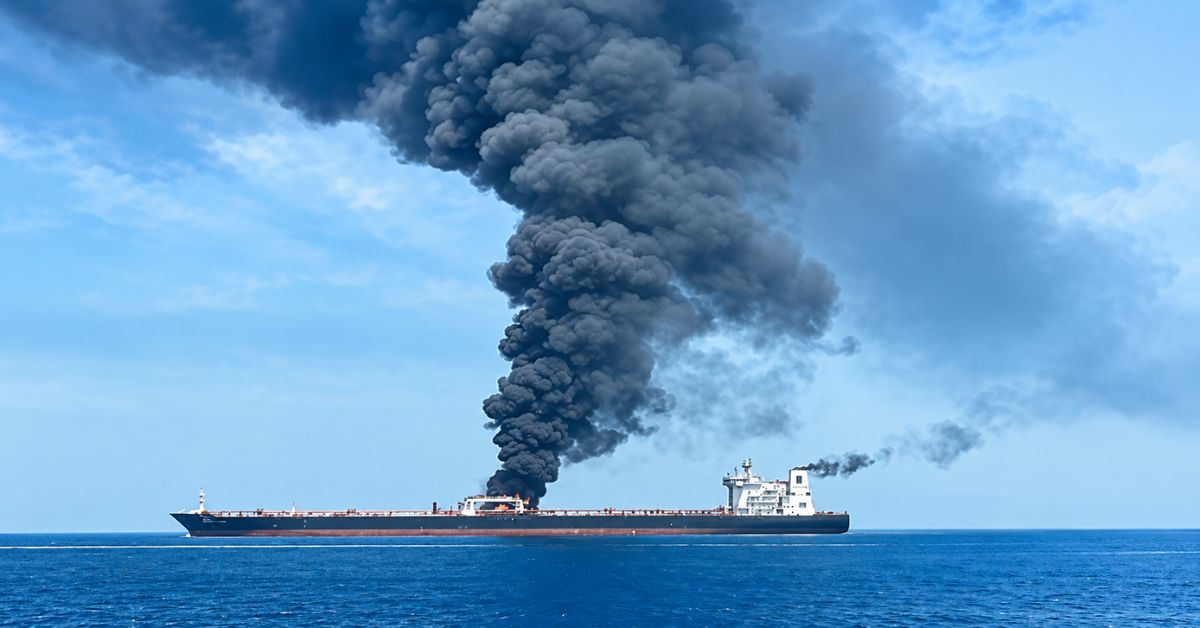
Maritime security accounts described a small craft approaching Louise 1 and attaching two explosive devices to its hull. The subsequent explosions reportedly caused an engine-room fire and temporarily disabled the tanker.
The United Kingdom Maritime Trade Operations reported an incident approximately 25 nautical miles northeast of Khasab, Oman. Its update said the crew was safe, the fire had been extinguished and no environmental impact had been reported. The vessel subsequently continued towards its next port.
The maritime incident record places the occurrence late on 29 October in UTC, while the Indian government’s update referred to Louise 1 on 30 October. The differing dates should be read in the context of the overnight reporting timeline.
Attack method remains separately attributed
Security sources characterised the devices as limpet mines and described the incident as the first known successful use of that method in the waterway since the current conflict began in February.
That description is narrower than a first-ever limpet-mine attack in the region. Responsibility for this incident had not been established in the available reporting.
India’s official statement described the incidents involving both tankers as projectile attacks. The distinction between the government’s terminology and the separate security-source assessment remains important while details are being established.
Seafarer exposure predates the latest incident
The attack comes against a prolonged deterioration in maritime security.
In a statement issued on 28 August, the International Maritime Organization said it had verified at least 70 attacks on international shipping since the conflict began on 28 February, with 19 seafarers killed.
At that time, the organisation estimated that up to 400 ships carrying around 6,000 seafarers had been unable to depart safely from the Persian Gulf. Those figures describe the situation in August and should not be treated as an updated October tally.
IMO Secretary-General Arsenio Dominguez called for practical cooperation to restore freedom of navigation, highlighting the effects on crews and supply chains carrying fuels, fertilisers and other commodities.
Energy trade magnifies the commercial implications
The Strait of Hormuz connects the Persian Gulf with the Gulf of Oman and the Arabian Sea. Its importance to energy trade makes repeated attacks consequential well beyond the vessels directly affected.
International Energy Agency figures show that approximately 20 million barrels a day of crude oil and petroleum products passed through the strait in 2025, representing around one-quarter of global seaborne oil trade. About 80% was destined for Asia.
The route also carried almost 20% of global LNG trade. Alternative crude-export routes through Saudi Arabia and the UAE provide some flexibility, but cannot replace the full scale of normal strait traffic.
For shipowners and cargo interests, an attack involving a temporarily disabled tanker raises questions about passage planning, emergency response and the availability of assistance. For India, the immediate concern remains the welfare of its nationals serving aboard internationally trading vessels.
The reported recovery of Louise 1 allowed its voyage to continue. It nevertheless adds another incident to a corridor where commercial navigation remains exposed to conflict, placing crews at the centre of the industry’s security challenge.
FAQs
Were the Indian seafarers aboard Louise 1 injured?
No. India confirmed that all 27 were safe, with no injuries reported.
Where did the incident occur?
Approximately 25 nautical miles northeast of Khasab, Oman, in the Strait of Hormuz.
Did the tanker continue its voyage?
Yes. The fire was extinguished and the vessel subsequently continued towards its next port.
Has responsibility been established?
Responsibility remained unclear in the available reporting.
Was another tanker carrying Indians attacked?
Yes. Arzanah, carrying two Indian nationals, was targeted separately. Both were reported safe.
 Join our WhatsApp channel for more updates:
 Subscribe to our YouTube channel for more updates: