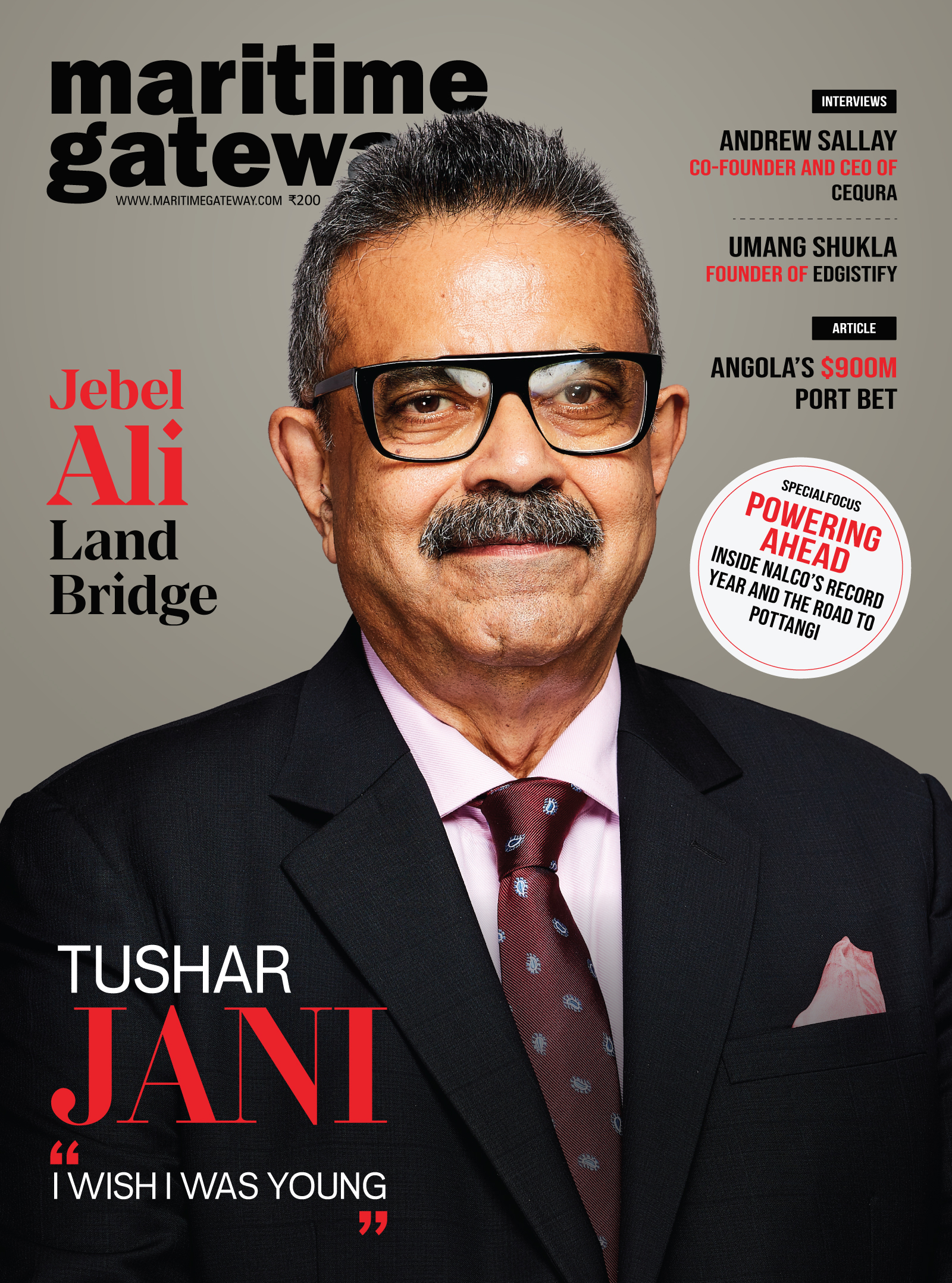





Tushar Jani on Five Decades of Supply Chain, Backing the Next Blue Dart, and Why Mid-Sized Logistics Players Should Thank the Tariff Wars
Tushar Jani built Blue Dart from scratch and sold it at its peak in 2005. Two decades on, through the SCA Group, CSE and Fundalogical, he has moved from operator to investor and mentor. In this candid conversation, he speaks about why he still works 16-18 hour days at 73, what he really tests for before writing a cheque, why India’s mid-sized logistics companies are sitting on a rare geopolitical opportunity, and why he believes every logistician of the future will need to double up as a data scientist.
You built Blue Dart from the ground up and walked away from it at its peak in 2005. Almost two decades later, with the SCA Group, CSE and Fundalogical all on your plate, what does a typical week look like for you today? And which of these genuinely gets you out of bed in the morning?
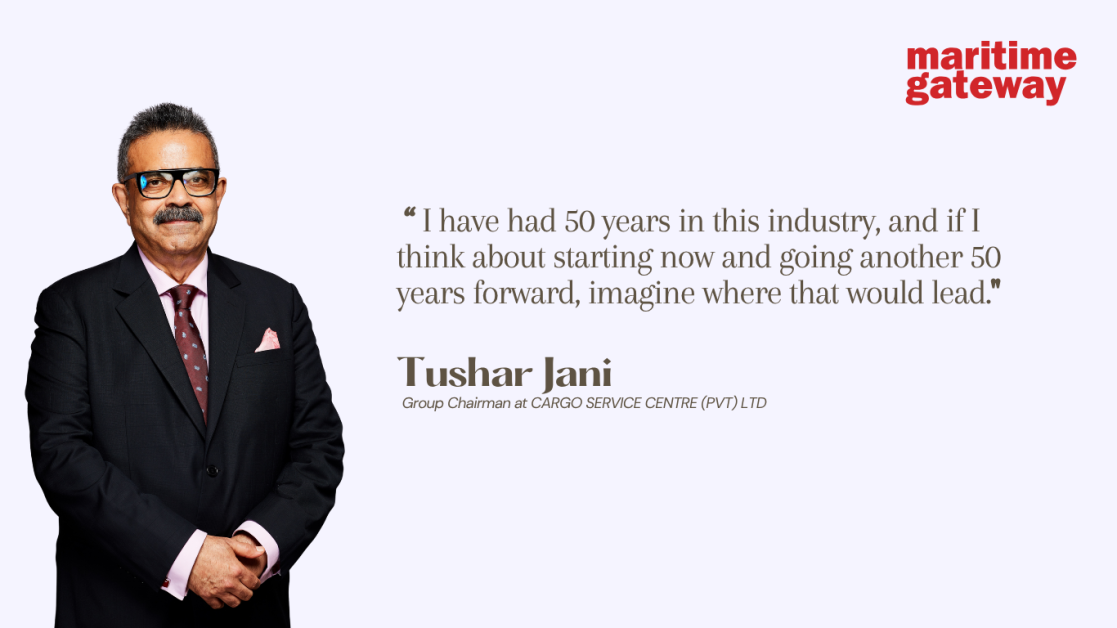
My first wish in life is that I was young again. I have had 50 years in this industry, and if I think about starting now and going another 50 years forward, imagine where that would lead. It is a great opportunity to be in this sector, not just in India but across the world. And because I am Indian, I have a better opportunity than my colleagues anywhere else, including China. People say you cannot beat China, but that is only true on manufacturing volume. On complex supply chain, solution-based logistics and delivering the right thing to the right place at the right time, India is ahead.
That is not opinion, it is five decades of experience across more than 70 countries. When I stepped into the air cargo complex in 1976, cargo sat there for 21 days after landing, even though the flight itself took a matter of hours. Today that 21-day dwell time has come down to a couple of hours. My first piece of automation was an ₹800 Casio calculator. Then came telex, fax, electronic typewriters, computers and the internet. When I joined Blue Dart in 1983, getting a telephone line took years; today you can get a phone and internet connection in 30 minutes, from home, from the road, from a ship. I feel fortunate to have witnessed that entire revolution.
I am 73 now, but my day is still full. I work 16-18 hours, and I still send mail to my senior management team at two in the morning, just so they see it the moment they wake up. I am still learning, still meeting people, still a student. Nothing has really changed since 1976 when I first walked into a port or an airport. I wish I could do another 10 to 15 years of this.
What made you go from being an operator who built physical infrastructure to becoming a venture backer writing cheques for early-stage founders? What was the trigger for Fundalogical and Vanana Logistics? And when a supply chain founder pitches you today, what are you really testing for, beyond the numbers on the slide?
There are 15,000 companies actively doing freight forwarding and supply chain work in this country. How many have crossed a thousand or two thousand crore? You can count them on one hand. I started Blue Dart with two friends on ₹30,000, about $1,100 at the time, and eventually sold it for $280 million; the company is valued at roughly $3.2 billion today. My simple belief is, if I could do it, why can’t the next person?
I have gone from customs broker to forwarder to courier company to cargo airline to airport operator, and travelled widely along the way. That kind of experience is worth passing on. Youngsters today have energy, ideas and understanding, but what they lack is the grey hair, the grey matter that only time gives you. A group of us, including Krishna Kotak, Suresh Parekh, Khalid Dhoraji and Manish Kheraawala, felt the same way: we wanted to give something back. Setting it up as a fund gave it structure, a proper platform, and real accountability for responsible investing.
I have now met more than 150 companies, and my first question to every one of them is simple: why do you need money? Selling equity is like selling a piece of yourself, so are you sure you’re ready? I spend hours understanding their model and giving them my thinking, and in that process I learn too. This is less about writing cheques and more about giving back to an industry that made me who I am. There should not be only one Shreyas Shetty, one Krishna Kotak, one Tushar Jani. There should be a thousand of them. And frankly, it is easier to be an entrepreneur in our industry than in most others. What people need is not just capital, but ideas, support and someone to brainstorm with.
What is your appetite going forward? Which sub-sectors of logistics and supply chain are you actively hunting in for the next Fundalogical bet? Cold chain, EV, last mile, port technology, warehousing automation, or something else entirely?
Let me give you a recent example. We invested in a company that collects used cooking oil from restaurants, filters it, and sells it to a biofuel company. It operates across 11 cities, collecting around 500 kilos a day against a market of roughly 80,000 kilos a day. You might ask where the logistics is in that. It is everywhere: building collection hubs, running what is effectively a reverse milk-run model, similar in spirit to Amul but working backwards. Oil is tested the moment it arrives, batched, and moved out within five hours. Nobody would have called used cooking oil a supply chain opportunity, but it is exactly the kind of first-generation entrepreneur story I want to back, rather than someone who simply inherited a family business.
We have also backed a cold chain company where a young couple identified more than 400 facilities across India, including large FMCG players, running at only 80 percent utilisation. They take the unused capacity, monetise it through revenue share, and run a completely asset-light model. Another portfolio company 3D-prints machine parts designed in the US and Europe and ships them worldwide; their real challenge was never manufacturing, it was supply chain, getting parts made, stored and delivered on time. These are metallurgical engineers who knew nothing about logistics when they started. That is exactly the kind of unique, non-routine operation Fundalogical looks for.
Geopolitics, the Red Sea disruptions, tariff wars, has moved from background noise to the boardroom agenda. How should a mid-sized Indian logistics company build resilience into its network design today?
A mid-sized Indian logistics company should thank the US President. This is the biggest opportunity they have had. There is no more “global village,” there is a global patchwork of corridors. Pick your country, pick the corridor it does business with, and put your time, energy and money into mastering that corridor rather than trying to be everywhere. If the current polarisation continues, and it looks like it will, large integrated global players may struggle to survive in their current form.
Look at the FTAs India has signed, with New Zealand, Australia, the EU, the UK. Each one implies a corridor with its own specialisation. That is where mid-sized players should build depth rather than breadth. If you have three sons, send one to build one corridor, another to build a second, and develop that traffic deliberately. The old model of global scale, the kind that made Agility’s acquisition of Ecu Worldwide look brilliant, was the right move for its era under an entrepreneur I consider one of the smartest our industry has produced. But the question today is whether that model still works. I genuinely believe it does not, and I tell friends, somewhat provocatively, that if they are holding shares in a large integrated logistics company, they may be better off holding gold instead.
Which part of the value chain, ports, air cargo, road, rail, warehousing, cold chain, do you think is most under-invested relative to the opportunity in front of it? If you started today with no legacy to protect, where would you build?
Opportunity exists across every vertical, some capital intensive, some less so. Take gas: as the world moves away from oil during this energy crisis, gas distribution, through pipes, cylinders, and in liquid form, is going to need real infrastructure. Take pharma: walk into any chemist and you will get an automatic 10 percent discount on MRP, something almost no other retail category offers without asking. That discount exists because the leakage in the domestic pharma supply chain runs close to 45-50 percent, largely because, unlike pharma exports, domestic pharma distribution in India is barely temperature-controlled.
Then look at consumer durables. Roughly eight million television sets are sold in a city like Mumbai in a month. Most buyers never use half the features on their smart TV because nobody teaches them how. If a company charged even a thousand rupees more per television and sent someone to spend two hours setting up and training the family on the product, most customers would happily pay for it, and at even a modest market share, the economics work. The same logic applies to microwaves, refrigerators, washing machines. This is not just about moving a box, it is a much larger definition of supply chain and after-sales value than most players in the industry currently see.
Apple, semiconductors, defence, EVs are reshaping cargo flows, and you have flagged cold chain, medical equipment and specialty chemicals as areas where India is quietly becoming a global hub. Which of these clusters do logistics players underestimate, and what has to happen in the next five years for India to actually own that position rather than just supply into someone else’s chain?
China’s technology has moved so far up the value chain that it no longer wants to manufacture mundane, lower-margin products, a flask, a pen, increasingly even certain categories of mobile phones. That manufacturing is going to shift to India. That is exactly why being a corridor expert matters, because India offers both a large domestic market and improving manufacturing capability. That is why Apple is here, and why Samsung now makes 60 percent of its global phone volumes in India.
That is the opportunity, across both cross-border and domestic logistics: build the best delivery system, the best product, and become a genuine partner to your customer from the factory floor to the end consumer, not merely a pickup-and-delivery vendor. As I said earlier about televisions, logistics companies can go a step further than delivery and actively help customers use what they bought. Whichever sector you choose in this environment, there is money to be made. The Prime Minister has called this the golden age, the swarnakal, of the logistics industry, and I agree.
Multi-modal logistics parks, dedicated freight corridors, GIFT City, maritime clusters, India has built a lot of physical and financial infrastructure. What is the single biggest white space opportunity for a startup to build on top of this new base?
Interfacing between modes is still a real challenge in this country, and any young entrepreneur solving that technological interface problem is solving something valuable. Multi-modal is genuinely the name of the game: inland waterways, rail, road corridors are all coming together. Consider that moving cargo from Srinagar to Rameswaram by truck costs around seven rupees a kilo and takes four days. Convert that into dollars, it works out to six or seven cents per kilometre, a cost structure you will not find almost anywhere else in the world. That cost advantage is India’s real power, and it will only be unlocked further as Gati Shakti and multi-modal parks mature and infrastructure outside ports, airports and stations catches up with what has been built inside them.
From the investor’s chair rather than the operator’s chair, what does government need to do differently on tax treatment, regulation, clarity and ease of exit to get risk capital flowing into logistics startups?
Ease of doing business needs work; on a scale of ten, I would put us at around five. Many processes are still outdated. Capital availability is a bigger issue than people realise: India does not have significant container shipping capacity of its own, no national wide-body cargo airline, and a fairly small owned shipping tonnage relative to a global fleet running into the tens of thousands of vessels.
GIFT City is a good example of an underused opportunity. It is a virtual platform, you can bank through it from anywhere in the country, yet very few people in logistics understand that you can register assets there and lease them back to your own operating company, the same sell-and-lease-back structure that made IndiGo’s aircraft model work. That should not be limited to ships and aircraft; it should extend to trucks and other logistics assets too, lightening balance sheets and insulating companies from currency swings. Government has not marketed or propagated this model well enough, and frankly it is not always clear within government who owns driving that adoption.
If you had the Finance Minister and Commerce Minister in a room for 15 minutes, what would you ask on behalf of the Indian logistics ecosystem?
I would want a transport ministry treated as one unified function for logistics, even if shipping, railways and roads remain organisationally separate for broader mobility purposes. I would ask the Finance Minister why a passenger clears immigration, collects luggage and gets home within two hours, while cargo arriving on the same flight can sit at the airport for four to six hours. I would ask the Commerce Minister why, despite having signed several strong FTAs, it can still take six months to open a foreign bank account for an Indian company trying to set up a branch abroad. And I would ask the Transport Minister to resolve a basic multi-modal liability question: when a container moves from factory to rail yard by truck, then by rail, then back onto a truck, then onto a ship, whose liability regime actually governs that journey?
These are not abstract questions, they need practitioners in the room, not bureaucrats and ministers trying to solve problems they have not lived through. To be fair, engagement with industry delegations has improved significantly compared to earlier years, and I recognise government operates on a much larger canvas, in service of the citizen, with a different lens than a businessman’s. I raised the idea of a unified logistics board, secretaries from railways, shipping, road and aviation, commerce and customs, headed by the Cabinet Secretary, with sector practitioners invited to the table, back in 1996. It exists in some form now. What it needs is the authority to decide on the spot and execute immediately.
What is the most common mistake young logistics entrepreneurs make when they pitch to you? How would you translate Fred Smith’s comment into advice for today’s tech-first founders who sometimes build the platform before proving the groundwork?
Youngsters are in a hurry, which is not necessarily wrong, and they carry a lot of self-belief, which can cut both ways. Where they fall short is being reluctant to take experienced people’s input. If they let people like us, call us dinosaurs, sit at the table, it helps, because we have already walked that road. There is no harm in listening, even if you are smarter than we are. When their smartness and our wisdom come together, that is when real progress happens. I have even suggested to government that if a company generates significant profit and takes on an obligation to mentor a set number of dependent entrepreneurs, it should earn a small tax benefit in return, not as charity, but as a structured obligation.
India’s logistics sector is at an inflection point, infrastructure catching up, capital flowing, policy aligning. If you had to place one bet on what the Indian logistics landscape looks like in 2035, what would you say?
I would break that further down to 2030 first, because that is really the beginning of a new era, and by 2040 India will look unrecognisable compared to today. If you are a young entrepreneur, you should be preparing now to be running by 2030: 141 new airports are planned, with around 100 expected to be operational by then, the Vande Bharat trains already compare favourably with European and American rail, and port capacity will reach meaningful scale. The real opportunity lies in the infrastructure that has to grow up around these assets, outside the ports, airports and stations themselves.
The bigger shift, though, is that every entrepreneur, investor and business owner in this space will need to think less transactionally and more strategically, and that means becoming a data scientist as much as a logistics operator. The way every company today needs a finance function and an accountant, it will soon need a data scientist just as fundamentally. Predictive science is where cargo handling is headed. I sometimes tell people that every logistician of the future has to become something of an astrologist too, someone who can genuinely predict what is coming.
Blue Dart made you a builder. Fundalogical is making you a backer. Twenty years from now, how do you want this second chapter of your career to be remembered?
With Blue Dart, I was fortunate to build something known for quality, service and a strong name. Before I hang up my uniform, what I want most is to look back and know I helped five entrepreneurs build their own version of Blue Dart. That is really why Fundalogical exists, so that years from now, I can point to a handful of people I backed and say, they built it themselves.
This interview has been edited for length and clarity.
 Join our WhatsApp channel for more updates:
 Subscribe to our YouTube channel for more updates: