



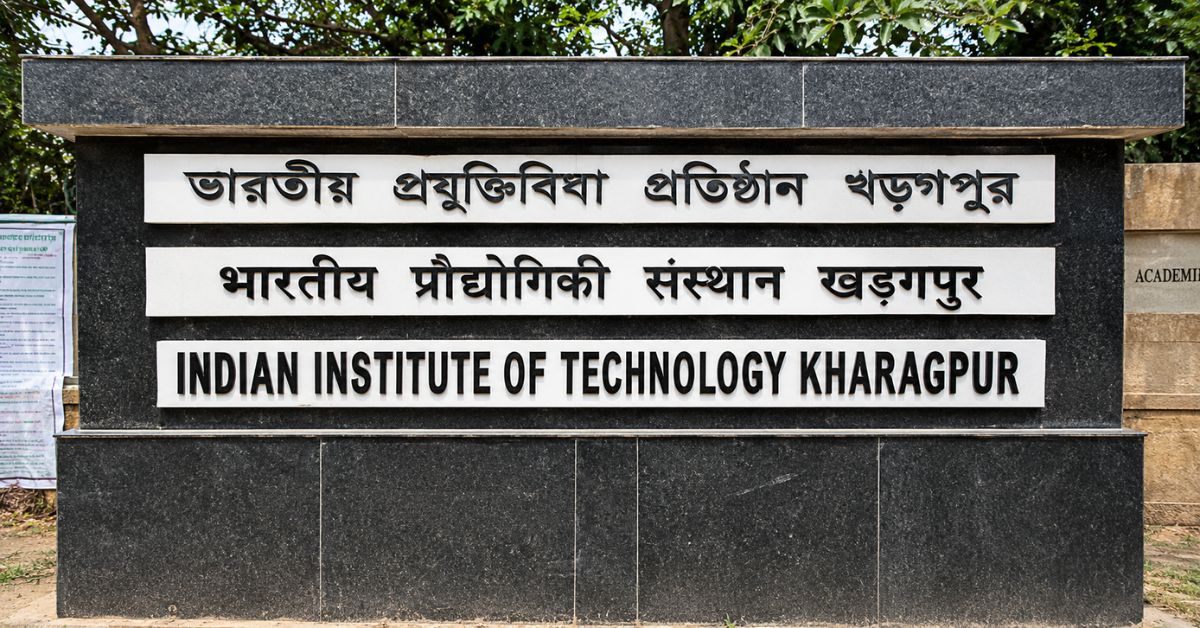

The Indian Institute of Technology (IIT) Kharagpur has begun technical surveys for a proposed deep-sea port at Dadanpatrabar in West Bengal’s East Midnapore district. The work includes measuring sea depth and examining soil conditions to assess whether the coastal site can support port development.
Dhumal Pratik Ashok, Chief Executive Officer of the Digha-Shankarpur Development Board, confirmed that preliminary depth measurements were underway. The exercise advances the state government’s assessment of the location, selected earlier this year after it abandoned the previous proposal at Tajpur.
What will the Dadanpatrabar survey establish?
The investigations cover water depth and ground conditions at the proposed site near Mandarmani. These assessments will help determine the technical feasibility of developing a deep-sea port along this stretch of the Bengal coast.
The distinction between a survey and construction is significant: the work now reported concerns preliminary investigations, with the port’s development still subject to further assessment. No confirmed construction commencement or commissioning schedule accompanies the survey announcement.
What preparatory work has already been tendered?
Government procurement records show that RITES issued a tender on 18 September 2026 to appoint a sub-consultant for offshore and onshore geotechnical investigations for port-led development at Dadanpatrabar in Purba Medinipur, another name for East Midnapore district.
The tender carried an estimated value of ₹80.30 lakh and specified a 45-day work period. Its published schedule set 3 October as the deadline for bid submissions and 5 October for bid opening.
This procurement concerns investigation services. The stated value therefore relates to the technical assignment and should not be interpreted as the investment cost of the proposed port. Similarly, the 45-day period applies to the investigation contract, rather than the wider development timetable.
Geotechnical investigations provide information used in feasibility studies and foundation design. RITES describes this work as part of both preliminary project assessment and the preparation of detailed project reports, helping establish the ground conditions that engineering designs must address.
Why did Bengal move the proposal from Tajpur?
Chief Minister Suvendu Adhikari’s government selected Dadanpatrabar in June 2026, replacing the Tajpur location pursued by the previous administration.
Adhikari cited inadequate land availability at Tajpur when explaining the change. According to the state government, approximately 1,700 acres of vested land are available at Dadanpatrabar, giving the alternative location a stronger land base for development.
The new site lies approximately 10 kilometres from Tajpur. The available government land includes land associated with a salt factory near the Mandarmani coastal area.
Why is a deep-sea port being considered?
The proposal responds to longstanding navigational constraints at Kolkata and Haldia, where access through the Hooghly river system is influenced by channel depth and tidal conditions. These factors affect the movement of larger cargo vessels.
A coastal deep-sea facility could provide an additional maritime gateway for West Bengal and trade originating in eastern and north-eastern India. Whether Dadanpatrabar can fulfil that role will depend on the outcome of the technical assessments and subsequent development decisions.
What happens next?
In September, Vandana Yadav, Principal Secretary of West Bengal’s Commerce and Industries Department, indicated that the government intended to invite bids for the proposed port.
The latest update links that process to completion of the necessary preliminary assessments. The immediate milestone is therefore establishing the site’s suitability and advancing project preparation before a broader development tender proceeds.
 Join our WhatsApp channel for more updates:
 Subscribe to our YouTube channel for more updates: