




India’s energy security, export competitiveness, and geopolitical balancing act are all being tested at once. In this conversation, Punit Oza cuts through the policy rhetoric to assess how much runway India actually has.
The IMO’s 2050 net-zero ambitions are reshaping global shipping. Where does India stand on green bunkering — and is it at risk of falling behind?
India has the policy ambitions — Harit Sagar, the National Green Hydrogen Mission, Maritime India Vision 2030 — but no Indian port currently offers routine commercial green bunkering. LNG exists only in nascent form at Kochi; methanol is under construction at VOC Port; green ammonia infrastructure at Kandla and Paradip remains largely on paper.
The deeper problem is that India’s green fuel strategy is oriented toward production and export, with maritime bunkering as a secondary application. India is not at risk of permanent irrelevance — its geography on the East-West trade route and its cost advantages in green fuel production are genuine assets. But the critical window is the next two to three years, before IMO’s 2027–28 GHG intensity rules lock in bunkering network decisions globally. If port timelines slip, as they often do, India will find itself competing against already-operational hubs in Singapore, Rotterdam, and the Gulf from a standing start.
India imports nearly 88% of its crude oil needs. How exposed is the country if the West Asia crisis deepens?
Deeply exposed — and more so than the official numbers suggest. Over 60% of India’s crude imports originate from Gulf producers, and roughly 52% transit the Strait of Hormuz. India’s strategic petroleum reserves at Mangalore, Padur, and Visakhapatnam hold only about 25 million barrels — just 9 to 10 days of cover in a complete shutdown. When commercial stocks are added, the buffer extends to 70 days on paper, but the functional ceiling before severe economic disruption is closer to 40 to 50 days.
The LPG dimension is arguably India’s sharpest vulnerability. Around 90% of LPG imports transit Hormuz, directly affecting 300 million households dependent on cooking gas. India’s posture is best described as managed vulnerability, not genuine resilience. A prolonged Hormuz disruption would move from a price shock to a supply crisis faster than official buffers suggest.
How long can India sustain its multi-directional balancing act in West Asia before it is forced to take clearer positions?
The conditions that made strategic ambiguity sustainable are eroding simultaneously across all four axes — the Israel relationship, Tehran, BRICS, and Global South credibility. What has changed is that economic pressure is now forcing the clock in ways that domestic politics cannot absorb indefinitely. India’s crude basket has surged 40% since January, the rupee is at record lows, over 9 million diaspora workers are at risk in Gulf countries, and Hormuz ship transits have fallen from 200–300 per week to fewer than twenty.
In my reading, India has roughly 60 to 90 days before three hard deadlines converge: the BRICS foreign ministers meeting in mid-May, the Kharif agricultural season, and sustained fiscal pressure. The likely outcome is not a dramatic break from non-alignment, but a gradient shift — sharper language on the Hormuz blockade without naming Iran, a BRICS humanitarian resolution that sidesteps war-guilt, and deeper naval coordination with the US under existing frameworks.
The Red Sea disruptions have caused severe freight cost spikes. Are India’s MSMEs structurally protected — or structurally exposed?
Structurally exposed, and absorbing the shock in the worst possible way — defensively and individually. Emergency Conflict Surcharges of $2,000–$4,000 per container sit on top of base rates that have surged over 300%. Transit times on India-Europe routes have stretched from 15 days to over 45 days via the Cape diversion. Textile exporters are reporting margin erosion of 5–8% from logistics costs alone.
The government’s RELIEF Scheme and the broader Export Promotion Mission are correct in instinct but are reactive frameworks retrofitted onto a structural problem. What India needs is a Maritime Trade Resilience Fund — a standing mechanism with pre-negotiated freight hedging instruments and automatic ECGC activation triggers calibrated to a corridor stress index. Until that architecture exists, every new crisis will produce a new acronym, and MSMEs will keep absorbing the gap between the scheme and the actual cost.
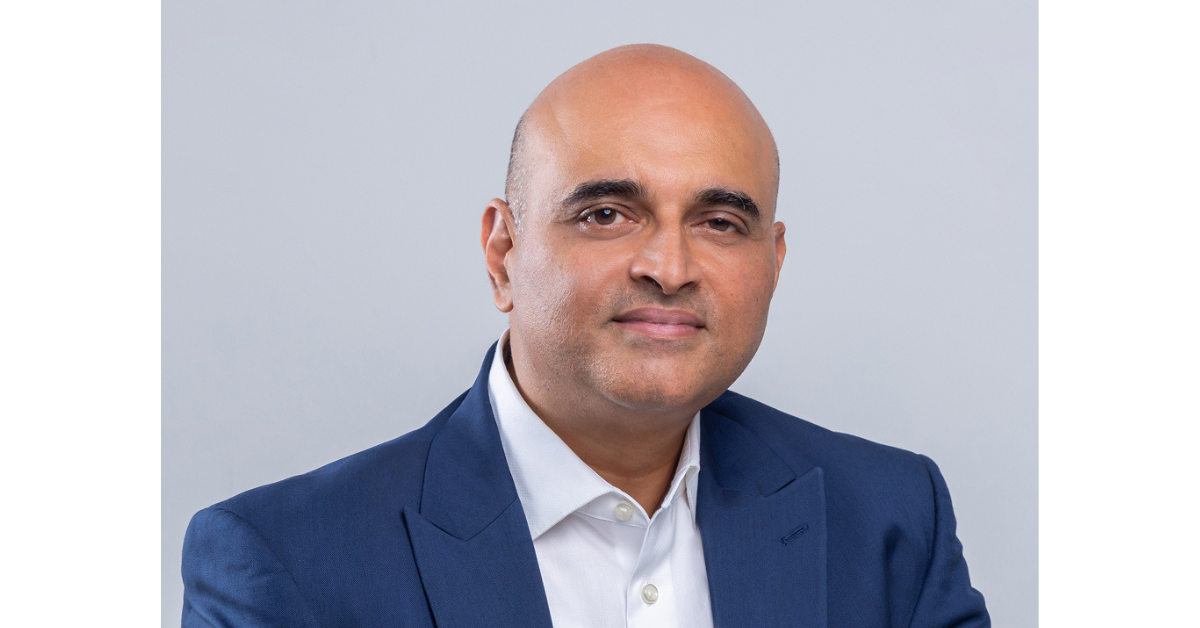
Punit Oza is President & Fellow of the Institute of Chartered Shipbrokers, UK, and a Senior Adjunct Fellow at the Maritime & Port Authority of Singapore Academy. With over three decades in dry bulk shipping — spanning Precious Shipping, Noble Group, and Torvald Klaveness — he now lectures globally on geopolitical risk and its impact on trade flows, and hosts a monthly podcast on geopolitics and maritime trade with Seatrade.
 Join our WhatsApp channel for more updates:
 Subscribe to our YouTube channel for more updates: