




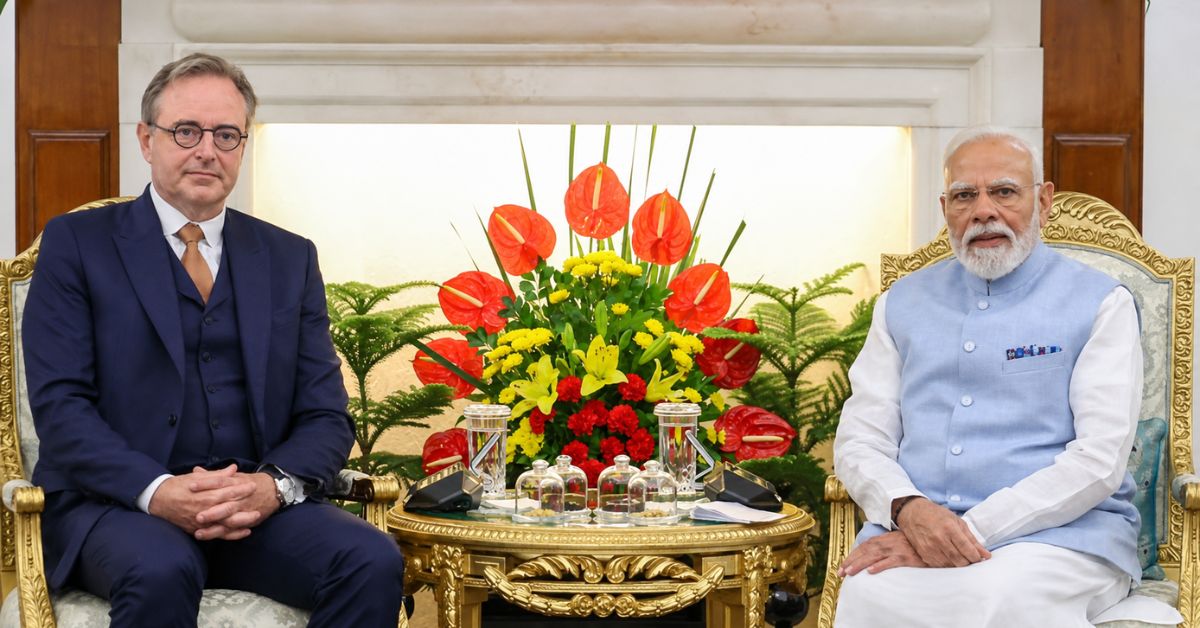

India and Belgium agreed to strengthen cooperation across trade, defence, clean energy, critical minerals, semiconductors, research and talent mobility, Prime Minister Narendra Modi and Belgian Prime Minister Bart de Wever said following talks in India on September 3.
What did the two countries agree to?
Modi said the talks with de Wever resulted in an agreement to deepen cooperation across the listed sectors, along with the establishment of an Investment Fast-Track Mechanism designed to facilitate and accelerate investment by Belgian companies in India. The two countries also set a target of doubling bilateral trade over the next five years.
On the defence side, the agreement covers enhanced collaboration including co-production, military exchanges and intelligence sharing, along with the appointment of a resident defence attaché in Brussels.
How does this fit into the broader India-EU trade relationship?
The bilateral pact comes against the backdrop of the long-delayed India-EU free trade agreement, concluded on January 27, 2026, which will cut tariffs on most goods traded between the two sides. The deal is aimed at boosting two-way trade and reducing both sides’ reliance on the United States amid rising global trade tensions. European Commission President Ursula von der Leyen said in June that the agreement is expected to be formally signed by the end of 2026.
What is the economic backdrop?
The agreement comes as India’s economy, Asia’s third-largest, posted year-on-year growth of 7.8 percent in the April-June quarter, beating forecasts, according to data published on August 31.
 Join our WhatsApp channel for more updates:
 Subscribe to our YouTube channel for more updates: