



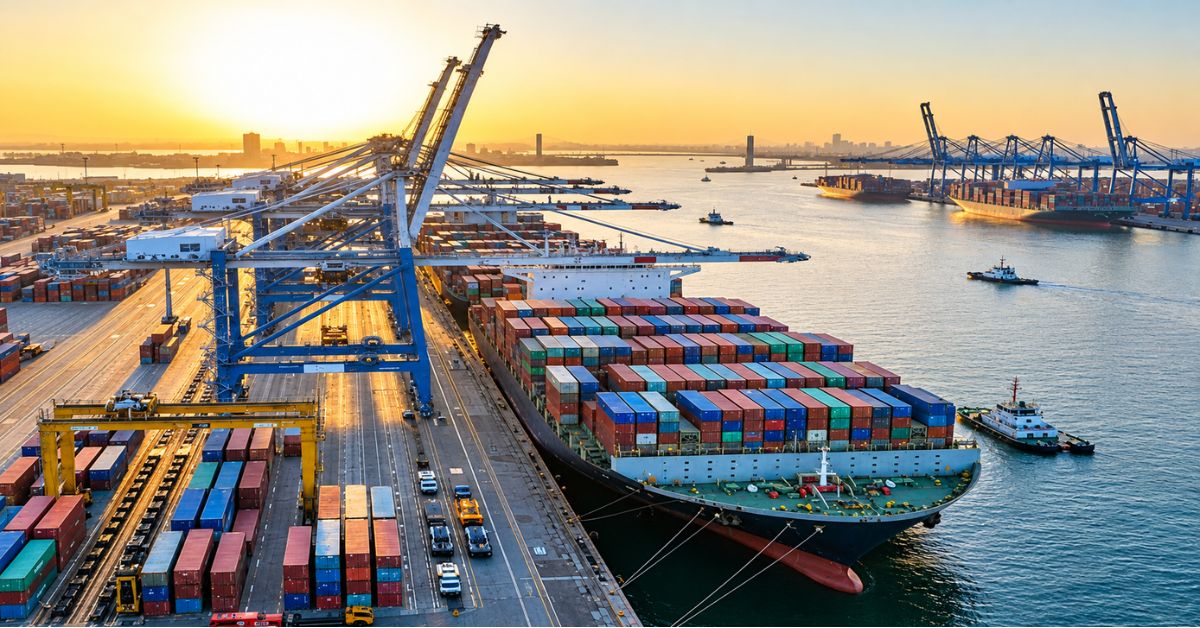

India’s Ministry of Environment, Forest and Climate Change (MoEFCC) has doubled the validity period of environmental clearances (ECs) granted to ports, harbors, breakwaters and dredging projects from 10 years to 20 years, in a move set to give the country’s port and maritime infrastructure sector greater long-term regulatory certainty.
What Has Changed Under the New Rules
The extension was notified on Monday, 22 September 2026, through an amendment to the Environment Impact Assessment (EIA) Notification, 2006. Under the previous framework, environmental clearances for such projects were valid for 10 years, with provision for a further one-year extension. Under the revised rules, an EC for ports, harbors, breakwaters and dredging projects will now be valid for 20 years from the outset, with provisions for two additional extensions of up to five years each, taking the maximum possible validity to 30 years.
Why Did the Government Extend the Validity Period
According to the notification, the matter was initially referred to the Sectoral Expert Appraisal Committee, which found that the existing 10-plus-one-year validity period was insufficient given the long gestation periods typically associated with port and harbour development. The committee recommended that the validity be revised to 15 years, with an option for a further five-year extension, a proposal that formed the basis of a draft notification issued by the ministry on 20 May 2026.
Following a stakeholder consultation meeting held on 16 June 2026 under the chairmanship of Shipping Secretary Vijay Kumar, the ministry reconsidered its position. During those discussions, the shipping ministry requested that the validity period be aligned with the project period itself, or fixed at 30 years, whichever is greater, for port projects. After further consultation, the environment ministry settled on an initial validity of 20 years, bringing the framework for port projects closer to that already applied to mining projects, where clearances can run for up to 30 years.
How Will Extensions Beyond 20 Years Be Granted
Under the amended provisions, the Expert Appraisal Committee (EAC) or the relevant State-Level Expert Appraisal Committee will examine a project’s existing environmental safeguards before recommending any extension beyond the initial 20-year period. Where a five-year extension is sought, the committee may also recommend additional measures be incorporated into the project’s Environmental Management Plan.
The notification further provides that, in deserving cases where a project has still not been operationalised even after the first five-year extension, the EAC or state-level EAC may examine the matter afresh and recommend a further extension, subject to enhanced environmental safeguards.
What This Means for India’s Port Sector
The change is expected to reduce regulatory friction for large-scale, capital-intensive port and harbour projects, many of which face extended construction and commissioning timelines due to factors such as land acquisition, dredging schedules, financing cycles and phased development plans. By reducing the frequency with which project developers must seek fresh clearances or renewals, the government aims to improve ease of doing business in the maritime infrastructure sector while retaining oversight through periodic committee review at the point of extension.
The move comes as India continues to expand port capacity under its broader maritime development agenda, with several greenfield port, shipbuilding cluster and dredging projects currently at various stages of planning and construction across the country’s coastline.
 Join our WhatsApp channel for more updates:
 Subscribe to our YouTube channel for more updates: