




India tops global ship recycling rankings
India has become the world’s largest ship recycling nation, achieving a key target of the Maritime India Vision (MIV) 2030 several years ahead of schedule. According to United Nations Conference on Trade and Development (UNCTAD) data cited in the report, India’s ship recycling volume rose to 2.99 million gross tonnes (GT) in 2025, up from 1.86 million GT in 2024, representing nearly 60 per cent growth in a single year and lifting its global market share from 30.1 per cent to 35.4 per cent.
Policy reforms and legal framework drive growth
The surge in ship recycling activity is attributed to a series of policy reforms and regulatory measures led by the Ministry of Ports, Shipping and Waterways. A central pillar has been the Recycling of Ships Act, 2019, which aligns India’s regulatory framework with the Hong Kong International Convention for the Safe and Environmentally Sound Recycling of Ships, thereby upgrading environmental and safety standards across the sector.
Alongside the legal reforms, the government has extended financial support to modernise recycling yards, upgrade infrastructure and improve compliance with international norms. Union Minister Sarbananda Sonowal highlighted that the milestone reflects sustained reform efforts, closer industry–government collaboration and a stronger focus on sustainable ship recycling practices.
Alang–Sosiya remains the backbone of the industry
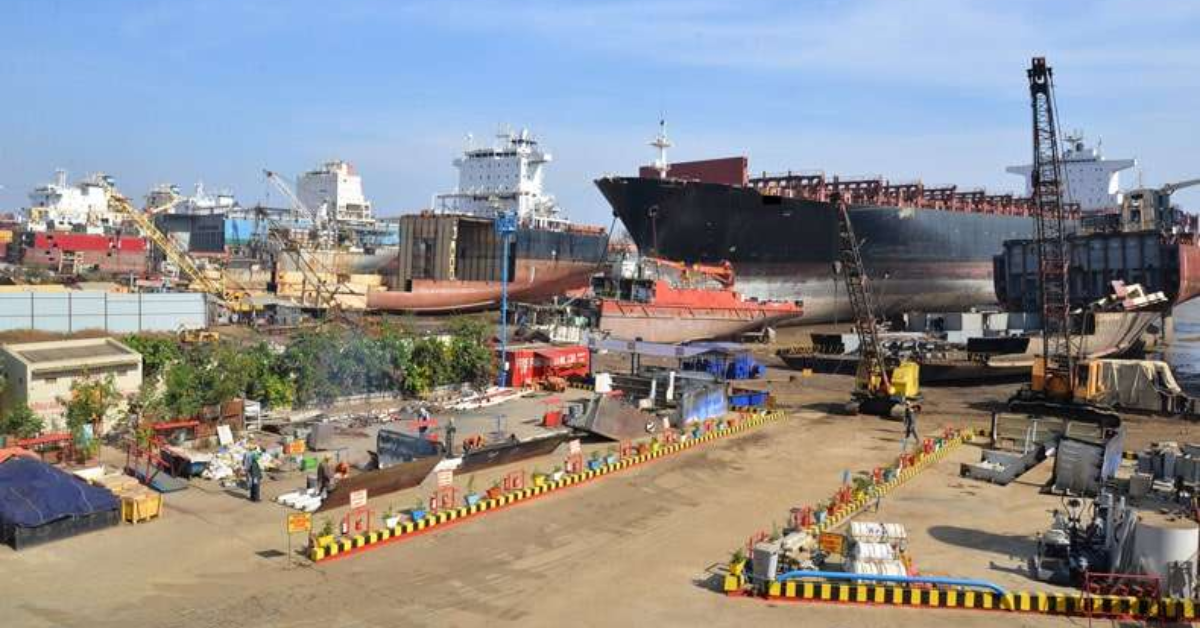
India’s ascent to the top of the global ship recycling market continues to be anchored by the Alang–Sosiya cluster in Gujarat, widely regarded as the world’s largest ship recycling yard. The complex handles the majority of the country’s ship dismantling and recycling volumes, and has been central to India’s ability to scale capacity and attract more end-of-life vessels.
To further strengthen the ecosystem, the government has introduced the Ship-breaking Credit Note Scheme, which offers incentives linked to the scrap value of recycled vessels. The scheme is designed to support both ship recycling and domestic shipbuilding by encouraging owners to recycle vessels in India and re‑channel value into the local maritime and steel supply chains.
Rising demand for sustainable ship recycling
Industry stakeholders view India’s improved compliance with global environmental and safety regulations as a key factor in attracting more international shipowners seeking responsible recycling options. With thousands of ageing ships expected to enter the recycling cycle in the coming years due to stricter emission rules and fleet renewal, India is positioning itself as a preferred global hub for sustainable ship dismantling.
Policymakers see this as a major growth opportunity to expand capacity, draw fresh investment and generate employment, while reinforcing the country’s broader maritime ambitions under Maritime India Vision 2030. As the world’s largest ship recycling nation, India is now better placed to influence global standards in green ship recycling and strengthen its role in the circular economy of the maritime sector.
 Join our WhatsApp channel for more updates:
 Subscribe to our YouTube channel for more updates: