



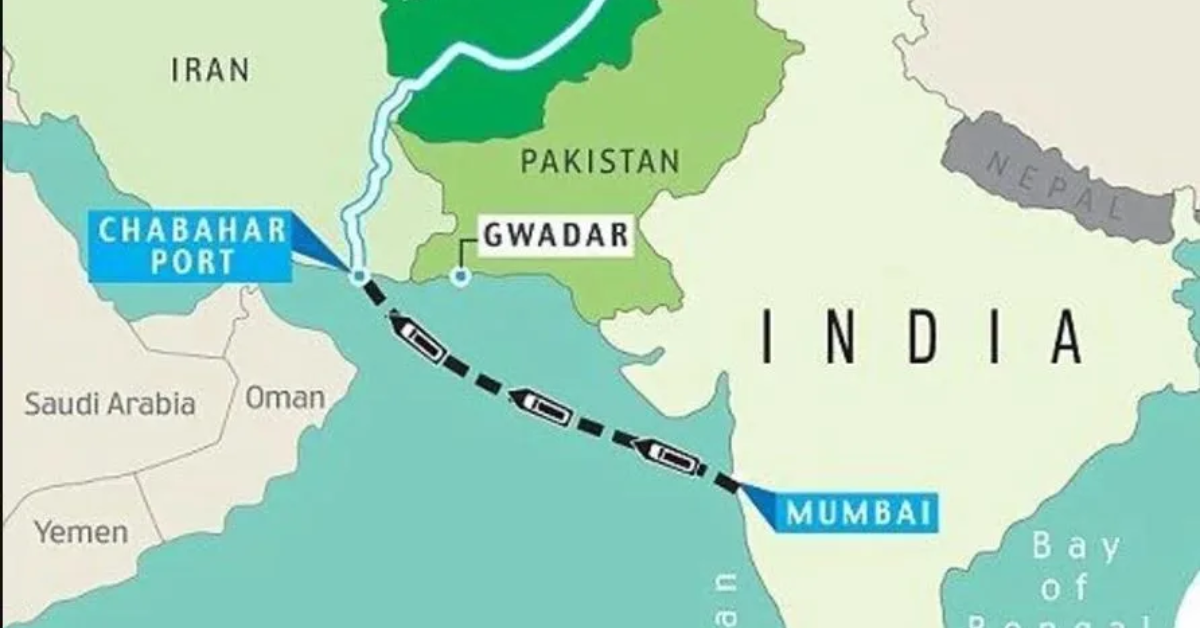

India is exploring a temporary transfer of its stake in Iran’s Chabahar Port to a local Iranian entity as a US Treasury sanctions waiver — the last protection shielding India Ports Global Limited’s operations at the Shahid Beheshti terminal from US sanctions — expires on April 26. The proposal, confirmed by multiple sources cited by Bloomberg, Business Standard, and The Week, involves India Ports Global divesting its holding in the India Ports Global Chabahar Free Zone to an Iranian partner, with an explicit guarantee that the stake would be returned to India once US sanctions on Iran are eased or lifted.
India has invested approximately USD 120 million in Chabahar since signing a 10-year operational agreement with Iran’s Ports and Maritime Organisation in 2024. The port has been strategically vital as India’s only direct maritime access route to Afghanistan and Central Asia that bypasses Pakistan — a cornerstone of the International North-South Transport Corridor vision and a USD 7,200-kilometre multimodal trade route linking India with Russia and Europe. The US Treasury had communicated to India in October 2025 that the Chabahar sanctions waiver would expire on April 26, 2026, leaving New Delhi with a narrowing window to structure an arrangement that protects Indian companies from sanctions liability while preserving long-term strategic access.
Why India Is Not Walking Away Permanently
The Ministry of External Affairs spokesperson confirmed that India remains ‘engaged with the US side in working out this arrangement’ — language that explicitly signals parallel negotiation for either a waiver extension or a mutually acceptable operational continuity mechanism. The IPGL stake transfer, if executed, is being framed by Indian officials as a ‘tactical recalibration’ rather than a permanent exit — an operational adjustment forced by the US sanctions timeline that does not reflect a change in India’s long-term strategic assessment of Chabahar’s value.
Analysts note that a complete Indian withdrawal from Chabahar would create a strategic vacuum almost certain to be filled by China, which has a higher tolerance for US sanctions risk and has been seeking greater influence in Iran’s port infrastructure as part of its 25-year comprehensive cooperation agreement with Tehran. The Trump administration’s threat to impose a 25 per cent additional tariff on any country maintaining trade ties with Iran creates a financial deterrent for India — where US trade is a vastly larger economic relationship than Iran trade — but the Chabahar Port’s strategic role in India’s Central Asia connectivity architecture makes a clean exit politically and strategically difficult. The temporary transfer with guaranteed return is India’s attempt to thread that needle.
 Join our WhatsApp channel for more updates:
 Subscribe to our YouTube channel for more updates: