



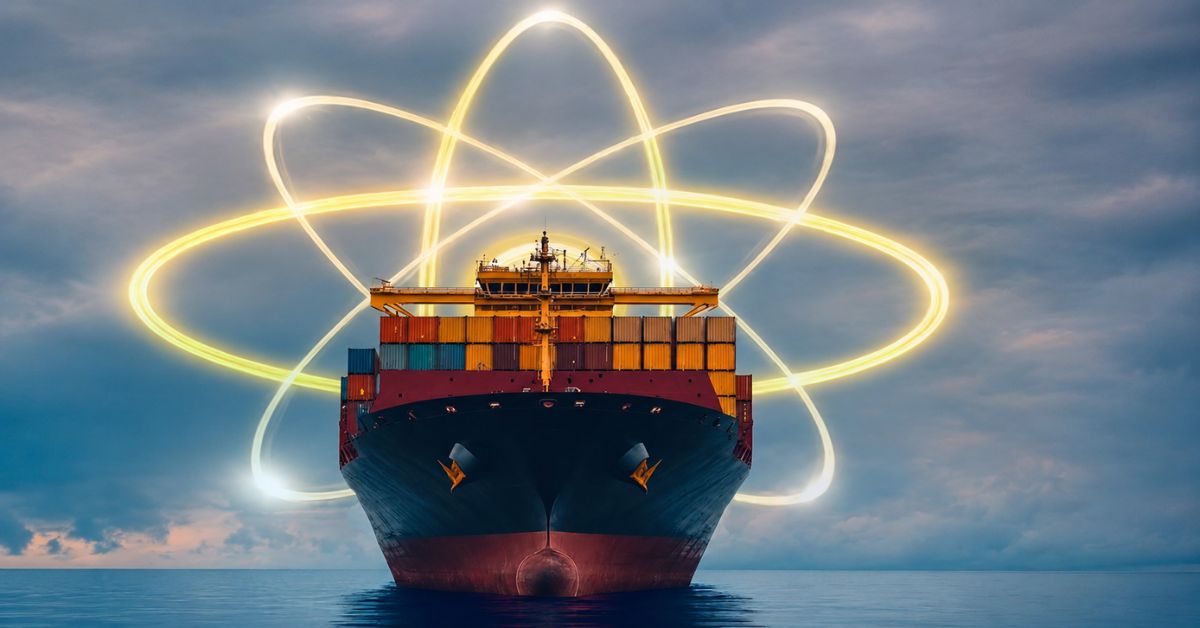

India on Wednesday joined a global initiative to explore the use of nuclear power at sea, including for floating power plants and civilian ships. The International Atomic Energy Agency launched the Atomic Technologies Licensed for Applications at Sea (ATLAS) initiative at a ministerial conference in Washington, attended by Atomic Energy Commission Chairman Ajit Kumar Mohanty.
The ATLAS initiative will study the use of small modular reactors (SMRs) for commercial shipping and offshore energy, as countries look at low-carbon power options for maritime use. India said the platform fits with its long-term energy plans and its expanding shipping sector.
Launching the initiative, IAEA Director General Rafael Mariano Grossi said that by bringing together the nuclear and maritime sectors, the world has the opportunity to shape the future of two crucial industries, energy and shipping, and to build global confidence in the safe, secure and peaceful use of nuclear technology at sea.
Mohanty said the launch of the ATLAS platform was timely as it seeks to advance the safe, secure and sustainable use of nuclear technologies, particularly small modular reactors, for civilian maritime propulsion and offshore energy. He said India’s long coastline and its large number of offshore islands, together with a vast expanding commercial shipping sector, present exciting opportunities for the deployment of small modular reactors in offshore energy supply and potentially the propulsion of civilian vessels.
The ATLAS initiative was formally unveiled at a two-day International High-level Forum hosted by the United States in Washington DC on August 26-27, bringing together around 600 participants from over 50 countries, along with international organisations, industry leaders, the maritime sector and port authorities, marking the first globally coordinated effort to connect the nuclear and maritime sectors. Maritime transport carries around 80% of global trade.
In a joint statement issued at the launch, 25 countries, including India, committed to ATLAS, calling it the first step towards revolutionising the civil nuclear maritime industry. The statement said nuclear energy, in particular from advanced small modular reactors, has the potential to be a safe and viable option for maritime applications, offering the potential for higher-speed maritime transport without the need for frequent refuelling, while innovations such as floating nuclear power plants could deliver reliable electricity to coastal or remote communities and industry.
US Secretary of Energy Chris Wright said at the opening session that the work accomplished at the ministerial brings the world closer to turning the promise of offshore nuclear energy and nuclear-powered shipping into commercial reality, by bringing governments, regulators and industry together to tackle the practical barriers to deployment.
Following the launch, six project groups are being formed to begin practical work this year addressing the safety, security, safeguards and regulatory aspects of nuclear-powered shipping and floating nuclear power plants, taking into account various deployment scenarios.
India’s participation aligns with the country’s broader nuclear ambitions, including its target of 100 GW of nuclear capacity by 2047 and moves to open the sector to greater private participation under the SHANTI Act.
 Join our WhatsApp channel for more updates:
 Subscribe to our YouTube channel for more updates: