
Summary
India and Mexico have formally launched negotiations for a Preferential Trade Agreement after signing Terms of Reference defining the talks’ scope and roadmap. The proposed pact will address goods market access, origin rules and customs procedures, with both countries seeking stronger commercial ties across manufacturing, agriculture, energy and other sectors.
Terms of Reference establish negotiating agenda
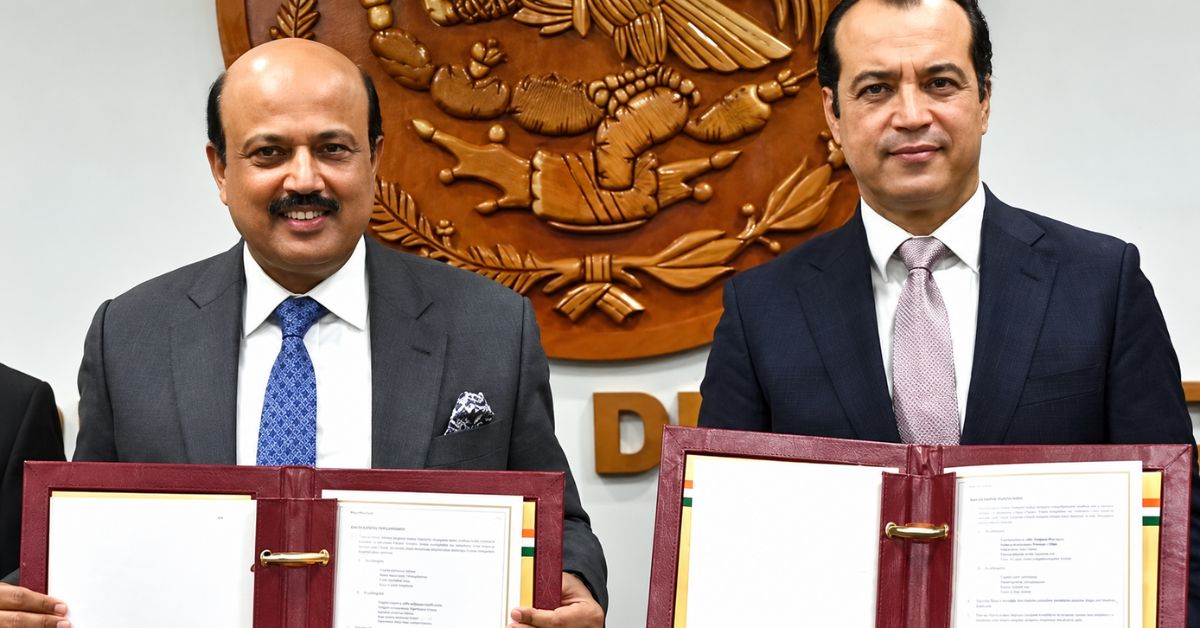
India–Mexico PTA negotiations have formally begun with the signing of Terms of Reference, creating a framework for discussions on preferential trade arrangements between the two economies.
Announced on 28 October 2026, the development establishes the scope, modalities and roadmap for negotiations. The agreement itself remains to be negotiated, and the announcement does not introduce immediate tariff concessions or changes to existing trading conditions.
Both countries intend to pursue a balanced arrangement that expands bilateral commerce, encourages investment and supports more diversified supply chains.
The discussions took place during Commerce Secretary Rajesh Agrawal’s visit to Mexico. Mexico’s Undersecretary of Foreign Trade, Luis Rosendo Gutiérrez Romano, participated on behalf of Economy Secretary Marcelo Ebrard Casaubon.
Goods access and origin rules among priorities
The negotiating framework covers market access for goods, rules of origin, customs procedures and trade facilitation.
Other areas include dispute settlement, sanitary and phytosanitary measures, technical barriers to trade and trade remedies. Together, these subjects address both the terms on which products enter a market and the procedures businesses must follow.
Market-access negotiations will determine which goods could receive preferential treatment. Rules of origin will establish the conditions products must satisfy to qualify for any agreed benefits.
For manufacturers using imported components, those origin requirements will be particularly relevant. A product’s shipment from one country does not, by itself, establish eligibility for preferential treatment under a future agreement.
The announcement does not specify product lists, tariff-reduction schedules or proposed origin thresholds.
Manufacturing sectors offer cooperation opportunities
The two delegations identified automotive, chemicals, electronics, pharmaceuticals and advanced manufacturing among sectors with potential for closer cooperation.
Agri-food, energy, critical minerals and medical devices also feature in the prospective commercial agenda.
The proposed pact seeks to draw on complementary capabilities, including opportunities for Mexican businesses in India and for Indian exporters and investors in Mexico.
Mexico’s connections with global value chains make it relevant to companies examining production partnerships and overseas market development. However, access to Mexico under a future bilateral pact would not automatically confer preferential access to third-country markets. Businesses would still need to meet the requirements applicable to each destination.
Commercial opportunities will therefore depend on the negotiated provisions, product competitiveness and customer demand.
Customs provisions matter for logistics planning
For shippers and logistics providers, customs procedures and trade facilitation are significant parts of the proposed agreement.
Tariff preferences can influence purchasing decisions, while documentation, clearance processes and regulatory requirements affect whether consignments move predictably.
The inclusion of technical barriers and sanitary and phytosanitary measures also matters for regulated products. Manufacturers and agri-food exporters will need to understand how any eventual provisions interact with destination-market standards and approval procedures.
At this stage, the framework identifies subjects for negotiation. It does not establish mutual recognition arrangements, simplified inspections or guaranteed clearance timelines.
Companies planning trade development can use the negotiating agenda to identify the barriers they would like the talks to address.
Leaders’ meeting provided the political foundation
The initiative follows discussions between Prime Minister Narendra Modi and Mexican President Claudia Sheinbaum on the sidelines of the G7 Summit in Canada in June 2025.
The leaders agreed to strengthen and deepen the bilateral partnership. The signing of negotiating terms now provides a structured process for pursuing the trade component of that relationship.
During the latest visit, delegations also reviewed opportunities to expand investment and strengthen connections between businesses in both countries.
Those discussions extend beyond tariff negotiations, recognising that commercial relationships also develop through partnerships, market knowledge and direct contact between companies.
Business mission proposed for early 2027
Both sides discussed organising a Mexican business mission to India during the first quarter of 2027.
The proposed programme would facilitate business-to-business meetings, identify commercial opportunities and strengthen links between productive sectors. Dates, participating companies and sector-specific activities have not been announced.
The next substantive milestone will be progress through negotiating rounds and clarification of potential market-access commitments. For businesses, the immediate opportunity is to assess relevant products, regulatory obstacles and partnership requirements before the agreement’s provisions are settled.
FAQs
What have India and Mexico signed?
They have signed Terms of Reference establishing the framework, scope and roadmap for PTA negotiations.
Are tariff concessions available immediately?
No. Negotiations have begun, but the agreement and its concessions remain to be settled.
Which subjects will the talks cover?
Goods market access, rules of origin, customs procedures, trade facilitation, dispute settlement, regulatory measures and trade remedies.
Which sectors offer potential opportunities?
Identified sectors include automotive, chemicals, electronics, pharmaceuticals, agri-food, energy, critical minerals, medical devices and advanced manufacturing.
When could the Mexican business mission visit India?
The proposed timing is the first quarter of 2027. Detailed arrangements have not been announced.
 Join our WhatsApp channel for more updates:
 Subscribe to our YouTube channel for more updates: