


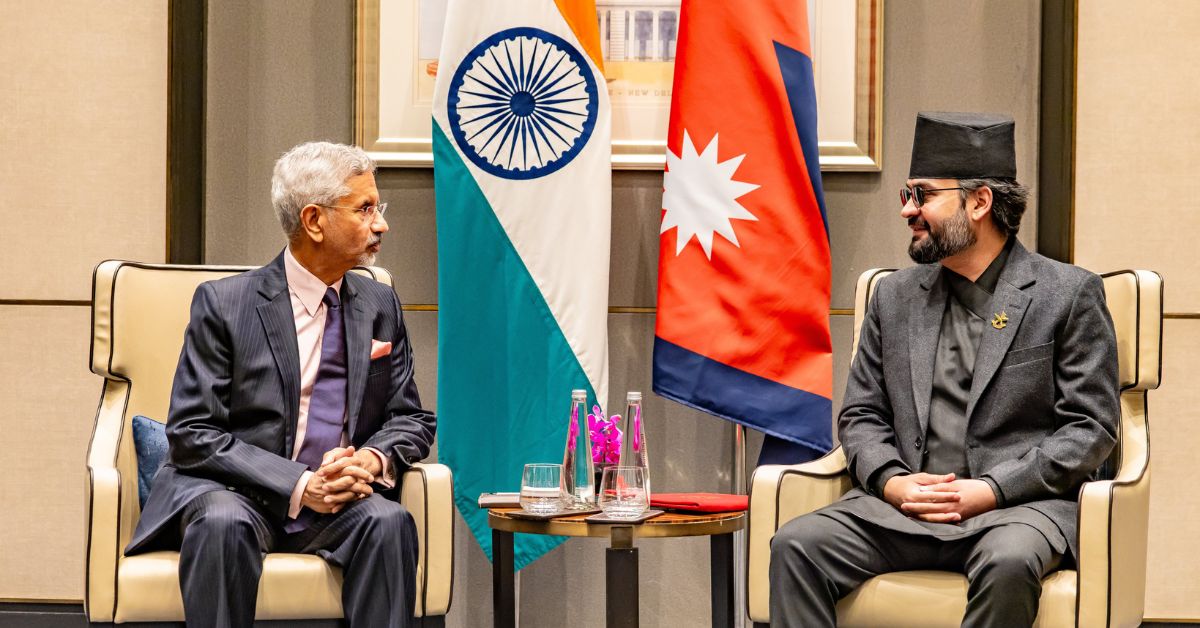

India and Nepal are placing trade, transport connectivity and energy cooperation at the centre of Prime Minister Balendra Shah’s two-day state visit to New Delhi, with bilateral talks with Prime Minister Narendra Modi scheduled for 23 November.
Shah arrived on 22 November for his first bilateral foreign visit since assuming office. For the logistics sector, the discussions bring renewed attention to cross-border rail development and the transit arrangements connecting landlocked Nepal with Indian seaports.
What has been discussed during the visit?
Nepal’s Ministry of Foreign Affairs confirmed that Shah met India’s External Affairs Minister S. Jaishankar on 22 November. Their discussions covered connectivity, trade, transit, commerce and energy, alongside education, culture and people-to-people exchanges.
Nepal’s Finance Minister Swarnim Wagle also addressed a Nepal–India Business Roundtable that evening, engaging Indian business leaders and investors on opportunities in Nepal.
The prime ministerial meeting was expected to review the wider bilateral relationship and advance cooperation across infrastructure, development and technology. Reports ahead of the talks indicated that project inaugurations and agreements were planned, but these should be distinguished from formally announced outcomes.
Which railway connections are under consideration?
The proposed Raxaul–Kathmandu railway remains an important element of connectivity discussions. The project could provide a cross-border link for both passengers and freight, although the pre-visit reporting did not establish a new construction award, financing agreement or completion timetable.
A passenger service between Ayodhya and Janakpur Dham was also expected to feature during the visit. Its primary relevance is passenger and pilgrimage connectivity, distinct from the freight potential of the Raxaul–Kathmandu proposal.
The Kathmandu rail connection has a longer diplomatic history. In April 2018, the two governments issued a joint statement on expanding rail linkages between Raxaul and Kathmandu, alongside an initiative on inland-waterway connectivity. The current discussions therefore build on an established cooperation agenda.
How does Nepal access international shipping networks?
Nepal’s third-country trade moves through Kolkata/Haldia and Visakhapatnam, according to the Embassy of India in Kathmandu. These gateways connect Nepalese importers and exporters with international shipping services through Indian transit routes.
An agreement signed in February 2016 enabled transit traffic through Visakhapatnam, including connections with the inland container depot at Birgunj. This expanded Nepal’s gateway options beyond Kolkata and Haldia.
The revised Treaty of Transit, signed on 1 June 2023, provides for movement through India’s road, railway, inland-waterway and port networks under agreed arrangements.
Rail freight is governed separately by the bilateral Rail Services Agreement of 2004. A 2021 amendment liberalised rail-freight traffic and updated the framework to reflect operational and infrastructure developments.
Together, these arrangements form the existing basis for Nepal’s access to maritime trade. Further connectivity initiatives would operate within, or require additions to, that framework.
Why are energy and trade central to the talks?
India is Nepal’s largest trade, transit and investment partner. It receives approximately 80% of Nepal’s goods exports and accounts for nearly one-third of foreign direct investment into the country, according to reporting ahead of the visit.
Electricity trade has also become a significant component of the relationship. Nepal earned approximately 1,800 crore Nepalese rupees from net electricity exports to India during FY2025–26.
The discussions are expected to address hydropower, infrastructure and broader economic engagement. For freight operators and cargo owners, the material outcomes will be any confirmed changes to transport infrastructure, border procedures or transit arrangements, rather than the wider statements of cooperation alone.
 Join our WhatsApp channel for more updates:
 Subscribe to our YouTube channel for more updates: