

Shipping’s efforts to encourage seafarers to seek mental health support could fall short if digital wellbeing services do not guarantee confidentiality, according to Captain Pradeep Chawla, CEO of MarinePALS.
In an industry where employment security, medical fitness and future contracts remain significant concerns, seafarers may hesitate to disclose mental health difficulties if they believe their responses could be accessed by employers or vessel managers.
Chawla said that although the maritime sector has become more open to discussing stress, fatigue and isolation, concerns about professional consequences continue to discourage crew members from seeking assistance.
For seafarers working on fixed-term contracts and supporting families, disclosing mental health difficulties can be perceived as a potential employment risk. Digital wellbeing platforms integrated into company systems may therefore raise concerns about who can access personal information and whether disclosures could influence future employment decisions.
The latest Seafarers Happiness Index figures highlight the challenges facing the workforce. The index declined from 7.18 in the first quarter of 2026 to 6.87 in the second quarter. Shore leave recorded a score of 5.72, while workload management stood at 6.20. Interaction with fellow crew members scored 7.49, and connectivity recorded 7.46.
These figures indicate the importance of social interaction and communication with families in supporting seafarer wellbeing, even as workload pressures and limited opportunities for shore leave remain concerns.
Geopolitical disruptions, vessel rerouting and commercial pressures have added to existing challenges, including excessive workloads, insufficient recovery time and inconsistent shore leave opportunities. Chawla argued that encouraging resilience without addressing these underlying conditions risks placing additional responsibility on seafarers rather than tackling the causes of workplace stress.
Confidentiality remains central to digital wellbeing platforms
Digital platforms can provide access to mental health resources, particularly for seafarers working aboard vessels where face-to-face support may not be readily available. However, their effectiveness depends on whether users trust the confidentiality of the services.
Chawla said employers need access to anonymised workforce trends to understand broader wellbeing challenges and improve working conditions, but should not have access to individual responses or personal assessments.
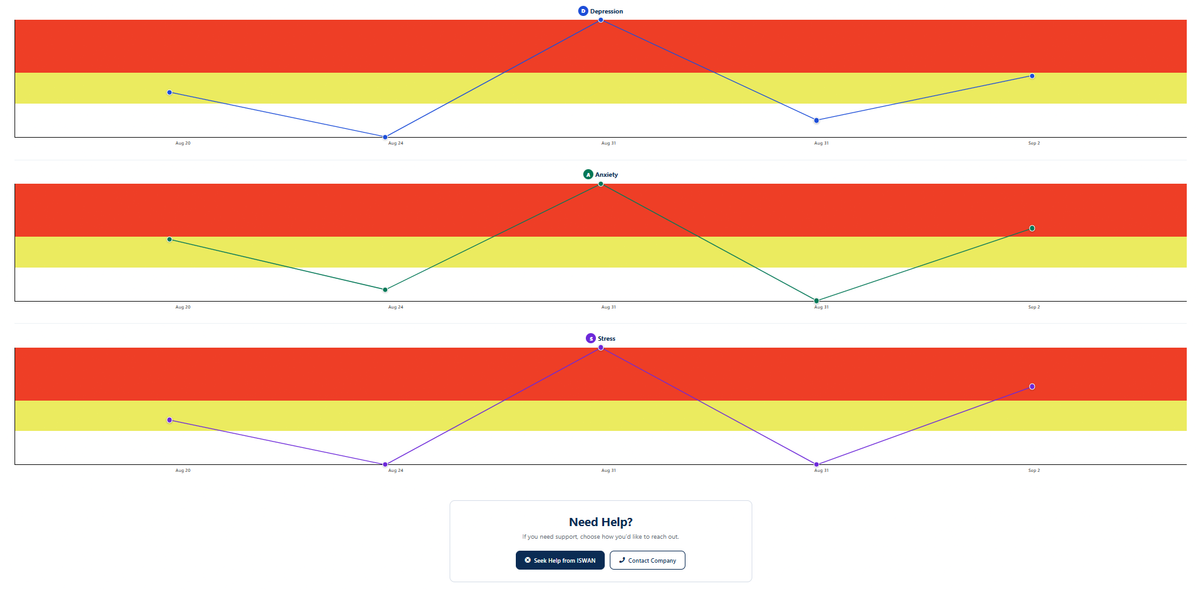
MarinePALS has incorporated this approach into MyMood, a self-assessment feature available through its platform. The tool asks users a series of questions and provides a colour-coded indication of whether additional support may be beneficial. According to the company, the assessment is based on an established psychological test.
Individual responses and assessment results are not accessible to ship managers or employers. MarinePALS also states that it does not share this information with employers.
Where the assessment indicates that further assistance may be appropriate, users are directed to the International Seafarers’ Welfare and Assistance Network (ISWAN), an independent maritime charity that provides confidential support to seafarers and their families.
MyMood is designed as an initial self-assessment resource rather than a diagnostic tool or emergency service. It does not replace professional mental health care.
Technology cannot replace improvements in working conditions
The growing use of digital wellbeing systems also raises questions about data access and employer monitoring. While aggregated information can help companies identify workforce-wide concerns, access to individual mental health disclosures could undermine the trust required for employees to use these services.
Chawla said wellbeing initiatives should not turn personal distress into a workplace performance indicator. If seafarers perceive self-assessment tools as monitoring systems, they may be less willing to provide honest responses or seek assistance.
He also emphasised that digital solutions cannot independently address the underlying causes of mental health difficulties at sea. Inadequate rest, bullying, poor leadership, social isolation and unsafe manning arrangements require direct intervention from shipowners and managers.
Mental health difficulties can develop gradually, with early signs including disrupted sleep, withdrawal, irritability and persistent worry. Seafarers may recognise these changes before feeling comfortable discussing them with managers, colleagues or medical professionals.
Confidential self-assessment tools can provide an opportunity to identify potential concerns and consider appropriate next steps before difficulties escalate.
Chawla said the effectiveness of maritime wellbeing programmes should be assessed by whether seafarers trust and use them, rather than by the level of information available through employer-facing dashboards.
For shipping companies seeking to encourage earlier intervention, maintaining a clear separation between personal health disclosures and employment decisions will remain essential to building confidence in digital mental health support.
FAQs
Why are seafarers reluctant to seek mental health support?
Seafarers may fear that disclosing mental health difficulties could affect their medical fitness status, employment position or opportunities for future contracts.
What is MyMood on the MarinePALS platform?
MyMood is a digital self-assessment tool that asks users a series of questions and provides a colour-coded indication of whether further mental health support may be beneficial.
Can employers access individual MyMood assessment results?
According to MarinePALS, ship managers and employers cannot access individual responses or assessment results, and the platform does not share this information with them.
Which organisation provides additional support through MyMood?
Users who may require further assistance are directed to the International Seafarers’ Welfare and Assistance Network (ISWAN), which provides confidential support to seafarers and their families.
Can digital wellbeing tools replace professional mental health care?
No. Digital self-assessment tools can help identify potential concerns but do not provide a medical diagnosis, replace professional care or serve as emergency services.
 Join our WhatsApp channel for more updates:
 Subscribe to our YouTube channel for more updates: