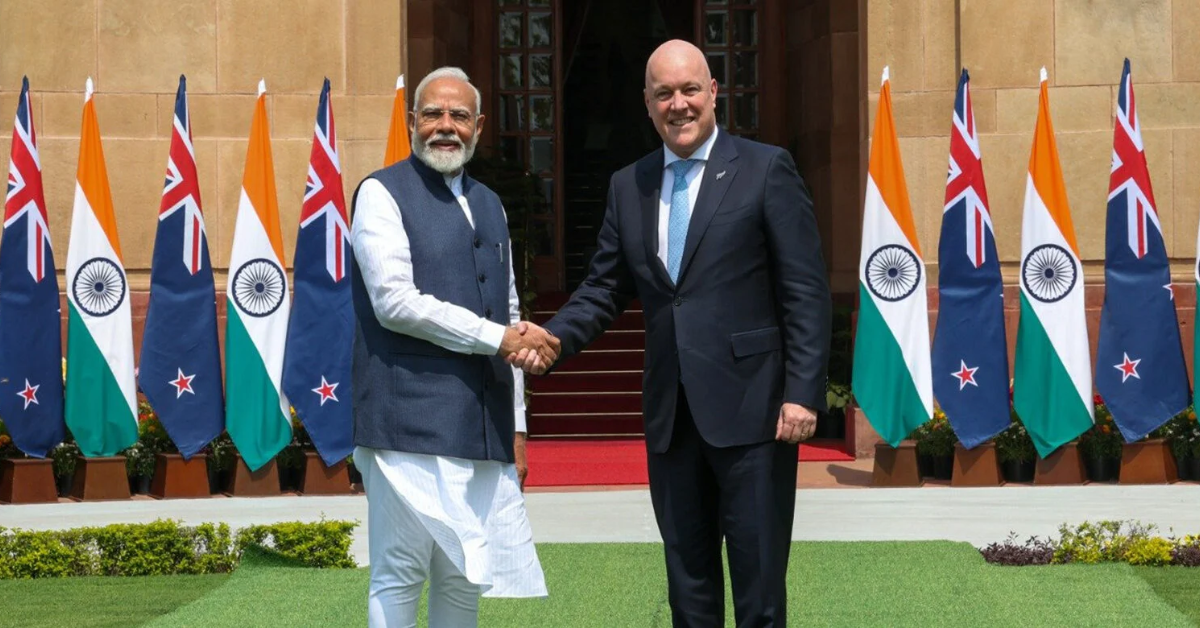

India’s 17th operational free trade agreement with New Zealand is now in effect, giving Indian goods—including textiles, leather, engineering products and pharma—duty-free entry into the New Zealand market from day one.
The India-New Zealand Free Trade Agreement (FTA), signed on April 27, 2026, came into force on Tuesday, creating fresh opportunities for Indian exporters, MSMEs, service providers and investors. It is India’s seventh trade pact to become operational in the past five years and its 17th active FTA overall.
What the FTA Means for Indian Trade
Under the agreement, 100 per cent of India’s export tariff lines will receive duty-free access to New Zealand from day one. This is expected to strengthen the competitiveness of labour-intensive sectors such as textiles and apparel, leather and footwear, engineering goods, auto components, gems and jewellery, agriculture and processed foods, and pharmaceuticals.
The pact also covers services, investment, skills and mobility, extending its relevance beyond merchandise trade. Provisions on duty-free inputs, bilateral cumulation, customs facilitation and investment promotion could support deeper supply-chain integration between the two economies.
Boost for MSMEs and Logistics
MSMEs in textiles, leather, footwear and engineering goods are among the key beneficiaries, as tariff elimination lowers landed costs and improves price competitiveness in New Zealand. For logistics providers, freight forwarders and port operators, the agreement could generate additional cargo flows across India–Oceania trade lanes.
New Zealand has committed foreign direct investment worth USD 20 billion over more than 15 years. Experts expect the FTA to support higher FDI inflows into India, although the eventual scale will depend on private-sector investment decisions.
Trade and Strategic Context
Bilateral trade declined about 11 per cent to USD 1.15 billion in 2025-26 from USD 1.3 billion in the previous fiscal year. India exported goods worth USD 566.51 million and imported USD 589.1 million, leaving a marginal trade deficit of USD 22.59 million.
The agreement follows negotiations launched in 2010, stalled in 2015 and revived in March 2025. It also strengthens India’s trade network with developed economies and supports its strategic positioning in the Indo-Pacific, according to industry experts.
India’s services access includes emerging areas such as Ayush, yoga instruction and student mobility, including post-study work visa provisions. The two countries have also set a target of doubling bilateral trade by 2030.
FAQs
1. What is the India-New Zealand Free Trade Agreement?
It is a comprehensive trade pact signed on April 27, 2026, covering goods, services, investment, customs facilitation, skills and professional mobility. It came into effect on October 20, 2026.
2. Which Indian sectors will benefit most?
Textiles and apparel, leather and footwear, engineering goods, auto components, gems and jewellery, agriculture and processed foods, pharmaceuticals and other manufacturing sectors are expected to gain.
3. Will Indian exports get duty-free access immediately?
Yes. All Indian export tariff lines receive duty-free access to New Zealand from the first day of the agreement’s operation.
4. How does the FTA affect Indian MSMEs?
MSMEs in labour-intensive sectors can benefit from lower tariffs, improved market access and stronger competitiveness in New Zealand, particularly in textiles, leather, footwear and engineering goods.
5. What is the trade target under the agreement?
India and New Zealand aim to double bilateral trade by 2030. Bilateral trade stood at USD 1.15 billion in 2025-26.
 Join our WhatsApp channel for more updates:
 Subscribe to our YouTube channel for more updates: