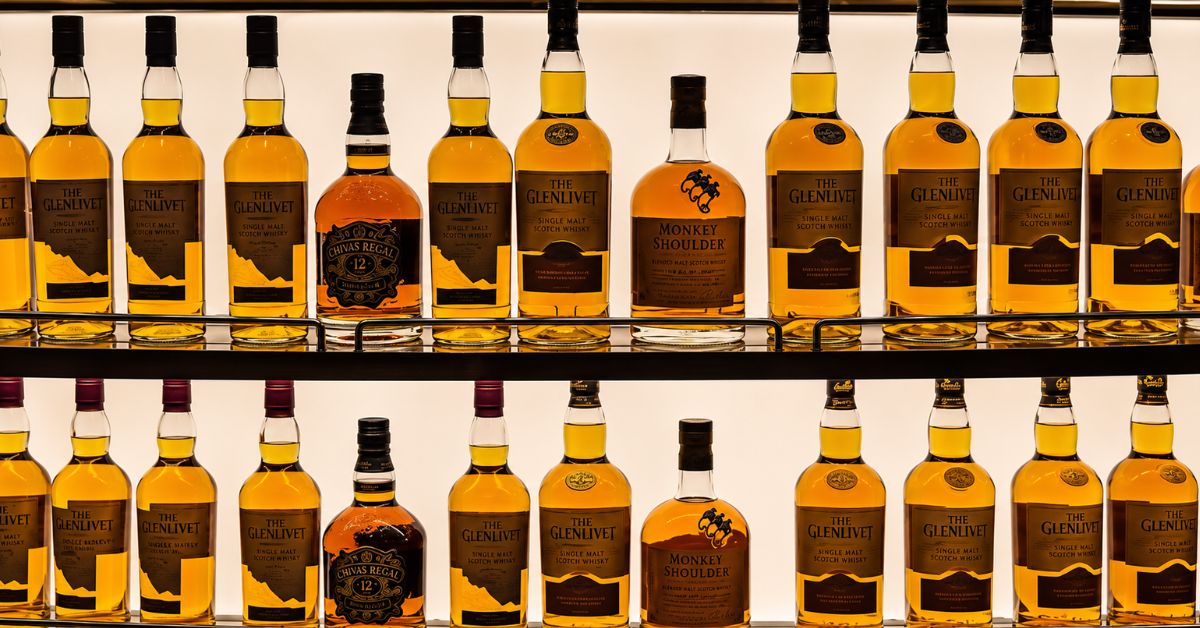

India’s Commerce Secretary Rajesh Agrawal said on 13 November that the government expects to resolve a customs classification dispute that has held up dozens of containers of bulk Scotch whisky at Indian ports. Customs investigators are seeking a 150% duty on the shipments, while importers are claiming the 75% preferential rate under the India–United Kingdom trade agreement. Agrawal said India would honour its tariff commitments and that the Department of Revenue was working with stakeholders to resolve the issue within days.
Why bulk Scotch whisky shipments are held at Indian ports
The dispute centres on how the cargo is classified when it enters India. Heading 2208 of the Harmonised System (HS), the international framework used to classify traded goods, covers spirits including whisky. Customs investigators have argued that some shipments should fall under heading 2106 as compound alcoholic preparations because the product arrives at higher strength and undergoes further processing in India. That classification would attract the 150% rate sought by investigators.
Importers maintain that the product remains Scotch whisky when shipped in bulk for blending or bottling in India. Agrawal described the dispute as a technical question involving tariff lines that carry different rates. The immediate issue for cargo clearance is whether the product as imported meets the description and origin requirements for the preferential tariff.
Which importers are affected by the customs hold?
Shipments linked to Pernod Ricard and Diageo are among those awaiting clearance. The Directorate of Revenue Intelligence (DRI), which operates under the Finance Ministry, circulated a memorandum on 4 November asking customs officials to apply the higher rate to bulk shipments it considers compound alcoholic preparations. The Department of Revenue has since been engaging with industry representatives on the classification issue.
Bulk shipments account for about 80% of India’s Scotch whisky imports by volume, according to industry estimates. Indian beverage companies use the imported spirit for domestic blending and bottling, including in whiskies made with other spirits and ingredients. The clearance delays therefore affect a supply chain that extends from Scottish distilleries and Indian ports to local production facilities.
What the India–UK trade agreement says about Scotch tariffs
The India–UK Comprehensive Economic and Trade Agreement (CETA) entered into force on 15 July 2026. It reduced the tariff on qualifying Scotch whisky under HS subheading 2208.30 from 150% to 75%, with staged cuts taking the rate to 40% over ten years. The concession applies to eligible whisky tariff lines, including those covering Scotch imported in containers larger than two litres.
The agreement’s tariff schedule establishes the preferential rate. The pending customs decision will determine whether the bulk consignments held at ports qualify under that schedule. Agrawal’s remarks on 13 November indicated that discussions were continuing.
FAQs
What customs duty applies to qualifying Scotch whisky imports from the UK?
The preferential tariff is 75%, down from 150% when the agreement took effect. It is scheduled to fall to 40% over ten years.
Why are bulk Scotch whisky containers awaiting clearance?
Customs investigators and importers disagree on whether the consignments should be classified as whisky or as compound alcoholic preparations. The classification determines whether the shipments qualify for the lower rate.
 Join our WhatsApp channel for more updates:
 Subscribe to our YouTube channel for more updates: