





Summary
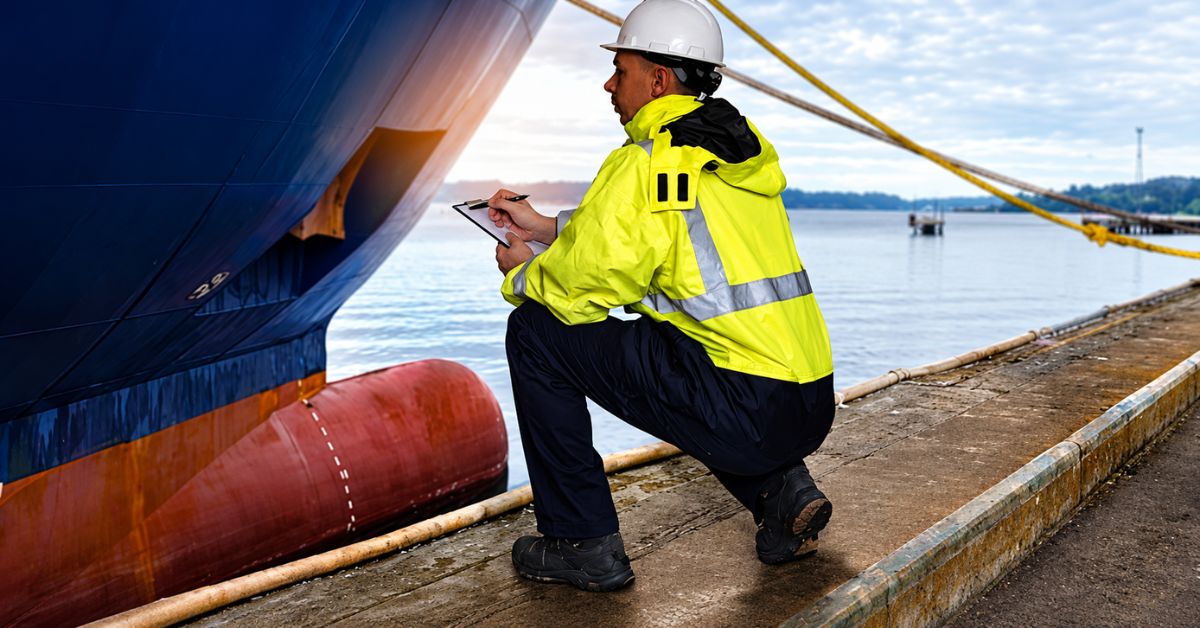
India detained 64 foreign-flagged vessels in 2025 after conducting 607 initial Port State Control inspections, an 18.3% increase over the previous year. The annual inspection findings highlight continuing maintenance and operational shortcomings, with ageing ships and certain vessel categories recording higher detention rates and reinforcing the case for targeted oversight.
More inspections uncover persistent deficiencies
India ship safety inspections increased in 2025, with maritime authorities identifying 2,595 deficiencies across 607 initial inspections of foreign-flagged vessels visiting Indian ports.
The Port State Control and Flag State Inspection Annual Report 2025, published by the Directorate General of Maritime Administration under the Ministry of Ports, Shipping and Waterways, recorded 64 detentions, equivalent to approximately 10.5% of inspections.
Only 156 inspected vessels had no deficiencies, representing 25.7% of the total. The average deficiency index stood at 4.28 per inspection.
Detentions increased from 39 in 2024, indicating that the expansion in inspection activity was accompanied by more interventions requiring vessels to address serious shortcomings before continuing operations.
The findings concern the vessels inspected and should be read in the context of a system that targets ships according to their risk profiles.
Ageing vessels show weaker compliance
Vessel age emerged as an important indicator of compliance performance.
Ships older than 20 years recorded an average deficiency index of 6.07, compared with 1.88 for vessels aged up to 10 years. Just 15.38% of the oldest group had no deficiencies, against nearly 48% of the youngest group.
Among ships older than 20 years, 25 were detained following 169 inspections, a detention rate of approximately 14.8%.
Vessels in the 10–20-year category accounted for the largest inspection group. Authorities conducted 340 inspections and detained 35 ships, producing a detention rate of approximately 10.3%.
The age-related differences strengthen the case for directing inspection resources towards vessels with greater maintenance and operational risks. Age alone, however, does not establish seaworthiness; equipment condition, crew competence and operating practices remain central considerations.
Tankers and container ships draw attention
Bulk carriers accounted for 268 inspections, approximately 44% of the total, and registered 14 detentions. Their detention rate was about 5.2%.
Container ships recorded 12 detentions from 71 inspections, or approximately 16.9%. Oil tankers registered 11 detentions from 36 inspections, equivalent to about 30.6%.
Chemical tankers accounted for seven detentions from 68 inspections. Tugboats also recorded seven detentions, although from a much smaller sample of 10 inspections.
These variations show why detention totals and rates need to be considered together. Bulk carriers generated the largest inspection workload, while some smaller groups recorded substantially higher proportions of detained vessels.
The results point towards differentiated monitoring rather than uniform inspection intensity across every ship category.
Technical oversight shows a marked divide
The report also identified differences associated with recognised organisations responsible for statutory technical oversight.
Vessels overseen by organisations belonging to the International Association of Classification Societies accounted for 566 inspections and 50 detentions, a rate of approximately 8.8%.
Ships associated with non-IACS organisations recorded 14 detentions from 41 inspections, equivalent to approximately 34.1%.
The disparity adds another dimension to vessel risk assessment. India’s targeting system considers recognised-organisation performance alongside vessel age, type, flag-state performance and detention history.
For shipowners and managers, the findings underline the importance of effective maintenance and preparation between statutory surveys, supported by consistent shore-based supervision.
Indian vessels face scrutiny overseas
Indian-flagged ships also encountered compliance challenges abroad during 2025.
Across 10 regional inspection regimes, 200 Indian vessels underwent Port State Control inspections. Authorities identified 451 deficiencies, averaging 2.26 per vessel, while six ships were detained, resulting in a 3% detention rate.
A total of 93 vessels, or 46.5%, had no deficiencies. All six detentions occurred under the Tokyo Memorandum of Understanding. No Indian vessel was detained under the Paris MoU or United States Coast Guard regimes.
The report highlighted readiness concerns involving dry-dock-related voyages, cargo carriage during such movements, inadequate voyage preparation and insufficient familiarity with inspection requirements.
For operators, the immediate priority is translating inspection findings into corrective action across fleets. Better preparation, functioning safety equipment and informed crews can reduce detention exposure while protecting seafarers, cargo and the marine environment.
FAQs
How many foreign-flagged ships did India detain in 2025?
Authorities recorded 64 detentions following 607 initial Port State Control inspections.
What was the overall detention rate?
Approximately 10.5%.
Did older vessels perform worse?
Ships older than 20 years recorded more deficiencies on average and a lower proportion of deficiency-free inspections than younger vessels.
How did Indian vessels perform overseas?
Six of 200 inspected Indian vessels were detained, representing a 3% detention rate.
What determines which vessels are inspected?
Risk profiling considers vessel age, type, flag-state performance, detention history and recognised-organisation performance.
 Join our WhatsApp channel for more updates:
 Subscribe to our YouTube channel for more updates:




