Maritime Gateway





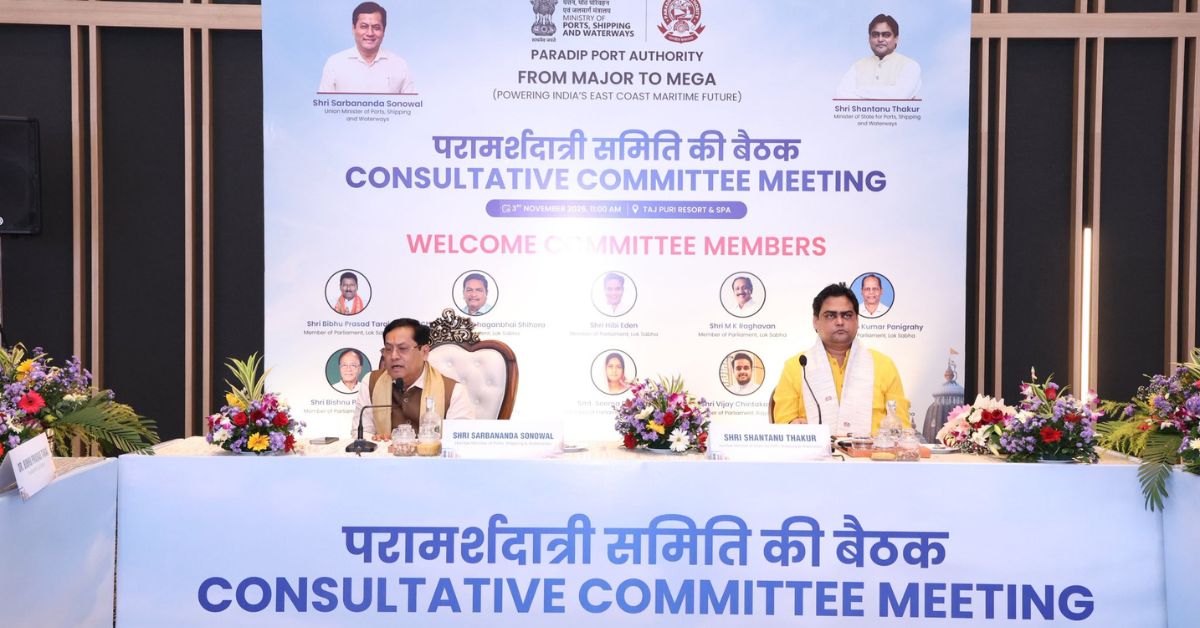

India plans to double the share of coastal shipping and inland waterways in freight movement to 12% by 2047, Union Minister of Ports, Shipping and Waterways Sarbananda Sonowal said at a Consultative Committee meeting in Puri, Odisha, on 3 November.
Sonowal also announced a proposed ₹1,500-crore Puri International Cruise Terminal, to be developed jointly by Paradip Port Authority and the Odisha government. The initiatives form part of efforts to expand waterborne logistics and cruise tourism.
How will India increase coastal and inland cargo movement?
The Coastal Cargo Promotion Scheme will provide incentives to cargo owners, coastal vessel operators and multimodal transport operators. Sonowal said coastal cargo handled at Indian ports had increased from 74 million tonnes to 177 million tonnes over the past 12 years.
Announced in the Union Budget 2026–27, the scheme seeks to encourage cargo movement from road and rail towards water transport. The budget also outlined plans to operationalise 20 additional National Waterways over five years.
The broader programme includes training institutes designated as Regional Centres of Excellence along National Waterway-5 and a dedicated inland vessel repair ecosystem in Varanasi and Patna. These measures are intended to develop the workforce and maintenance capacity needed to support expanded waterway operations.
Why is National Waterway-5 important for Odisha?
Sonowal highlighted the development of National Waterway-5 in Odisha, estimated to cost more than ₹13,000 crore, as a major component of the state’s waterborne freight infrastructure.
The planned corridor will connect the mineral-producing areas of Talcher and Angul with industrial centres including Kalinganagar and the ports of Paradip and Dhamra. Its development was announced in the Union Budget 2026–27.
The waterway incorporates the Brahmani and Mahanadi delta systems. Its proposed river-sea connections are intended to provide an additional logistics route for Odisha’s industrial and mining clusters and reduce pressure on heavily used road and rail corridors.
What are the Cruise Bharat Mission’s targets?
India recorded 462,661 ocean cruise passengers and 212 vessel calls in 2025–26. The Cruise Bharat Mission targets one million sea cruise passengers and 400,000 jobs by March 2029.
Sonowal said the cargo promotion scheme and cruise mission together were expected to generate more than 560,000 jobs and avoid 16 million tonnes of carbon dioxide emissions. These remain government projections.
Launched in Mumbai on 30 September 2024, the Cruise Bharat Mission follows a three-phase programme running from October 2024 to March 2029. Its scope covers terminal development, destinations, marinas and connections between cruise circuits.
The first phase focused on studies, master planning, partnerships with neighbouring countries and improvements to existing facilities. The second phase, scheduled from October 2025 to March 2027, concentrates on developing new terminals, marinas and destinations.
The final phase, beginning in April 2027, is intended to integrate cruise circuits across the Indian subcontinent while continuing infrastructure development. At launch, the mission’s targets included increasing international cruise terminals to 10 and marinas to five by its final phase.
How does terminal development fit the wider programme?
The mission was established to coordinate work across central and state government agencies. In a November 2024 parliamentary response, the ministry identified cruise terminals at six major ports: Visakhapatnam, Mormugao, New Mangalore, Cochin, Mumbai and Chennai.
That existing network provides the historical backdrop to the proposed Puri facility and the mission’s wider programme of developing additional cruise destinations and terminal infrastructure.
 Join our WhatsApp channel for more updates:
 Subscribe to our YouTube channel for more updates: