





Ramprasad, Editor-in -Chief reporting from SMM Hamburg
India is targeting a place among the world’s five largest shipbuilding nations by 2047, with the government planning to increase domestic shipbuilding capacity from around 1 million gross tonnes (GT) to 4.5 million GT.
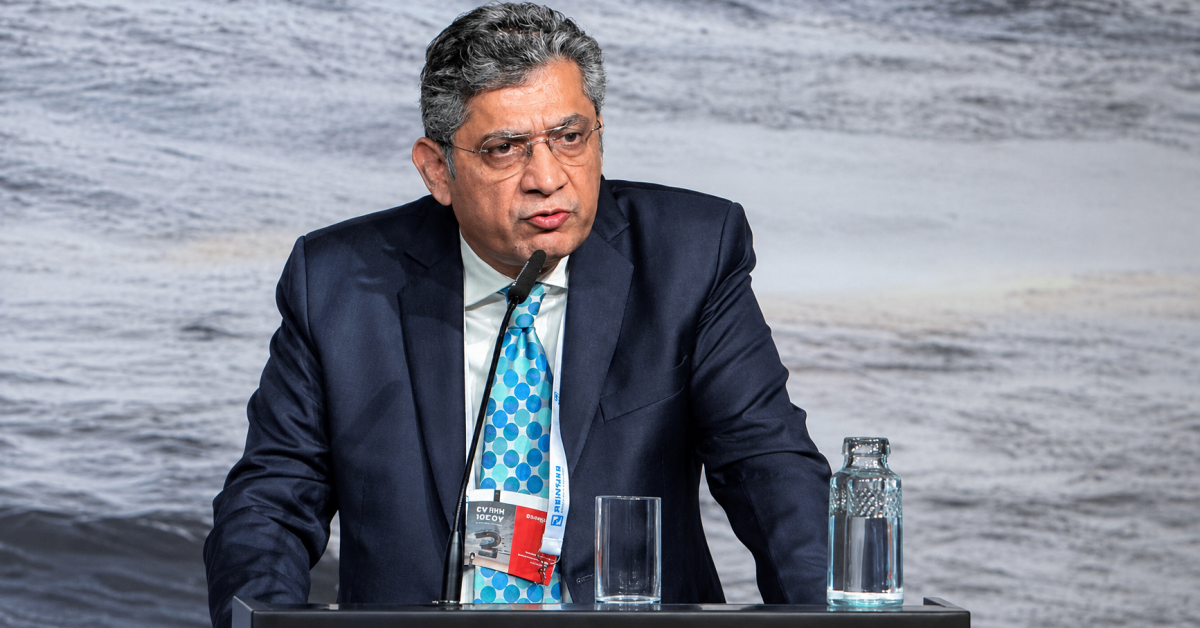
Speaking at the opening ceremony of SMM Hamburg, India’s Shipping Secretary Vijay Kumar outlined the country’s long-term shipbuilding strategy to an international audience of shipyard executives, marine equipment manufacturers and policymakers.
Kumar said India aims to enter the global top 10 shipbuilding nations by 2030 before progressing towards a top-five position by 2047. He also highlighted opportunities for collaboration between Indian and European maritime companies, particularly in technology, manufacturing and green shipping.
“There is a natural synergy between us,” Kumar said, referring to the combination of European technological capabilities and India’s manufacturing scale, policy support and renewable energy potential.
India plans fourfold increase in shipbuilding capacity
The government’s shipbuilding strategy includes a support package valued at approximately €7 billion, announced last year, with measures intended to provide policy support through 2047.
A significant part of the programme is focused on developing integrated “mega shipping clusters”. These clusters are intended to bring shipyards, component manufacturers, technology companies, logistics providers, financial institutions and skilled workers together within dedicated industrial zones.
The clusters are being developed through partnerships between the central government and state governments. Incentives can include land-related concessions and tax benefits, while the central government provides broader policy and financial support.
Government seeks to create visibility for shipyard orders
Alongside expanding production capacity, India is attempting to build a pipeline of demand for domestic shipyards.
According to Kumar, the government has consolidated vessel requirements from the offshore energy sector into a potential pipeline of more than 400 vessels, representing estimated investment of around €2 billion.
Five greenfield shipbuilding clusters, each with capacity exceeding 1,000 GT, have also received in-principle approval, Kumar said. National shipbuilding output increased by 40 percent over the past year, according to figures presented during his address.
India’s Shipbuilding Financial Assistance Scheme, which provides subsidies of up to 15.5 percent of a vessel’s contract value, has generated more than 100 vessel orders worth over €1 billion, Kumar said. More than 80 percent of the value is attributed to spot orders rather than long-term contracted work.
“We are already building for the world,” Kumar said.
The government is also promoting digitisation throughout the shipbuilding supply chain, covering areas including vessel design and component manufacturing. The initiative is intended to increase integration between Indian manufacturers and international technology and equipment suppliers.
Green shipping and alternative fuels form part of strategy
Kumar also highlighted sustainability measures covering ports, vessels and ship recycling.
India is developing financing programmes for green ports and vessels while expanding infrastructure for alternative marine fuels. Ports are being prepared to handle fuels such as methanol and ammonia, with the government positioning India as a potential production and supply hub for low-carbon marine fuels.
Ship recycling was another key element of the strategy. Kumar said India handles around 35 percent of global end-of-life vessel tonnage and has the largest volume of recycling facilities certified under the Hong Kong International Convention.
India is also aligning its recycling practices with international requirements, including the European Union Ship Recycling Regulation.
Under the recycling incentive mechanism outlined by Kumar, shipowners can receive a credit for responsibly recycling vessels in India. The credit can reportedly reach up to 40 percent of the recycled vessel’s value and provide an offset of as much as 5 percent against the cost of a new vessel constructed domestically.
Automation and AI planned for new shipyards
During a moderated discussion following the address, Kumar was asked how India intends to balance rapid industrial expansion with environmental objectives.
He pointed to the incorporation of automation and artificial intelligence into new shipyard developments as a means of improving safety, efficiency and productivity.
The government is also promoting ship repair as part of its sustainability strategy. Extending the operational life of vessels through maintenance and repair can reduce the material and energy requirements associated with replacing ships.
Kumar said the combination of ship recycling incentives, alternative-fuel infrastructure and repair capacity is intended to support both industrial growth and environmental objectives.
“We are confident that our growth will come beneficially,” he said.
India seeks greater European participation
India’s shipbuilding ambitions form part of a wider industrial policy covering manufacturing, steel, ports and renewable energy.
At SMM Hamburg, Kumar invited European shipyards, shipping companies and marine equipment manufacturers to consider investment opportunities in Indian shipbuilding clusters, place newbuilding orders with Indian yards and explore opportunities linked to the country’s ship-recycling incentives.
He also encouraged delegates to engage with the Indian delegation and visit the India Pavilion during the exhibition.
 Join our WhatsApp channel for more updates:
 Subscribe to our YouTube channel for more updates: