




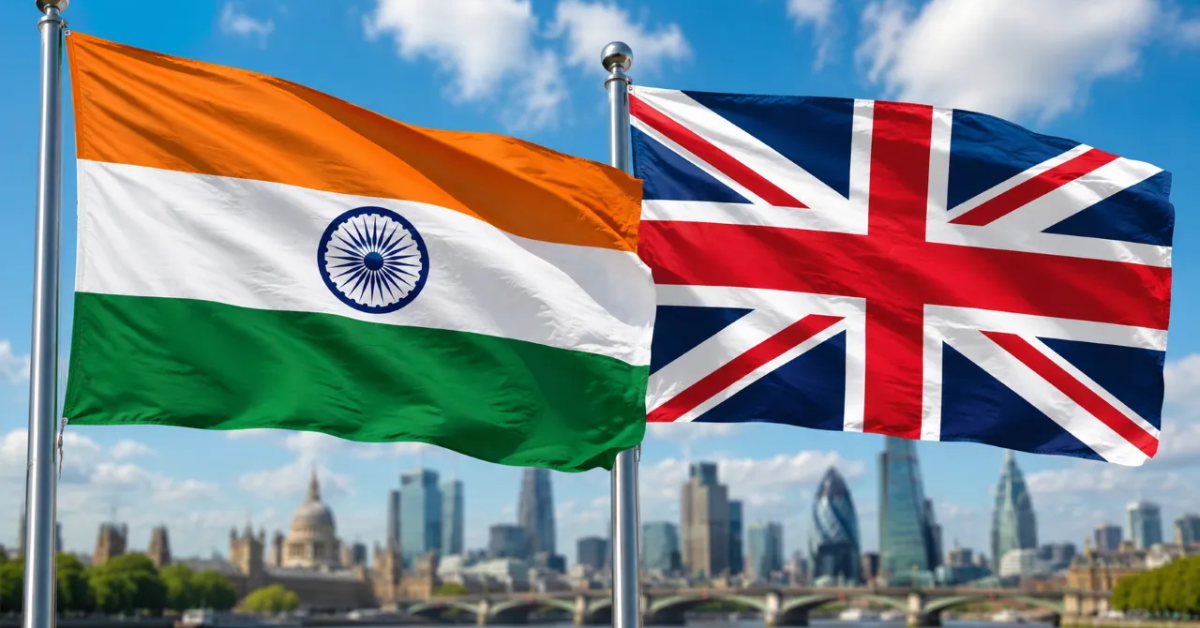

The India–UK Comprehensive Economic and Trade Agreement (CETA) has come into effect, granting duty‑free access for nearly 99% of India’s exports to the United Kingdom and covering almost 100% of the bilateral trade value. The agreement, which was signed in July 2025 after 14 rounds of negotiations, became operational on July 15, 2026 following completion of ratification procedures by both countries.
Commerce and Industry Ministry officials noted that on the first day of implementation, more than 50 consignments worth over $140 million were dispatched from India to the UK under CETA, signalling immediate uptake by exporters. The deal is being described as one of India’s most comprehensive free trade pacts, with 30 chapters spanning goods, services, digital trade, financial services, telecommunications, intellectual property, innovation, sustainability and government procurement.
Tariff Cuts and Beneficiary Sectors
Under CETA, the UK will eliminate tariffs on about 99% of tariff lines for Indian goods, removing duties that earlier ranged up to 12–16% on many labour‑intensive and manufactured products. Sectors such as textiles and garments, leather and footwear, processed foods, cereals, fruits, vegetables, spices, fish and meat products will now enter the UK at zero duty instead of the earlier 4–16% tariffs.
Other major beneficiaries include engineering goods, auto components, machinery, electronics, fabricated metal products, ceramics, glass, chemicals, pharmaceuticals, marine products and gems and jewellery, where previous tariffs of up to 18–21.5% will be phased out. Textiles and clothing alone receive 100% duty‑free access across 1,143 tariff lines, eliminating UK import duties of up to 12% on these items.
Services, Professionals and Digital Trade
Beyond goods, CETA includes wide‑ranging commitments on services, with India gaining improved market access in IT and IT‑enabled services, financial and legal services, professional and educational services, healthcare and digital trade. The agreement opens up 137 services sub‑sectors for Indian providers, one of the most ambitious services packages the UK has offered in a free trade deal.
For professionals, the pact facilitates easier mobility and recognition of qualifications in selected fields, while also creating new opportunities for Indian firms in areas such as software services, business process outsourcing, engineering design and consulting. Provisions on digital trade and telecommunications aim to support cross‑border data flows, e‑commerce, and tech‑led services, complementing India’s growing digital economy.
What It Means for India–UK Trade
Bilateral trade between India and the UK currently stands at nearly $56 billion, with both governments setting a joint goal to double this figure by 2030. CETA is expected to enhance export competitiveness, attract investment and deepen economic integration, supporting India’s “Make in India” strategy and diversifying its global trade partnerships.
While India will also lower tariffs on a large share of UK imports, the agreement provides for phased duty reductions on certain premium British products, including Scotch whisky, gin, vodka, chocolates, cosmetics, perfumes and selected food items, with some duties falling gradually over several years. For Indian exporters, the immediate elimination or reduction of tariffs on most products is likely to improve price competitiveness in the UK market and encourage new orders in sectors such as textiles, engineering, auto parts and processed foods.
 Join our WhatsApp channel for more updates:
 Subscribe to our YouTube channel for more updates: