




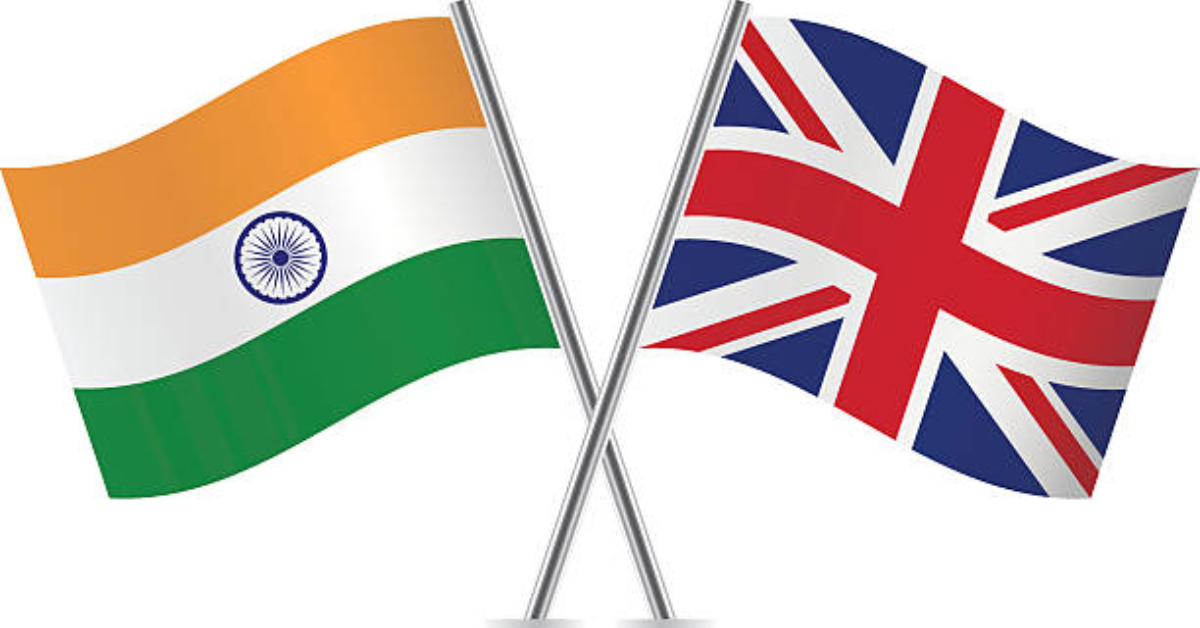

The India–United Kingdom free trade agreement (FTA) is moving into its implementation phase and is expected to come into force from the second week of May, marking a major step-up in bilateral economic ties. Officials from both sides indicate that the necessary legal and procedural formalities are now at an advanced stage, paving the way for the deal to become operational within weeks.
India and the UK signed the Comprehensive Economic and Trade Agreement (CETA) on 24 July 2025, after several rounds of negotiations spread over multiple years. Once implemented, the pact will allow 99 per cent of Indian exports to enter the British market at zero customs duty, a move expected to significantly strengthen the competitiveness of Indian goods in the UK.
On the Indian side, labour‑intensive sectors such as textiles, garments, leather, footwear, gems and jewellery, sports goods and toys are seen as major beneficiaries of the duty‑free access. These industries have a strong export orientation and are expected to leverage the preferential terms to deepen their presence in the UK market and expand order books.
In return, India has agreed to gradually reduce tariffs on selected British products, including premium categories such as automobiles and Scotch whisky. Under the agreement, duties on Scotch will be cut from 150 per cent to 75 per cent immediately, and further brought down to 40 per cent by 2035. Import duties on cars will be lowered to about 10 per cent over a five‑year period, from levels that currently go up to 110 per cent, under a calibrated quota‑based liberalisation framework.
The pact is anchored in the broader objective of doubling the current bilateral trade of around USD 56 billion by 2030. New opportunities are expected to open up not only in goods but also in services, investment flows, technology partnerships and mobility of professionals.
Alongside the FTA, India and the UK have also concluded a Double Contributions Convention (DCC) to prevent temporary workers from having to pay social security contributions in both jurisdictions. The convention is to be implemented in parallel with CETA, and is aimed at easing the cost burden on companies and professionals operating across the two markets.
While the agreement has already been signed, it requires completion of domestic ratification and notification processes before it can take effect. In the UK, the pact has been undergoing scrutiny in Parliament and relevant committees, while in India it has been cleared at the Cabinet level. With these steps now approaching completion, officials are increasingly confident about a roll‑out in the second week of May.
Once in force, the India–UK FTA is expected to provide a strong policy signal to investors and exporters, while also adding momentum to India’s wider trade engagement strategy with developed markets.
 Join our WhatsApp channel for more updates:
 Subscribe to our YouTube channel for more updates: