




India is working to formalise maritime agreements with Liberia and Panama, two of the world’s largest open ship registries, as attacks on commercial vessels in the Strait of Hormuz continue. The agreements are aimed at reducing India’s reliance on foreign-flagged vessels and expanding the country’s role in global shipping.
Why India is moving
Nearly 95% of India’s trade by volume is carried by foreign-flagged vessels. This dependence has exposed the country’s trade flows to risks arising from disruptions in the Red Sea and the Strait of Hormuz.
The proposed agreements form part of a wider government push to strengthen India’s maritime capabilities. This includes a Rs 69,725 crore support package for domestic shipbuilding, financing and leasing, aimed at developing India as a hub for ship finance, leasing and ship construction.
India’s share of global shipping capacity remains below 1%, making implementation of the measures and the ability of Indian maritime companies to scale up an important factor.
By working with Liberia and Panama, India aims to simplify certification requirements for ships. The effectiveness of the agreements will also depend on the ability of Indian shipyards to meet international standards for quality and operational efficiency.
Latest attack
On October 6, the Ministry of External Affairs (MEA) condemned a projectile strike on the Panama-flagged tanker MT On Peace off the coast of Oman while it was transiting the Strait of Hormuz.
Twelve crew members were injured in the incident, including 11 Indians. The MEA called for an immediate end to attacks on civilian infrastructure and seafarers, and said attacks on commercial shipping and seafarers now extend from the Gulf and the Red Sea to the Black Sea.
The coalition angle
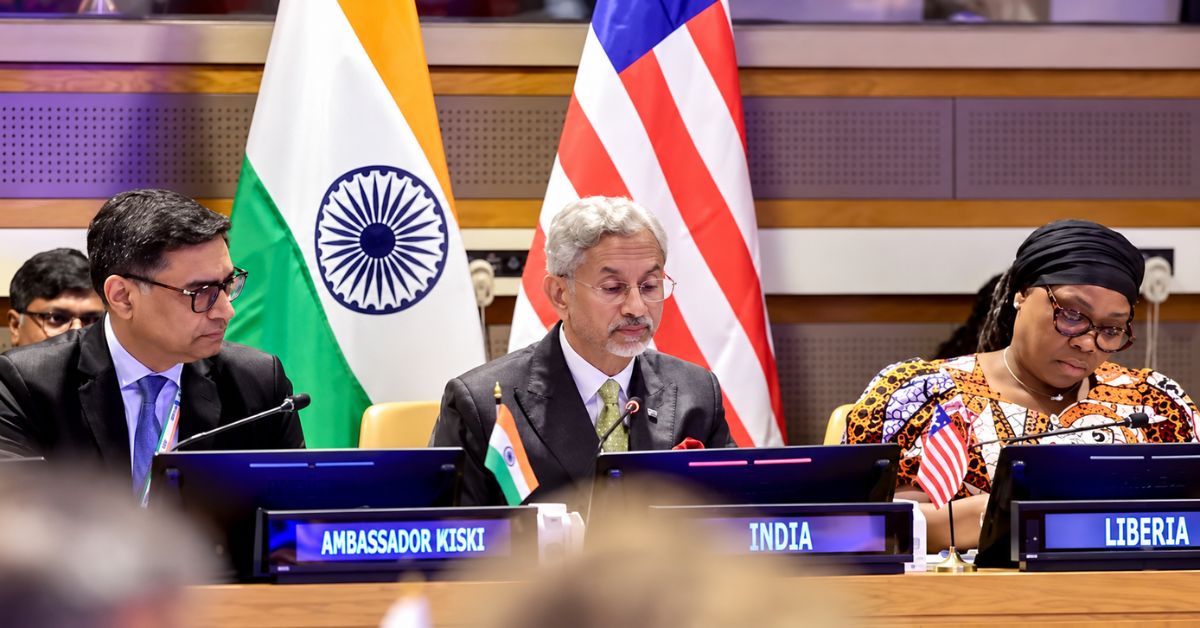
On September 25, India and Liberia launched a Group of Friends on the Safety and Security of Shipping and Seafarers at the United Nations General Assembly.
External Affairs Minister S. Jaishankar said India had joined Liberia and 23 partner nations in the coalition, which aims to mobilise international support for the safety of commercial shipping routes and seafarers.
 Join our WhatsApp channel for more updates:
 Subscribe to our YouTube channel for more updates: