




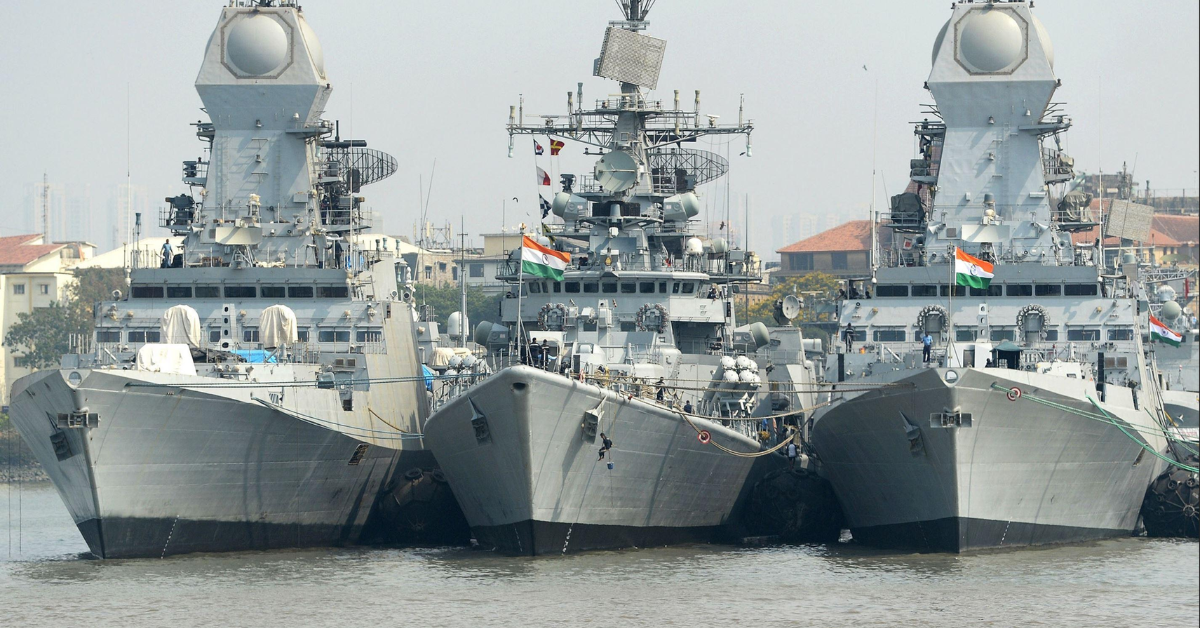

India has significantly scaled up its naval presence in the Gulf of Oman, deploying over half a dozen warships, including logistics support vessels, under Operation Sankalp to escort Indian-flagged fuel carriers attempting to exit the Strait of Hormuz. The deployment marks a major expansion of India’s naval engagement in the Persian Gulf region since the Hormuz crisis began on February 28.
The Indian Navy vessels are positioned east of the Strait of Hormuz and will not enter the waterway itself, in keeping with India’s policy of maintaining a non-escalatory posture while protecting its maritime and energy interests. The escorts are designed to provide a security corridor for Indian-flagged tankers as they transit the volatile Gulf of Oman toward Indian ports.
22 Indian Ships, 611 Seafarers Still Stranded
As of March 18, 22 India-flagged merchant ships — carrying a combined crew of 611 seafarers — remain trapped inside the Persian Gulf, unable to exit through the strait. The stranded fleet comprises 6 LPG carriers, 1 LNG vessel, 4 crude tankers, and several other cargo ships. Their continued detention represents both a humanitarian concern and an acute energy security risk for India, which relies heavily on Gulf imports for its oil and gas needs.
India’s Ministry of External Affairs has been engaged in diplomatic negotiations with Tehran, with Iranian authorities signalling that ships bound for India will be given safe passage. The Iranian ambassador to India confirmed this assurance in a formal communication, providing the diplomatic basis for the current naval escort operations.
First LPG Tanker Arrives at Mundra
The first concrete outcome of Operation Sankalp materialised on March 16, when the Indian LPG tanker Shivalik arrived at Mundra Port in Gujarat after successfully exiting the Hormuz strait under naval escort. The vessel’s safe arrival was greeted with relief by the LPG supply chain, which had been facing the prospect of domestic shortages if the situation remained unresolved. Several additional vessels are expected to follow in the coming days.
Navy Expands Logistics Footprint
The deployment of logistics support vessels alongside combat ships signals a longer-term operational commitment by the Indian Navy, suggesting the escort mission may continue for several weeks. Officials have indicated that the Navy is prepared to maintain the presence as long as Indian-flagged vessels require protection to exit the Gulf.
The Hormuz Strait carries approximately 20 per cent of global oil trade, and its effective closure since late February has disrupted energy flows across Asia. India, the world’s third-largest oil importer, is among the most severely affected nations, importing substantial volumes of crude oil, LPG, and LNG from Persian Gulf producers.
 Join our WhatsApp channel for more updates:
 Subscribe to our YouTube channel for more updates: