




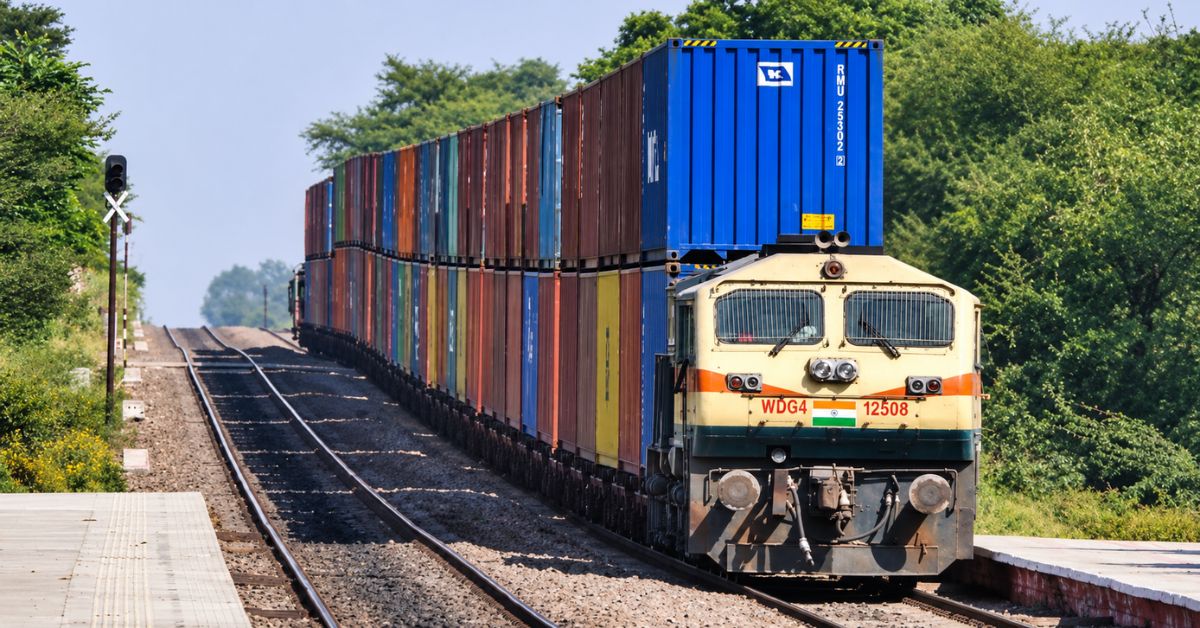

Indian Railways loaded 145.07 million tonnes of freight in October 2026, its highest total for the month and an 8.32% increase from 133.93 million tonnes a year earlier. Food grains recorded the fastest growth among the commodities reported, at 26.3%, while domestic coal loading rose 16% as power stations required more fuel, the Ministry of Railways said on 4 November.
The network carried 11.14 million additional tonnes in October compared with the same month last year. That accounted for just over a quarter of the 43.68 million tonnes of additional freight loaded in the first seven months of the 2026–27 financial year.
How did container and bulk cargo volumes change?
Domestic container loading grew 6.3% year on year in October, following a 10% increase in September. Clinker, an intermediate product used in cement manufacturing, recorded double-digit growth for a second consecutive month. Its loading rose 10.4% in October after a 20% increase in September.
Food grain traffic grew faster in October than in September, when loading had risen 25%. Iron ore maintained a steadier pace, with a 5% increase in October following 5.2% growth the previous month. Among the other cargo categories, October loading rose 1.9% for mineral oil, 0.5% for finished steel and 11% for the ministry’s “balance other goods” category.
Power stations received nearly 77 additional coal rakes a day
Indian Railways supplied power stations with an average of 469.8 rakes of domestic coal per day in October, up from 393.2 a year earlier. That represents an additional 76.6 trainloads a day, or a 19.5% increase in dispatches. In September, the network had supplied an average of 443 rakes a day, against 397 in September 2025.
In an update issued on 22 October, the ministry linked higher demand for coal-fired power to increased industrial production and deficient rainfall in parts of India. It said the railways were coordinating with the coal and power ministries to move coal from mines and maintain stocks at thermal power plants. Daily dispatches to these plants had averaged 430 rakes during the first half of the financial year.
Seven-month freight growth reaches 4.67%
From April to October 2026, Indian Railways loaded 978.78 million tonnes, up 4.67% from 935.10 million tonnes in the corresponding period of 2025. October’s performance lifted the cumulative growth rate from 4.1% at the end of September, when first-half loading stood at 833.7 million tonnes.
For port users, one of the network’s main freight links is the 1,506-kilometre Western Dedicated Freight Corridor between Dadri in Uttar Pradesh and Jawaharlal Nehru Port in Maharashtra. The commissioned corridor supports double-stack container trains between western ports and the northern hinterland. Across the western and eastern dedicated freight corridors, the ministry reported an average of about 443 trains a day in an August update.
Terminal additions in Gujarat also illustrate the range of cargo entering the rail network. In September, Railways Minister Ashwini Vaishnaw inaugurated the Shivlakha Gati Shakti Cargo Terminal in Kachchh and flagged off a salt train to Mithapur. Terminals at Bhimasar, Devaliya and Chandisar were also dedicated that month as part of efforts to improve freight links between Gujarat’s industrial centres, ports and inland markets.
 Join our WhatsApp channel for more updates:
 Subscribe to our YouTube channel for more updates:




