




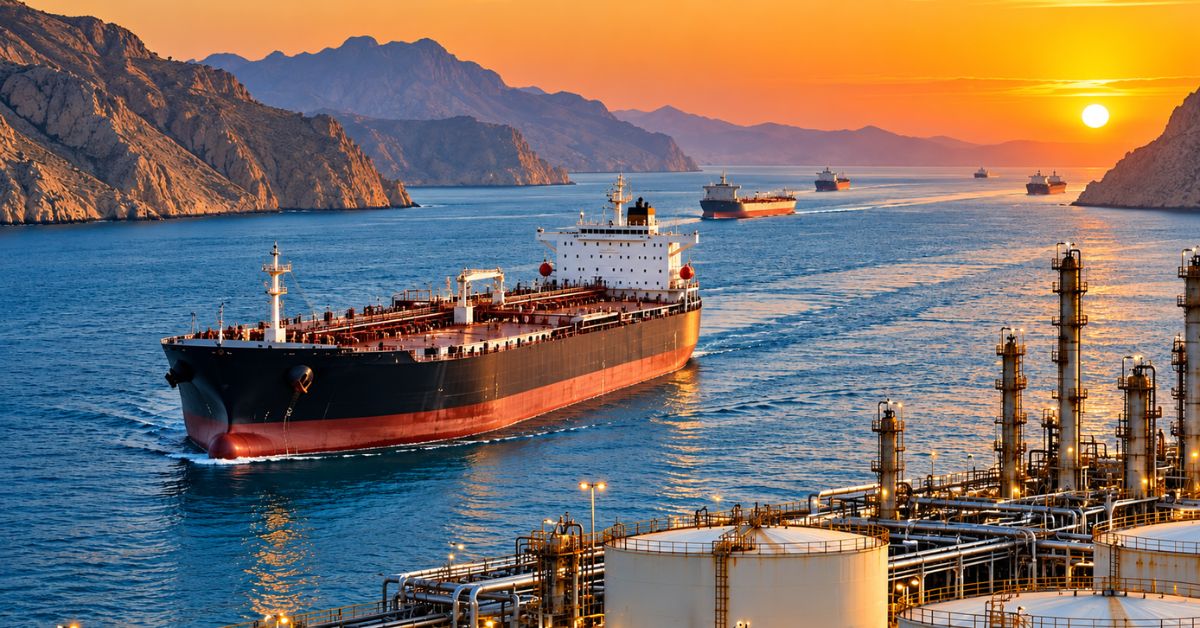

Indian oil refiners are changing how they procure crude from the Persian Gulf, with companies increasingly chartering tankers themselves to transport cargoes through the Strait of Hormuz instead of relying on producers and traders to arrange delivery. Several refiners have reportedly issued tenders and begun discussions with shipowners to secure vessels.
Which refiners are changing their buying approach?
Reliance Industries, Bharat Petroleum Corporation, Indian Oil Corporation and HPCL-Mittal Energy have recently purchased Iraqi crude on a Free on Board (FOB) basis.
Under FOB terms, the buyer is responsible for arranging the vessel, loading the cargo and transporting it to the destination. The arrangement gives refiners greater control over freight costs, although securing suitable tankers and managing the associated shipping risks remain challenges.
Why are Indian refiners moving away from delivered cargoes?
Following the outbreak of the US-Iran war, Indian companies kept their own tankers away from the Strait of Hormuz because of security concerns. Instead, they relied on Gulf producers and international traders to assume the transit risk and deliver crude to India on a cost and freight (CFR) basis.
That arrangement came at a premium. By taking responsibility for the tanker leg, refiners can seek discounts on Gulf crude grades while reducing the freight premium paid to intermediaries.
What has made the shift possible?
India’s Directorate General of Shipping relaxed its Hormuz-related maritime advisory in August, widening the pool of vessels and crews available to Indian buyers.
The change has made FOB procurement more practical for refiners seeking to arrange their own shipping. It also comes as companies assess ways to reduce the additional costs associated with crude transportation through the strategically important waterway.
What risks remain for refiners?
The shift to FOB purchases also transfers greater shipping and operational exposure to refiners.
Sumit Ritolia, senior manager of modelling at Kpler, noted that crude still has to be lifted from within the Strait of Hormuz, where shipping and operational risks remain high. He said refiners that can manage those risks could use the resulting discounts to increase purchases.
Why is the Strait of Hormuz important to India’s energy security?
Before the conflict, the Strait of Hormuz carried about one-fifth of global crude and LNG supplies. For India, Middle Eastern crude moving through the waterway accounted for 41%, or around 2.1 million barrels per day, of the country’s seaborne crude imports in 2025.
Iraq was India’s largest supplier among those flows, accounting for around 919,000 barrels per day.
Any sustained shift towards refiners controlling their own freight arrangements in the region could therefore affect tanker demand, charter rates and the cost of India’s crude imports.
 Join our WhatsApp channel for more updates:
 Subscribe to our YouTube channel for more updates: