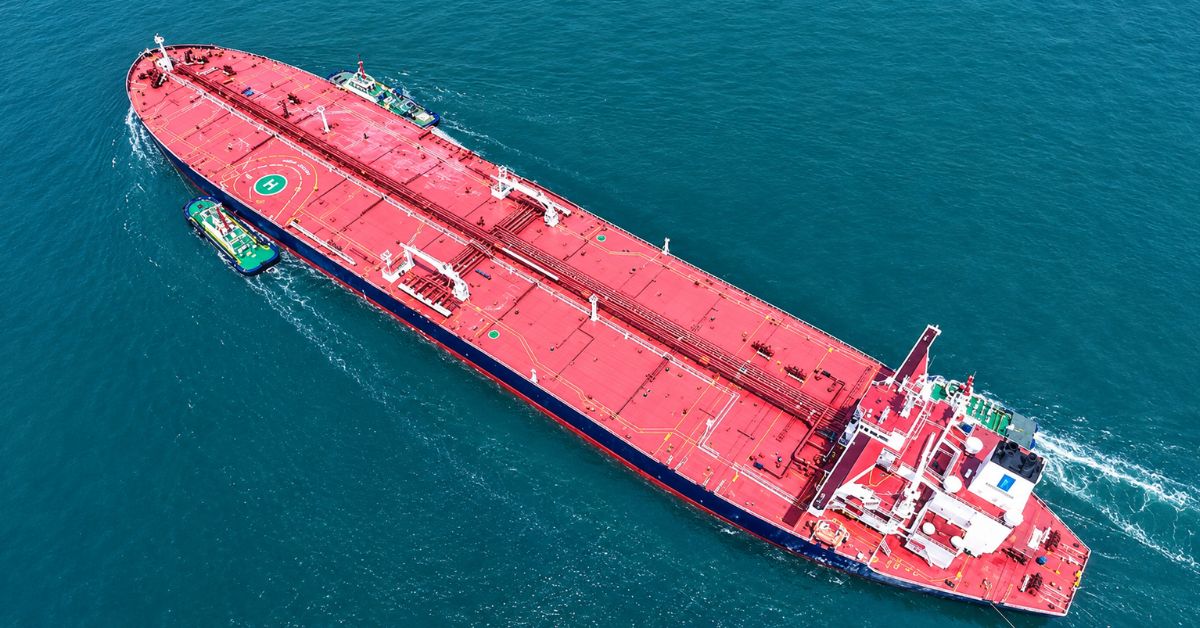

Indian Oil Corporation (IOC) is advancing plans to acquire crude oil and liquefied petroleum gas (LPG) carriers as higher freight costs and disruptions around the Strait of Hormuz increase pressure on its supply chain.
Director of Finance Anuj Jain said during the company’s second-quarter earnings call on 31 October that the board had approved vessel purchases and tenders had been issued several months earlier. IndianOil is also discussing domestic shipbuilding opportunities under the Make in India initiative.
Why is IndianOil looking beyond chartered vessels?
The company is pursuing three approaches: improving its existing mix of time and voyage charters, acquiring ships, and exploring construction in India.
Jain said IndianOil’s time-chartered fleet had helped maintain supplies and contain transport costs during the disruption. The company has three crude carriers and nine LPG vessels on time charter.
He put crude transportation costs on its time-chartered vessels at approximately US$2–2.50 per barrel, against spot-market rates reaching US$8–10. LPG freight, normally around US$40 per tonne, had risen to US$160–180 per tonne in the spot market.
The comparisons illustrate the protection provided by previously secured shipping capacity during a sharp market upswing. They do not establish the acquisition cost or expected returns of the proposed owned fleet.
How does the plan build on earlier shipping discussions?
IndianOil had outlined its interest in vessel ownership before the latest earnings update. During its May 2026 results call, Jain said oil-sector central public sector enterprises and the Shipping Corporation of India had signed a non-binding memorandum of understanding to explore joint ownership and management of vessels.
The proposed collaboration included an emphasis on building some ships domestically. At that stage, IndianOil was examining the purchase of four medium-range vessels.
Jain said due diligence was continuing, while questions concerning investment returns, operating arrangements and the proposed venture’s role remained under discussion. The May disclosure should therefore be treated as background to the ownership strategy, rather than confirmation of the number or specification of ships now being acquired.
Management’s stated rationale was that IndianOil’s continuing requirement for marine transport could make greater shipping security commercially useful across market cycles.
Freight costs are influencing crude procurement
IndianOil Chairman A S Sahney also highlighted tanker availability at an industry event in Goa on 27 October. He said high freight costs were reducing the benefit of discounted crude purchases and called for expansion of India’s shipping capacity.
Sahney additionally advocated investment in crude and LPG storage to provide more days of supply cover. His remarks linked transport capacity and inventory infrastructure as complementary elements of energy security.
IndianOil’s October earnings presentation described shipping, insurance and freight expenses as continuing concerns. The company said it had diversified procurement towards Russia, Venezuela, Brazil and African suppliers to maintain refinery operations.
Spot purchases accounted for approximately 87% of crude imports in the first half of financial year 2026–27, compared with around 50% during the previous financial year.
How are other refiners managing shipping exposure?
Other Indian refiners are adjusting procurement arrangements in response to the same pressures. Mangalore Refinery and Petrochemicals said on 4 November that it was increasing crude purchases on a delivered basis to reduce shipping exposure and freight costs.
Under that approach, delivery forms part of the supplier’s obligation, offering a different response to the transport risks that IndianOil is addressing through charters and proposed ownership.
For IndianOil, the next concrete milestones will be acquisition awards and disclosure of vessel specifications, costs and delivery schedules. Board approval and tendering establish progress towards ownership, while domestic construction remains a separate strand of stakeholder discussions.
 Join our WhatsApp channel for more updates:
 Subscribe to our YouTube channel for more updates: