
Summary
India could achieve US$1 trillion in exports during FY2026–27 if its current momentum continues, Chief Economic Adviser V. Anantha Nageswaran has said. His assessment comes after a strong first half, while the remaining challenge is to sustain overseas demand and improve manufacturing competitiveness amid global supply-chain disruption.
Outlook depends on sustained performance
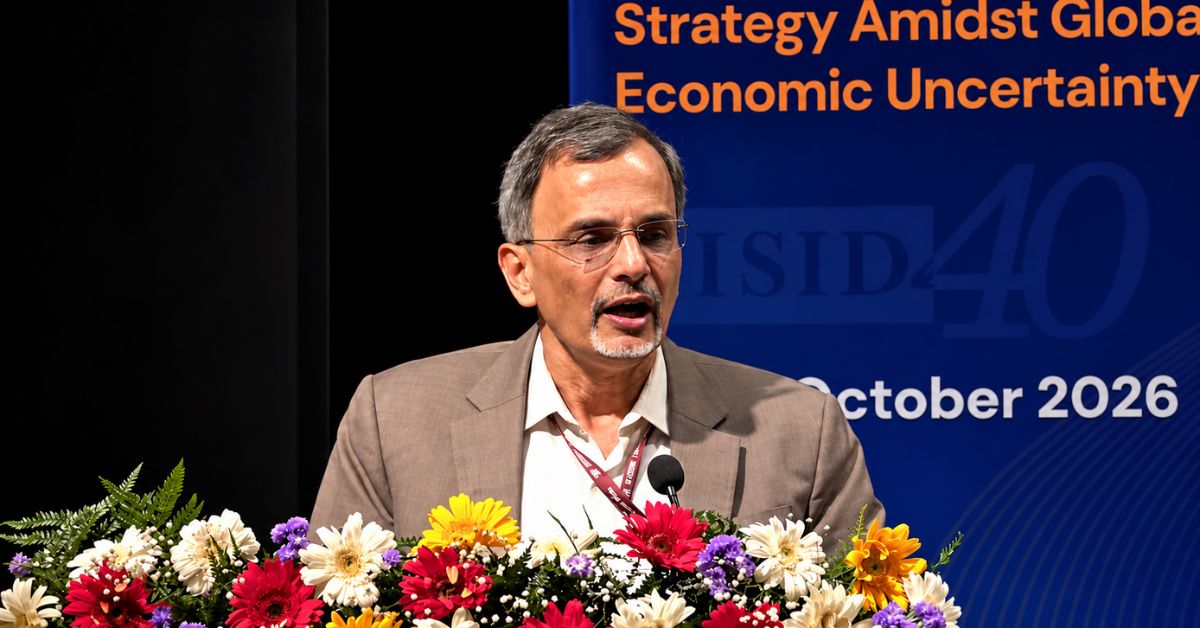
India’s $1 trillion export goal remains achievable, Nageswaran said at the ISID–IDRA Fourth National Conference on 29 October, citing approximately US$480 billion in first-half exports.
He linked the ambition to stronger domestic manufacturing and internationally competitive industry. Government support, he argued, should be time-bound and tied to performance, including export competitiveness or the ability to compete with imports.
The remarks present a conditional outlook for the financial year, rather than confirmation that the milestone has been reached.
First-half figures show growth across goods and services
The Commerce Ministry’s October trade release estimated combined merchandise and services exports at US$476.20 billion during April–September 2026, up 13.84% year on year.
Merchandise exports contributed US$259.89 billion, an increase of 18.51%. Services exports were estimated at US$216.31 billion.
The trillion-dollar ambition therefore covers both goods and services. It should not be interpreted as a merchandise-export target or a direct measure of cargo moving through ports and airports.
The ministry also noted that September’s services figures were estimates, with revisions to some earlier periods incorporated using quarterly balance-of-payments data. Such updates can change the reported combined total.
Second half must exceed the first
Using the ministry’s published first-half estimate, India would need US$523.80 billion in exports during October–March to reach US$1 trillion.
That is approximately 10% more than the April–September total. Simply repeating the first-half value would produce annual exports of US$952.40 billion.
The arithmetic illustrates the task ahead: maintaining momentum must translate into a stronger second half, rather than an unchanged six-month total. The calculation uses the published estimate and could change if the underlying figures are revised.
The CEA’s assessment is therefore best understood as confidence in the continuing growth trajectory, subject to performance over the remaining months.
Manufacturing competitiveness remains central
Nageswaran’s policy message focused on productive capacity and resilience.
He cautioned that protection without improvements in productivity could leave industry vulnerable. He also called for buffers of essential commodities as geopolitical tensions make access to critical resources less predictable.
The emphasis connects export growth with the ability to manufacture competitively and maintain supplies. For businesses, sustained overseas sales require dependable inputs and efficient production alongside access to buyers.
It also places responsibility on firms receiving public assistance to demonstrate commercial progress, rather than depend indefinitely on protection.
Earlier ministerial remarks established the ambition
Commerce and Industry Minister Piyush Goyal had expressed confidence in the same target earlier in October.
At a Partnership Summit curtain-raiser on 8 October, he cited exports of US$863 billion in the preceding year. Reaching US$1 trillion from that base would require growth of approximately 16%.
Goyal also called for greater use of trade agreements, urging industry bodies to help MSMEs understand market-access opportunities and rules of origin.
Those remarks provide background to the CEA’s assessment: the target depends on participation across exporters, services businesses and manufacturing industries, rather than a single sector.
Maritime disruption remains a trading constraint
Policy support continues alongside the export push.
The Department of Commerce has extended Component II of RELIEF until 31 March 2027 because of continuing West Asian disruptions affecting maritime logistics.
The component encourages eligible exporters to obtain ECGC cover, offering 95% risk coverage for specified shipments and protection against premium increases beyond pre-disruption levels during the eligible period.
It addresses particular insurance and export-risk pressures. It does not remove the need for competitive freight, reliable sailings or sustained customer orders.
For the logistics industry, merchandise-export growth creates transport opportunities, but export value alone cannot predict container demand or cargo tonnage.
The product mix, shipment size and transport mode determine the operational effect. The next six months will show whether stronger exports translate into regular cargo flows while services sustain their substantial contribution to the national total.
FAQs
Does the target cover only merchandise exports?
No. It covers merchandise and services combined.
How much did India export in the first half?
An estimated US$476.20 billion during April–September 2026.
How much is needed in the second half?
US$523.80 billion, based on the published first-half estimate.
Has the CEA guaranteed the outcome?
No. His assessment depends on continued export momentum.
What manufacturing changes did he emphasise?
Higher productivity, stronger competitiveness and performance-linked government support.
 Join our WhatsApp channel for more updates:
 Subscribe to our YouTube channel for more updates: