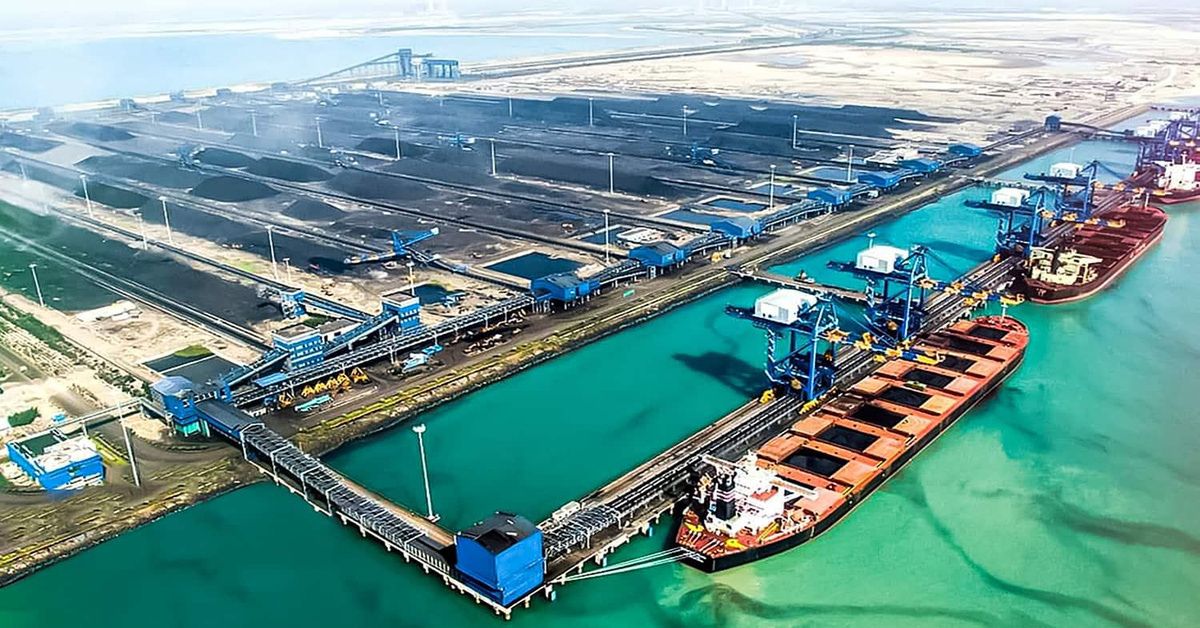

India’s imports of coal, coke and briquettes increased 37.6 per cent in value in October 2026, reaching US$3.10 billion, as purchases of industrial inputs gathered pace. Government trade estimates put the corresponding figure for October 2025 at US$2.25 billion, underscoring a higher import bill for the commodity group.
CRISIL’s Macroeconomics: Trade First Cut analysis identified coal among the contributors to stronger investment and intermediate-goods imports. The reported annual growth rate accelerated from 32.1 per cent in September.
What does the 37.6% increase measure?
The increase relates to the US-dollar value of the combined coal, coke and briquettes import category. It does not establish an equivalent rise in physical coal volumes or cargo handled at Indian ports.
For April–October 2026, imports in this category totalled US$19.72 billion, compared with US$16.35 billion a year earlier, an increase of 20.63 per cent. The October figures are provisional.
For shipping and bulk-terminal operators, the distinction between value and tonnage is important. Import expenditure can change because of prices, quantities and the composition of purchases. Physical shipment data would be needed to assess the corresponding impact on vessel demand, berth utilisation and inland cargo movement.
Which other industrial imports increased?
The rise formed part of a broader expansion in industrial purchases. CRISIL reported October import growth of 31.2 per cent for chemicals, 32.9 per cent for non-ferrous metals, 22.3 per cent for machinery and 24.3 per cent for transport equipment.
Petroleum imports also increased sharply, rising 54.3 per cent year on year, compared with 30.7 per cent in September. CRISIL linked the higher oil import bill with renewed pressure from international crude prices.
These categories span raw materials, intermediate products and capital equipment, indicating that the increase in import expenditure extended beyond a single fuel or industrial segment.
Why does India continue to import coal?
India’s coal imports serve different industrial requirements. The Ministry of Coal says steelmakers import coking coal to address gaps in domestic availability and meet quality requirements. Non-coking coal is imported by power producers, cement manufacturers and traders.
The ministry’s annual report also identifies limited domestic availability of high-quality coking coal and coal with high calorific value as reasons for imports.
Some coastal power stations are specifically designed to operate on imported coal. Other power plants use imported material for blending with domestic supplies. These differences mean that import requirements depend on fuel specifications and plant configurations, as well as overall industrial activity.
In FY2025–26, India imported 246.37 million tonnes of coal, comprising 66.33 million tonnes of coking coal and 180.04 million tonnes of non-coking coal, according to the ministry’s published statistics. These annual volume figures provide context but are separate from October’s value-based growth measure.
How did the wider trade balance change?
India’s merchandise imports reached US$89.35 billion in October, while exports stood at US$49.47 billion, according to the Ministry of Commerce and Industry. The resulting merchandise trade deficit was approximately US$39.88 billion.
CRISIL said the deficit narrowed from about US$42.6 billion a year earlier, primarily because gold imports declined. However, its core goods deficit, excluding oil and gold, widened to US$20 billion from US$15.3 billion.
The October figures therefore show stronger underlying industrial import expenditure despite a narrower headline deficit. For the maritime sector, the next measure of the coal trade’s operational impact will be the corresponding tonnage and port-level cargo data.
 Join our WhatsApp channel for more updates:
 Subscribe to our YouTube channel for more updates: