




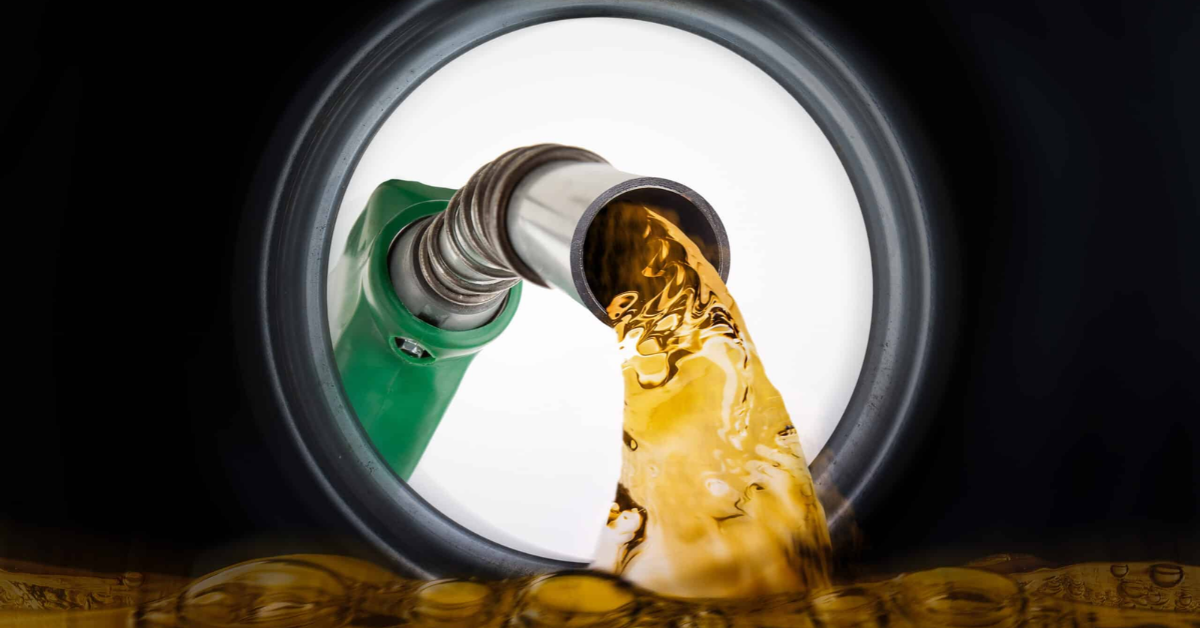

India’s diesel exports are set to rise sharply from 2027 as state-run refiners bring expanded capacity online, a shift that strengthens the country’s position as a swing supplier of refined products in a market already stretched by conflict-driven disruption.
State refiners plan to add 16.5 million tonnes of annual diesel production capacity in 2027, part of a national push toward 300 million tonnes per year (mtpa) of refining capacity by 2030, with a further step up to 400 mtpa envisioned later. Oil Minister Hardeep Singh Puri framed the shift simply: “We will be in a happy situation of not only refining for ourselves but for the world.”
For shipowners, the signal is straightforward. More Indian export barrels mean more tonne-miles on clean product trades, and the incremental cargoes will load at a handful of west and east coast terminals that are already running close to berth capacity.
The Capacity Numbers Behind the Export Call
The additions are spread across four state refiners and one joint venture, each with a distinct timeline and product slate.
| Refiner | Capacity addition | Diesel contribution |
| Indian Oil Corp | ~18 mtpa refining capacity | ~8 mtpa additional diesel |
| HPCL (Rajasthan refinery) | 9 mtpa greenfield refinery | 3 mtpa diesel from next year, once stabilised |
| BPCL | Brownfield expansion | 1.5 mtpa extra diesel from next year |
| Numaligarh (Oil India subsidiary) | Expansion to 9 mtpa by March next year | 3 mtpa diesel |
| Total | — | 16.5 mtpa in 2027 |
A secondary effect matters as much as the headline capacity. HPCL and some peers buy refined products from private refiners for sale through their own retail networks. As their own output rises, those third-party purchases fall, and the displaced volumes become available for export rather than domestic sale. Officials expect this to be a direct contributor to export availability.
India has already emerged as the second-largest exporter of seaborne diesel this year, behind only the United States, according to ship-tracking data from Kpler.
Why Clean Tanker Markets Are Watching Closely
The global refining system is running hot. Conflict in the Middle East and the Ukraine-Russia war have disrupted trade flows, plant closures have removed capacity, and surviving refineries are operating at historic utilisation rates to plug fuel shortages. Freight rates have risen across the board as a result.
India’s expansion lands into that environment as a supply-side addition rather than a substitution. Three consequences follow for tanker markets:
- Longer-haul diesel trades. Indian barrels heading to Europe, Africa and Southeast Asia generate more tonne-miles than intra-regional US Gulf moves, supporting LR2 and MR earnings on eastern routes.
- Ballast and triangulation logic. Product carriers discharging in India can reposition into the export stream rather than ballasting west, improving fleet utilisation on the India-Middle East-East Asia triangle.
- Arbitrage-driven volatility. The refineries are being configured to process a broad range of crude grades and flexible petrochemical feedstocks, letting operators chase price arbitrage and shift between diesel and higher-value products. That flexibility means export volumes will respond to spreads rather than run at a fixed rate — good for freight volatility, harder for shippers seeking predictable space.
The competitive map is also shifting. Private refiners Reliance and Nayara already export refined fuels, while state companies have largely served domestic demand. As state refiners turn exporter, India’s aggregate pull on clean tonnage rises without any single company’s decision being decisive.
Ports, Terminals and the Bunkering Spillover
Cargo growth is only useful if the infrastructure absorbs it. India’s product export capacity is concentrated at a small number of terminals — the Jamnagar and Vadinar complexes on the west coast, and Paradip, Vizag and Numaligarh-linked facilities on the east.
Earlier this year, US Secretary of State Marco Rubio described India as a refining “superpower” during a visit to Reliance’s Jamnagar complex, a remark that underscores how visible the country’s refining scale has become internationally.
The logistics chain around those terminals carries its own requirements: single point moorings and product jetties, tank farm capacity, pipeline connectivity between refinery and berth, and sufficient tug and pilotage capacity to avoid demurrage. Any mismatch between refinery output and loadout capability converts a commercial opportunity into a queue of waiting vessels.
There is a bunkering angle too. A refinery system producing surplus distillate at scale creates optionality for India to price marine fuels competitively — relevant given that Indian bunker prices have historically traded well above Singapore, a gap that has suppressed the country’s prospects as a bunkering hub.
What the Finance Desk Should Track
Three financial threads run through this expansion.
First, capex and project debt. Brownfield expansions at IOCL, BPCL and Numaligarh, plus HPCL’s greenfield Rajasthan refinery, require sustained capital spending through a period of volatile crude prices and refining margins. Lenders will be watching whether commissioning stays on schedule — HPCL’s diesel output, for instance, depends on the refinery stabilising, not merely starting up.
Second, margin risk. Refining margins are cyclical, and a wave of global capacity additions arriving together can compress the very spreads that justify export volumes. The flexible crude-slate design is a partial hedge, but it does not insulate earnings from a structural downturn.
Third, trade finance and FX. Exporting diesel at scale means dollar-denominated receivables, larger working capital requirements for crude purchases, and active hedging of both product cracks and currency. For Indian banks, that is a growing book of commodity-linked exposure tied to some of the country’s largest corporate borrowers.
Frequently Asked Questions
1. How much diesel capacity will Indian refiners add in 2027?
State refiners will add 16.5 million tonnes per year of diesel production capacity, led by Indian Oil’s roughly 8 mtpa, with 3 mtpa each from HPCL’s Rajasthan refinery and the expanded Numaligarh refinery, and 1.5 mtpa from BPCL.
2. What is India’s refining capacity target?
India plans to reach 300 million tonnes per year by 2030, with an ambition to go further to 400 mtpa afterwards. Current expansions are the first stage of that pathway.
3. Where does India rank among diesel exporters globally?
India is the second-largest exporter of seaborne diesel this year, behind only the United States, according to Kpler ship-tracking data.
4. Why do these exports matter for tanker freight rates?
Indian diesel moving to Europe, Africa and Southeast Asia creates longer voyages than intra-regional alternatives, absorbing clean product tanker capacity and supporting LR and MR earnings. Rising export volumes arrive when global refining disruption has already lifted freight.
5. Which ports will handle the additional export volumes?
Primarily the west coast refining clusters around Jamnagar and Vadinar, alongside east coast facilities serving Paradip, Vizag and the Numaligarh refinery in Assam. Loadout capacity, tank farms and jetty availability will determine how quickly volumes reach the water.
 Join our WhatsApp channel for more updates:
 Subscribe to our YouTube channel for more updates:



