



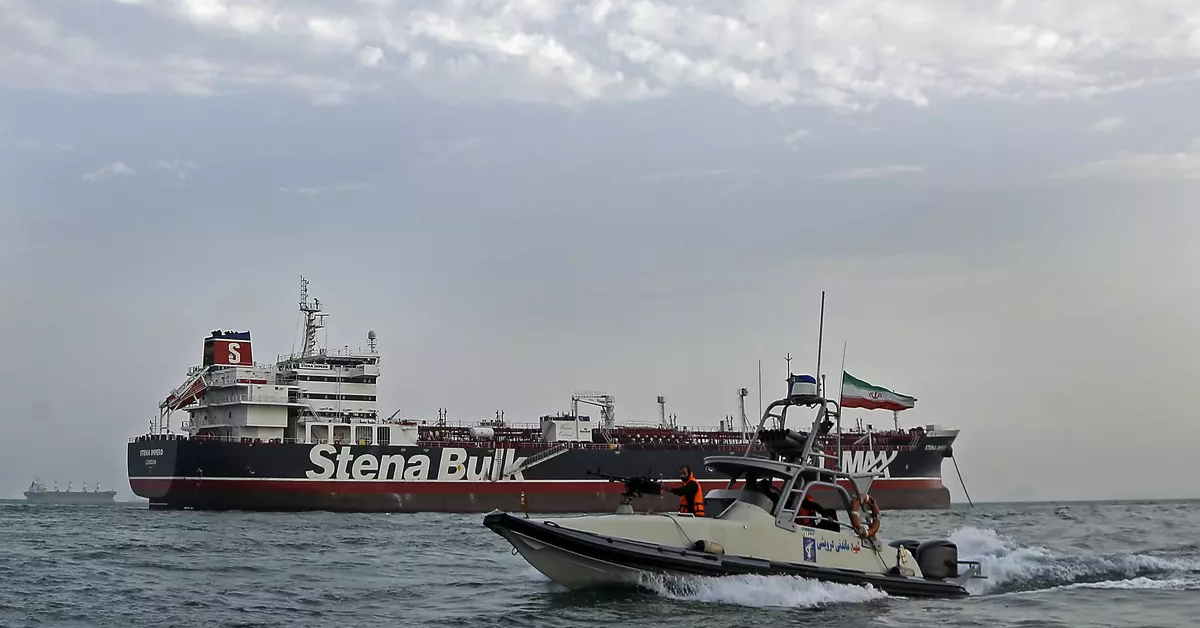

Iran has received its first formal toll revenue from vessels transiting the Strait of Hormuz, with Deputy Parliament Speaker Hamidreza Haji Babaei confirming that initial proceeds had been deposited into the Central Bank of Iran account. The announcement marks a significant shift in how Iran is treating its control of the strait — from a crisis-period security measure into a formalised, revenue-generating mechanism that fundamentally redefines the Hormuz transit regime for global commercial shipping.
No details were provided on the number of vessels that have paid, the toll amounts collected, or the specific vessel categories subject to the charge. Iranian media had earlier reported that the toll system was introduced as a formalised framework following the outbreak of the US-Israel conflict on February 28, with IRGC naval forces requiring vessels to submit cargo manifests and receive coded clearances before transit — a process that multiple ship operators have described as requiring payments of up to USD 2 million per crossing, settled in Chinese yuan. The Central Bank deposit confirmation moves the toll from a reported field practice by IRGC units into an institutionalised revenue stream formally acknowledged at the parliamentary level.
The Commercial and Legal Implications
The formalisation of Hormuz tolls has profound implications for the global shipping industry, international maritime law, and the geopolitics of energy trade. Under the United Nations Convention on the Law of the Sea, the Strait of Hormuz is an international strait subject to the right of transit passage, which cannot legally be conditioned on the payment of fees or charges to the coastal state. Iran’s imposition and now formal collection of transit tolls directly contradicts this legal framework — creating a precedent that, if unchallenged, could inspire other coastal states controlling strategic chokepoints to assert similar toll-collection rights.
For shipping companies, the toll creates a new cost line item that must be factored into voyage economics for all Gulf-related trade. With the World Container Index at USD 2,287 per 40-foot container and bunker adjustment factors already elevated by the Cape of Good Hope rerouting, the addition of a USD 2 million per-transit toll — spread across the cargo on a VLCC or large container ship — adds a significant per-tonne or per-TEU cost surcharge to any cargo moving through the strait. The practical effect is to make the Hormuz route more expensive than Cape rerouting for any vessel that cannot negotiate a lower toll rate — accelerating the commercial logic of the Cape alternative that shipping lines have already been adopting since March.
 Join our WhatsApp channel for more updates:
 Subscribe to our YouTube channel for more updates: