



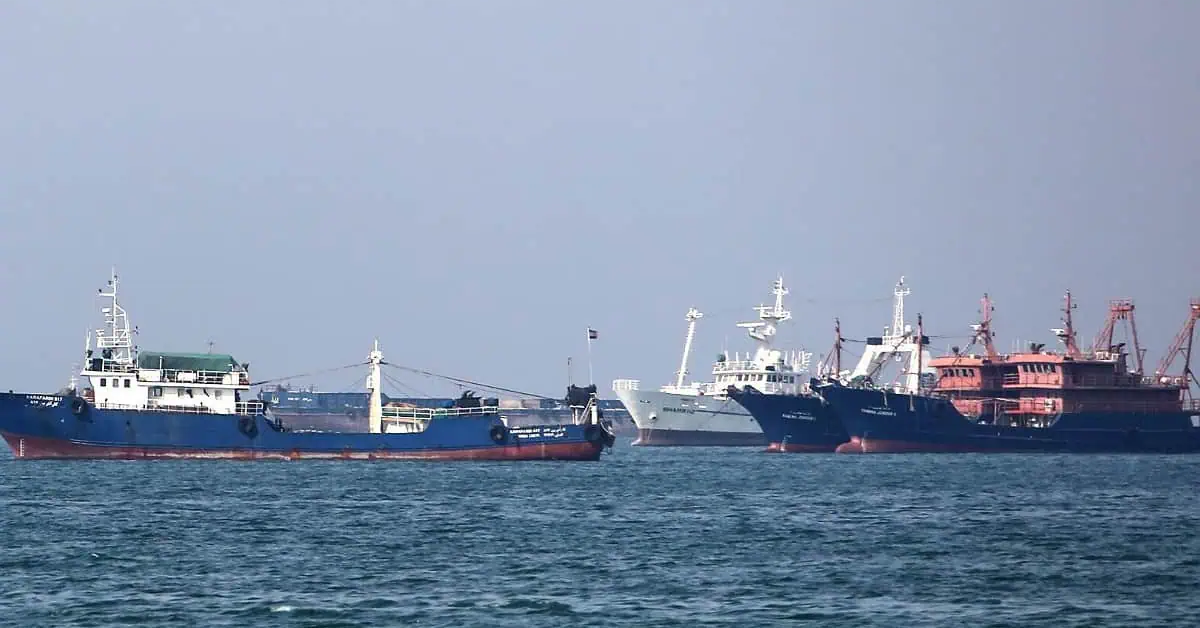

Tehran’s Persian Gulf Strait Authority mandates vessel coverage for Hormuz transit, drawing sharp industry criticism and raising fears of a precedent for tolling international waterways.
Just days after a US-Iran Memorandum of Understanding promised toll-free passage through the Strait of Hormuz for 60 days, Iran has introduced a fresh complication: a mandatory insurance requirement for all vessels transiting the critical chokepoint. The move, announced by Tehran’s newly established Persian Gulf Strait Authority (PGSA), has been met with widespread alarm across the global shipping industry.
Under the PGSA terms-and-conditions document, reviewed by Lloyd’s List, shipowners are required to secure insurance coverage approved by the Iranian authority before their vessels can transit the strait. Critically, Iran has insisted that this insurance must be purchased through channels it controls, effectively placing a new layer of administrative oversight on one of the world’s most heavily trafficked waterways.
In the short term, the insurance will be provided free of charge, with costs borne by the Iranian government. However, the authority has explicitly reserved the right to introduce insurance fees in the future. ‘The PGSA reserves the right to introduce insurance fees in the future. Owners will then be required to purchase and renew coverage accordingly,’ the document states.
Beyond insurance, Iran has also imposed a routing restriction. Vessels must now use a designated northern transit route near Larak Island, rejecting the growing practice of ships taking a US-protected southern corridor closer to the Oman coast. Any deviation is deemed a violation subject to penalties.
The reaction from the maritime industry has been swift and largely hostile. ‘It’s madness. This whole situation is a mess,’ one major tanker owner with vessels transiting the strait told Lloyd’s List. Several tanker operators have raised concerns about the practicality and legal standing of the PGSA’s authority to unilaterally impose conditions on what is, under international maritime law, a strait used for international navigation.
The stakes for India are considerable. The Strait of Hormuz is a critical artery for Indian energy imports — roughly 60 percent of India’s crude oil and a large share of its LNG transits through it. Any sustained disruption, toll imposition, or insurance controversy could raise freight costs and complicate supply chain planning for Indian refiners and importers.
International Maritime Organization (IMO) Secretary-General Arsenio Dominguez, who is involved in ongoing discussions with Iran and Oman, warned that permitting transit charges could set a dangerous precedent for other strategic maritime routes worldwide — potentially including the Malacca Strait, the Bab-el-Mandeb, or the Suez Canal.
US Vice President JD Vance reaffirmed Washington’s position that international waterways should remain free of tolls, while emphasising that uninterrupted navigation remains the immediate priority. Gulf states and major oil firms have reportedly made clear their opposition to any transit fee regime, arguing that such charges would increase energy costs across the board.
The situation remains fluid. With the 60-day MOU window now open, international stakeholders are watching closely whether Iran’s insurance gambit is the opening move in a longer bid to assert sovereign-style control over the strait — and what that would mean for global trade.
 Join our WhatsApp channel for more updates:
 Subscribe to our YouTube channel for more updates: