



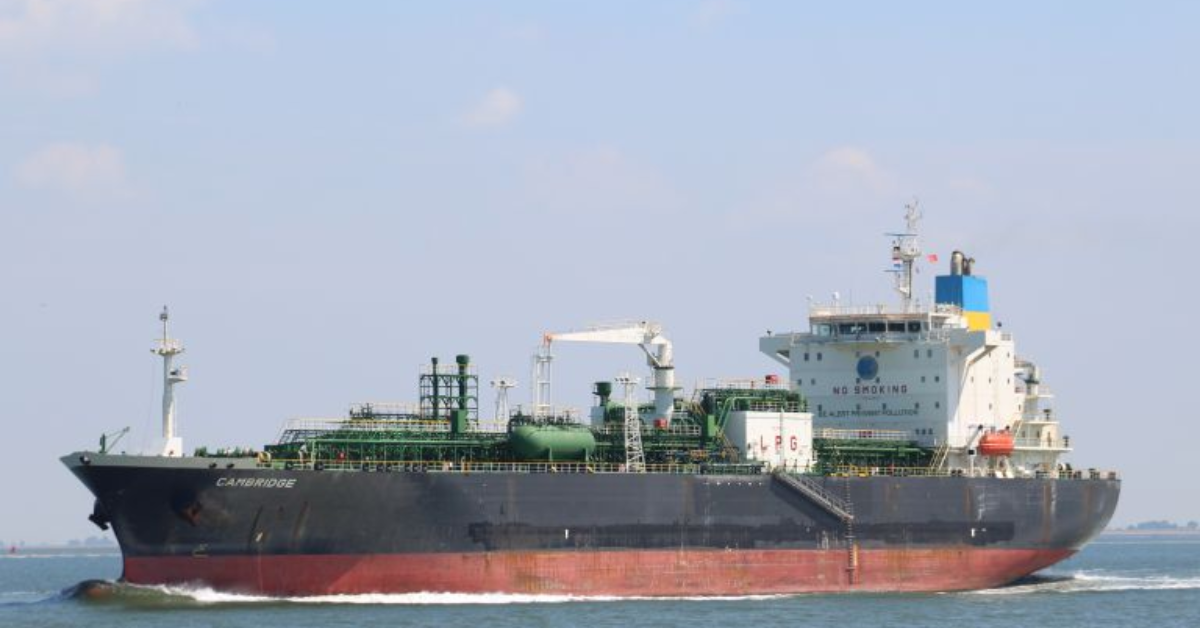

In a significant relief for India’s energy supply chain, the Indian-flagged LPG tanker Jag Vikram has safely arrived at Deendayal (Kandla) Port, marking the first such vessel to transit the Strait of Hormuz since the US-Iran ceasefire announcement.
The mid-sized gas carrier, owned by Mumbai-based Great Eastern Shipping Company, docked late Tuesday at Oil Jetty No. 1, carrying 20,400 metric tonnes of vital cooking gas from Gulf suppliers. Having crossed the tense chokepoint on April 11 after over a week of clearance delays, the ship underscores cautious maritime normalization amid lingering West Asia frictions. With 24 Indian seafarers aboard, its eastward passage through the Gulf of Oman signalled reduced immediate threats to the 20% global oil/gas artery—critical as 90% of India’s LPG imports flow from Gulf ports like Jubail and Mesaieed.
Kandla authorities confirmed unloading operations commenced promptly, bolstering domestic inventories strained by prior Hormuz disruptions. Since February’s conflict escalation, nine Indian vessels had exited the Persian Gulf, but Jag Vikram pioneered the post-ceasefire return leg. Ports Ministry Additional Secretary Mukesh Mangal noted at an inter-ministerial briefing: “We’re coordinating with MEA to expedite our 15 stranded ships. All Indian ports operate normally, congestion-free.”
This arrival holds profound logistics implications. Kandla, handling 25% of India’s LPG throughput (over 5 million tonnes annually), feeds northern refineries and bottling plants via the western DFC and NH-41. The cargo—equivalent to 1.5 million household cylinders—eases seasonal pressures ahead of summer weddings, where LPG demand surges 15%. Amid Red Sea/Hormuz dual crises that doubled VLGC charter rates to $150,000/day, the transit averts a projected 10-12% supply shortfall, stabilizing prices that had climbed ₹50/cylinder in March.
For maritime stakeholders, Jag Vikram’s feat spotlights Navy’s pivotal role: escorts secured 500+ vessels YTD, while IFC-IOR’s real-time tracking fused satellite/drone intel from 28 nations. Yet challenges linger—15 Indian-owned ships await clearance, insurance premiums hover 20% above norms, and Cape reroutings add $800,000/voyage for gas carriers. Operators at Mundra and Hazira report optimized berthing via PORTLIVE AI, but urge faster SPR-LPG blending to hedge imports.
The episode amplifies India’s resilience playbook. Diversified sourcing—Russia up 40%, US LNG +25%—pads Strategic Reserves to 13 million tonnes, while Gati Shakti’s ₹10,000 crore green corridor targets 30% rail LPG evacuation from Gujarat by 2028. FIEO hails the arrival as a “confidence booster” for pharma/textile exporters, whose $15 billion Gulf trade faced Hormuz paralysis.
As the two-week truce holds tenuously, Jag Vikram exemplifies supply chain grit: naval overheads, diplomatic hustles, and port efficiencies converging to protect EXIM arteries. With global trade eyeing 3.2% growth amid energy volatility, India’s western gateways reaffirm reliability.
 Join our WhatsApp channel for more updates:
 Subscribe to our YouTube channel for more updates: