
Summary
Gujarat has approved incentives for manufacturers establishing units at the Jambusar bulk drug park in Bharuch district. The package includes a 10% capital subsidy, utility-charge reimbursements and repayment of stamp duty and registration fees, supporting investment in domestic production of pharmaceutical ingredients and intermediates.
Package addresses capital and operating costs
The Jambusar bulk drug park incentives include a 10% subsidy on eligible fixed capital investment, alongside special interest support for qualifying micro, small and medium enterprises.
The dedicated scheme provides utility-charge reimbursements for up to ten years. Covered categories include electricity, steam, water, effluent treatment, solid-waste management, warehousing and park maintenance.
Eligible investors can also receive full reimbursement of stamp duty and registration fees on the first allotment of land within the park.
Businesses may choose between the dedicated park scheme and the Viksit Gujarat Industrial Policy 2026, according to their project requirements. The announcement presents these as alternative frameworks rather than automatically cumulative benefits.
Land applications open until November
Gujarat Industrial Development Corporation is inviting online applications for the Jambusar park from 26 October to 25 November 2026.
The application window gives pharmaceutical manufacturers a defined opportunity to seek space within the proposed cluster. It is separate from the incentive announcement: land applications, allotment and establishment of a production unit remain distinct steps.
For prospective investors, the immediate assessment involves matching their proposed manufacturing activity with plot requirements, infrastructure availability and the applicable assistance framework.
The commercial decision will also depend on project approvals, construction schedules and the timing of access to shared utilities. Incentives can influence investment economics, but manufacturing cannot begin until the necessary facilities and permissions are in place.
Project forms part of national bulk-drug strategy
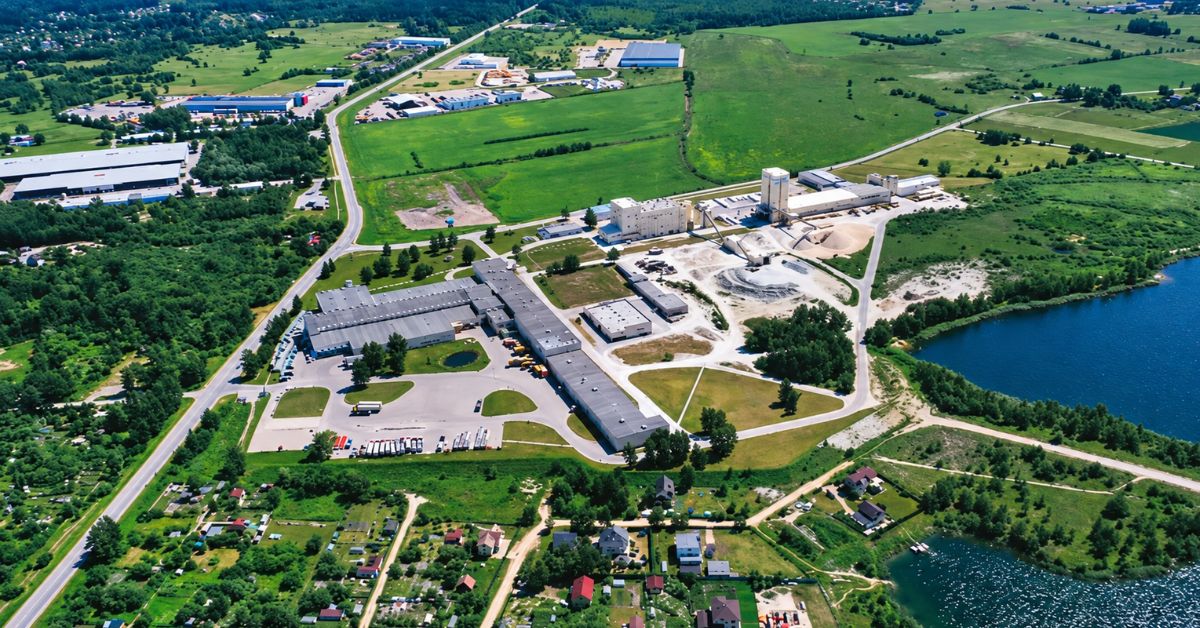
Jambusar is one of three parks approved under the Centre’s Scheme for Promotion of Bulk Drug Parks, alongside projects in Andhra Pradesh and Himachal Pradesh.
A February 2026 parliamentary update listed the Gujarat development at approximately 2,015 acres, with GIDC as the implementing agency.
The reported project cost was ₹2,507.02 crore, including ₹1,457.01 crore for common infrastructure facilities. Central assistance of ₹1,000 crore was approved for each of the three parks.
The national scheme seeks to reduce manufacturing costs through shared infrastructure and economies of scale. Its scope includes utilities, environmental facilities, testing, storage and logistics support.
The state’s latest incentives therefore operate alongside a separate infrastructure-development programme. Financial assistance to individual units and funding for common facilities address different parts of the investment requirement.
Shared facilities support industrial operations
GIDC’s published park plan identifies common effluent treatment, solvent recovery, steam generation, waste-management and storage facilities.
It also includes warehousing, an emergency response centre, a centre of excellence and multimodal logistics provisions.
Bringing these functions into a common industrial estate can reduce the need for every manufacturer to develop equivalent standalone infrastructure. The practical benefit depends on facility capacity, service quality and the requirements of each production process.
For bulk-drug manufacturers, dependable utilities and environmental services are closely connected with production continuity. A shared facility must therefore be assessed as an operating service, alongside its potential to reduce initial capital expenditure.
Domestic production remains the policy objective
The package is intended to encourage manufacturing of active pharmaceutical ingredients, key starting materials and drug intermediates.
These materials form essential inputs for medicine production. Expanding domestic availability could give manufacturers additional sourcing options and reduce exposure to disruptions affecting overseas suppliers.
However, new industrial capacity translates into supply-chain resilience only when units commission successfully, meet quality requirements and produce competitively. Investment announcements and land allotments are the beginning of that process, rather than evidence of import substitution already achieved.
Logistics opportunities depend on commissioning
For transporters, warehouse operators and industrial service providers, the park could generate demand for inbound raw-material movement, storage and outward distribution.
The cargo mix will depend on the units established and their production processes. Handling arrangements may differ substantially between chemical inputs, intermediates and finished pharmaceutical ingredients.
The immediate development is a clearer investment proposition supported by a current land-application window. Its longer-term significance will emerge through completed infrastructure, commissioned manufacturing units and sustained production, creating the cargo flows and service requirements around which logistics businesses can plan.
FAQs
Where is the park located?
At Jambusar in Gujarat’s Bharuch district.
What capital subsidy has been announced?
10% of eligible fixed capital investment under the dedicated scheme.
How long can utility reimbursements apply?
For up to ten years, subject to the scheme’s conditions.
When do land applications close?
GIDC’s advertised closing date is 25 November 2026.
Can investors automatically combine both incentive frameworks?
The announcement provides a choice between the dedicated park scheme and the Viksit Gujarat Industrial Policy 2026.
 Join our WhatsApp channel for more updates:
 Subscribe to our YouTube channel for more updates: