




Japan’s Minister of Transport unveiled the government’s first investments in the shipbuilding industry as part of an ambitious plan to dramatically expand the sector. Minister Yasuyuki Kaneko highlighted that shipbuilding is one of 17 priority areas in the government’s growth strategy.
Once one of the leaders in shipbuilding, Japan’s market share has declined dramatically as lower-cost competition emerged in South Korea and China. For 2025, the Japan Ship Exporters’ Association (JSEA) reported total orders of 186 ships totaling just under 9 million gross tons, down 16.5% versus 2024. It delivered 191 ships for export, totaling 8.32 million gross tons, with its market share at approximately 9% of global orders.
“The revitalization of Japan’s shipbuilding industry is finally getting underway,” Kaneko said, speaking with the press on Friday.
The government’s goal is to double Japan’s shipbuilding volume by 2035. Kaneko said the program will be rolled out in several phases, with total investment of approximately 1 trillion yen ($6.4 billion) coming from a combination of public and private partnerships. The Japanese shipbuilding industry had earlier outlined to the government the critical need for investment, saying it would require government support to reclaim a portion of its lost business.
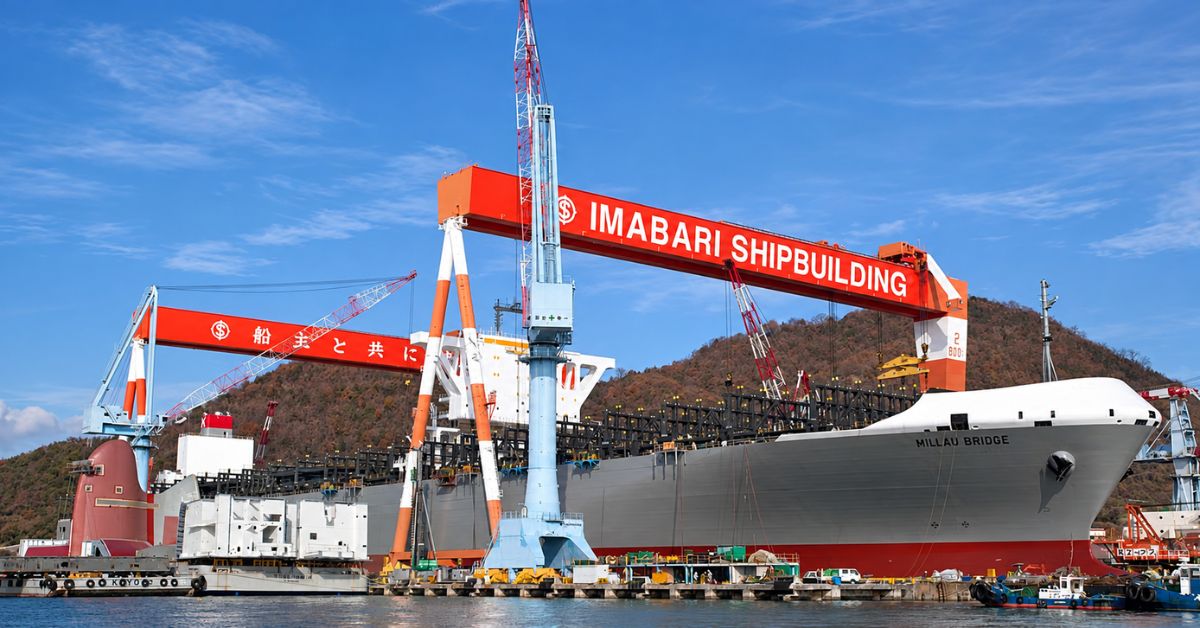
The first three investments are going to Imabari Shipbuilding, Japan Marine United Corp (JMU) and Namura Shipbuilding. The total value is 600 billion yen ($3.8 billion), with the government contributing nearly $1.4 billion. Japan’s JiJi Press reports that Imabari and its subsidiary Tadotsu Shipyard will receive the largest portion, approximately 114 billion yen ($729 million) in government subsidies. JMU will receive a maximum of 49.4 billion yen ($316 million), while Namura and its subsidiary Hakodate Dock Co. will also get up to 49.9 billion yen.
The companies are meant to use the investment to expand and modernize their plants, with one focus on developing advanced technologies for the next generation of ocean shipping.
“These three cases represent just a small portion of the numerous investment plans submitted by various businesses, essentially the first phase,” Kaneko said.
 Join our WhatsApp channel for more updates:
 Subscribe to our YouTube channel for more updates: