




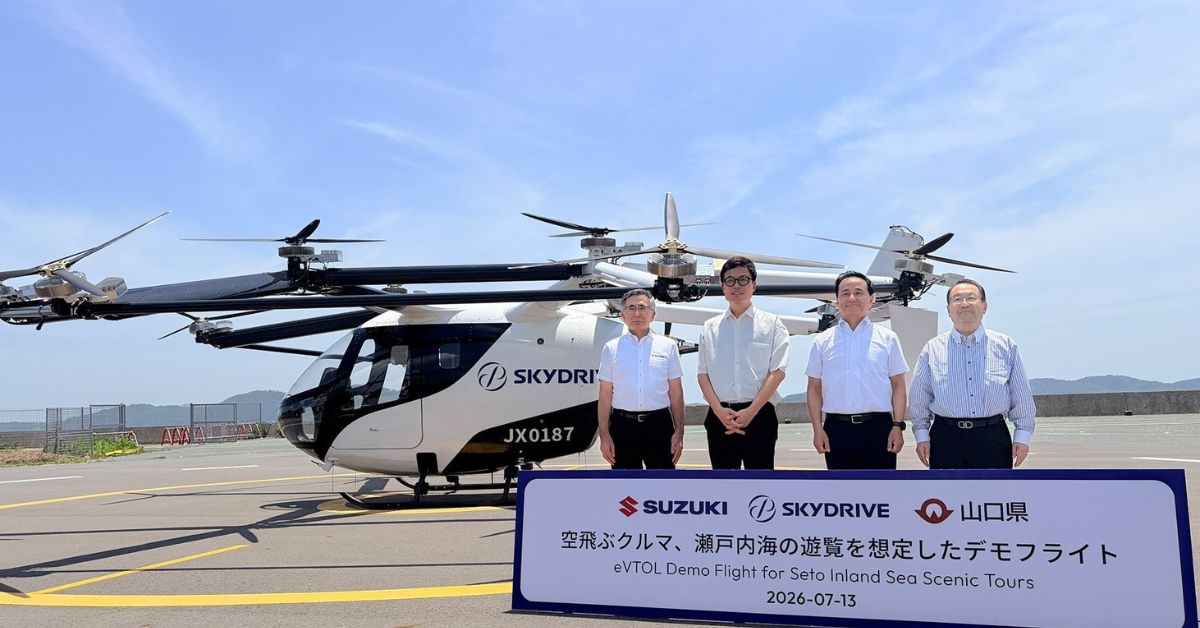

Three big names have signed up for a vital project that aims to ultimately introduce eVTOL medical logistics services in India. SkyDrive is the first name that comes to mind in relation to Japanese eVTOLs. It was the first Advanced Air Mobility (AAM) company to fly a piloted eVTOL in Japan, back in 2019. In 2025, thousands of visitors got the chance to watch flight demonstrations performed by SkyDrive’s flagship aircraft during the Osaka Expo event.
SkyDrive and Suzuki are in a close partnership, with Suzuki being the eVTOL maker’s official production partner, SkyDrive having kicked off official aircraft production in 2024 at a factory owned by Suzuki Motor Corporation. The two also have a special connection to the Indian market, widely promoted through Suzuki’s traditional presence there. Last year, Suzuki brokered a major deal for SkyDrive in India, fetching it a large pre-order for up to 50 aircraft from the Gujarat-based JetSetGo Aviation Services.
This year, both SkyDrive and Suzuki signed an MoU with Air India to start formally evaluating potential routes for future eVTOL medical transportation services in India. From the initial information, it looks like one of the most complex initiatives of its kind based around eVTOL operations, focusing on three different types of medical and beyond-medical logistics across three different geographical parts of India.
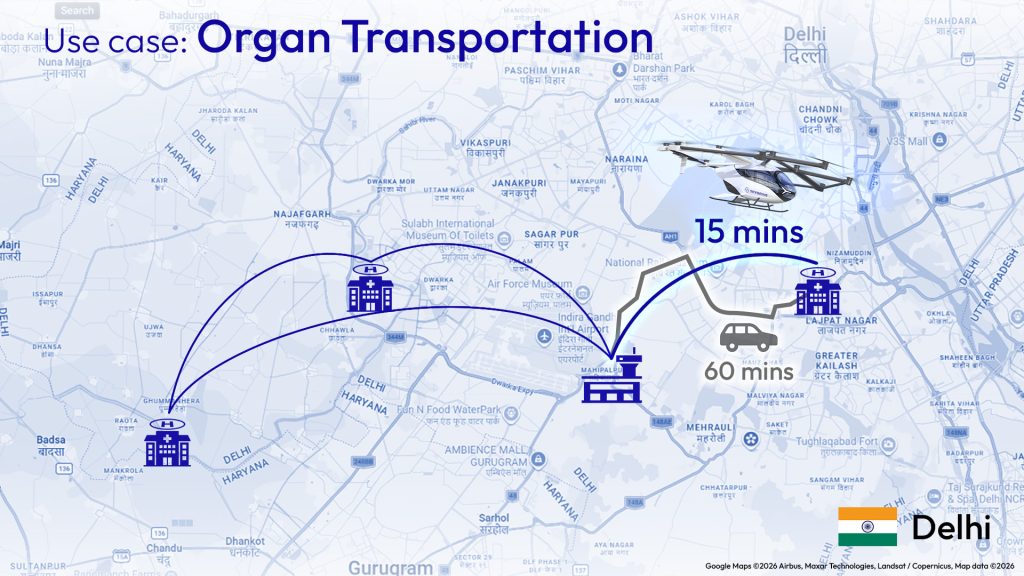
The MoU connects three key use cases with three different operational routes. One will focus on classic emergency and organ transport between major hospitals in the Delhi National Capital Region area. SkyDrive’s eVTOLs are expected to be able to provide this transportation in just 10 to 15 minutes, instead of the 30 to 90 minutes it currently takes ambulances to cover the same route.
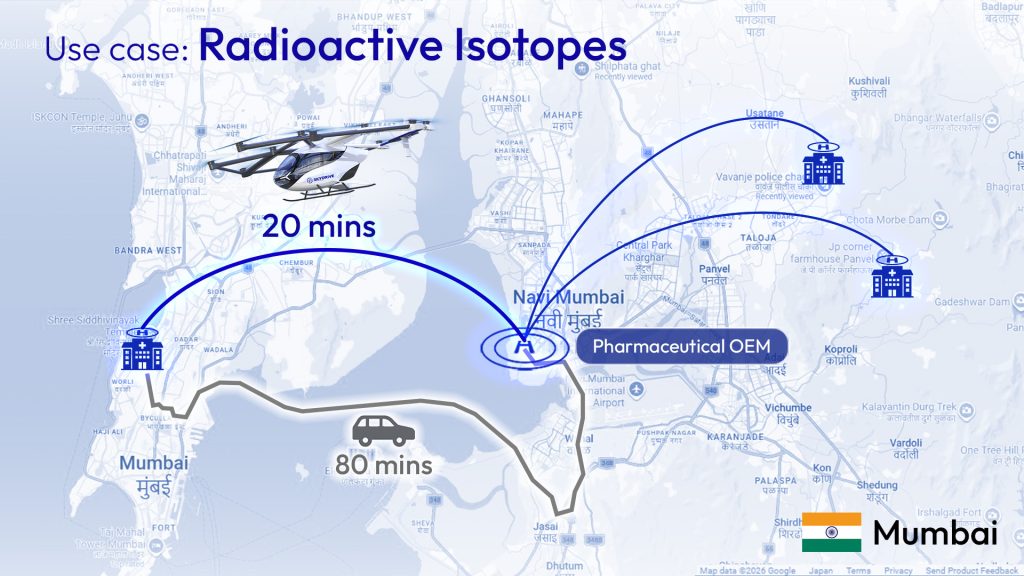
The second use case will focus on the emergency transport of radioactive isotopes, used for cancer diagnostics and various pharmaceuticals. Isotopes have a very short half-life and need to be transported to hospitals as soon as possible after production, and for this use case, eVTOLs will cover routes from a manufacturing facility in Mumbai to several major hospitals.
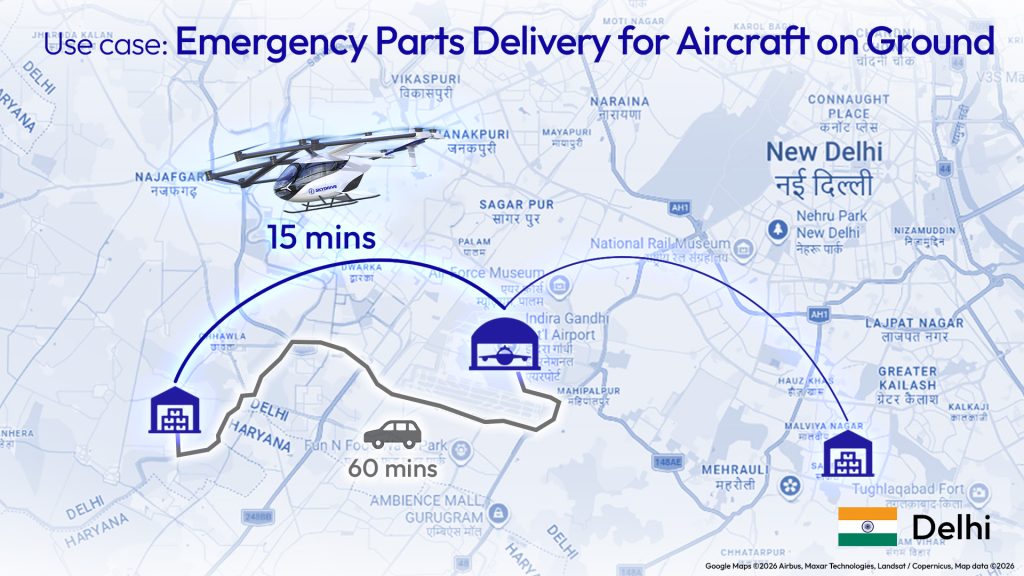
The third use case will interestingly expand to conventional aviation, with eVTOLs delivering aircraft parts to maintenance bases near various airports, in particular Delhi Indira Gandhi International Airport.
The joint study will initially focus on these first use cases and locations, and eventually expand based on feedback, marking a significant step toward officially introducing eVTOL medical logistics in one of the countries where it could be most beneficial, given its well-known traffic congestion challenges.
 Join our WhatsApp channel for more updates:
 Subscribe to our YouTube channel for more updates: