



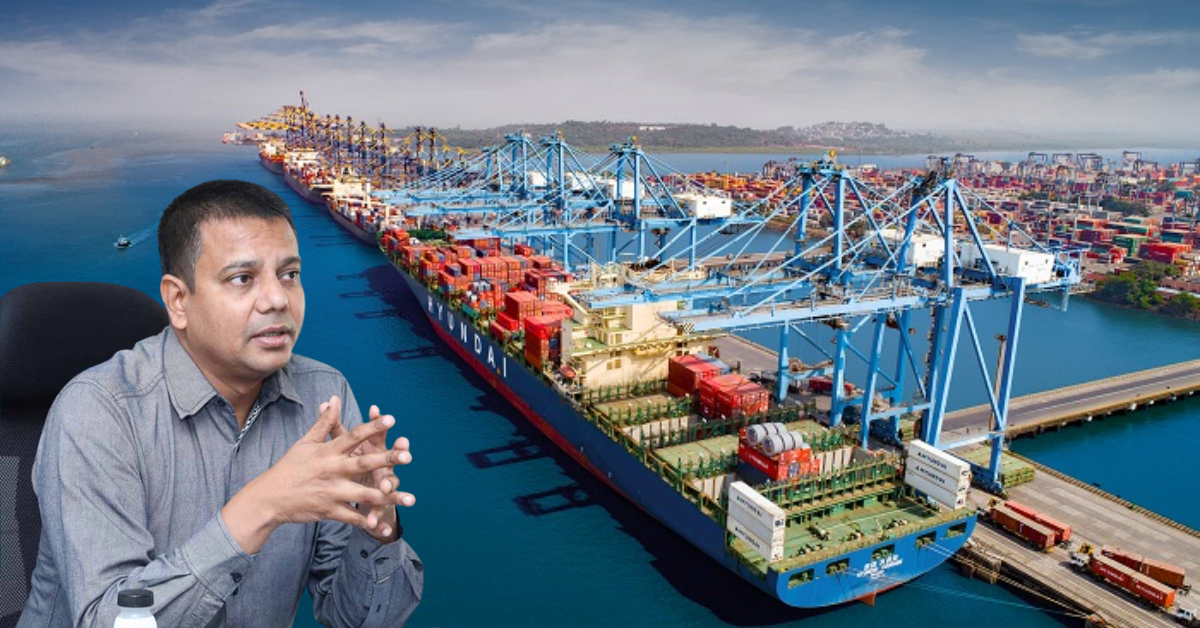

Gaurav Dayal, IAS (2004 UP Cadre), Chairperson of JNPA, sits down for an extensive aerial view of JNPA and what the coming years look like for the port.
Q1. JN Port has further strengthened its position as India’s leading container gateway. How do you assess its FY 2025–26 performance in throughput, productivity, and finances? Which achievements stand out, and where is further improvement needed?
In FY 2025–26, JNPA has delivered a strong, broad‑based performance across throughput, productivity, and financial indicators. In CY 2025, the port achieved its highest‑ever container handling of 7.94 million TEUs, registering a robust year‑on‑year increase and giving us confidence that we will cross the 8 million TEU mark by the end of the current financial year.
Among our key achievements, we are particularly proud that JNPA has emerged as India’s largest container port and has been ranked 23rd globally and No. 1 in India in the World Bank–S&P Global CPPI 2024, while also being recognised among the top 20 global improvers during 2020–2024, underscoring gains in efficiency and service quality.linkedin+1
On the financial side, operating income has grown from about ₹1,900 crore in FY 2019–20 to ₹3,262 crore in FY 2024–25, a CAGR of 9.45%, and we expect it to rise to around ₹3,900 crore in FY 2025–26, an 18.53% increase over FY 2024–25, in line with traffic growth and better capacity utilisation. Over the last six years, EBITA has grown at a CAGR of 8.94%, and for FY 2025–26 we expect a higher growth rate of 9.19%, supported by a lower operating ratio of 32% versus 34% in FY 2024–25, reflecting continuous efforts to curb inefficiencies, reduce wasteful expenditure, and strengthen financial discipline.
Looking ahead, there is still meaningful scope to improve sustainability and green‑port initiatives. We are actively exploring LNG bunkering, alternative fuels, and cleaner technologies, while intensifying our focus on operational efficiency, digitalisation, and productivity so that growth remains both robust and environmentally sustainable over the long term.
Q2. Amid global trade volatility and rising regional competition, what is your outlook for FY 2025–27? Will growth be driven more by traditional cargo, new trade corridors, or value‑added logistics?
JNPA has consolidated its position as India’s largest container port, with an installed capacity of over 10 million TEUs. In the current global environment—marked by shifting trade flows, evolving shipping alliances, and near‑term volatility—we remain cautiously optimistic about throughput in FY 2025–26 and FY 2026–27.
We expect to maintain our upward trajectory and aim for continued double‑digit growth in container traffic, broadly in line with last year, and remain confident of achieving 8 million TEUs by the end of this financial year. Core containerised EXIM cargo from established markets will remain a stable base, supported by India’s growing manufacturing capabilities and domestic consumption.
At the same time, we see the next leg of growth coming from value‑added logistics activities and ecosystem linkages. Expansion of SEZ‑led manufacturing, warehousing, multimodal connectivity, and port‑centric logistics will increasingly drive incremental volumes and deepen JNPA’s role as an integrated logistics hub, not just a gateway port.
Q3. JN Port has been investing heavily in capacity. Can you update us on key projects—new terminals, berth upgrades, and yard expansion and how they will shape JNPA’s long‑term capacity and competitiveness?
Recent capacity augmentation has been a major turning point for JNPA. The commissioning of BMCT Phase II and the capacity expansion at Nhava Sheva Free Port Terminal (NSFT) from 0.6 million TEUs to 1.8 million TEUs have together raised JNPA’s overall container‑handling capacity to over 10.4 million TEUs, firmly positioning it as India’s largest container port. These developments mark the effective utilisation of all major brownfield capacity within the existing Nhava Sheva footprint. With most available space now optimised, our strategic focus is shifting to greenfield expansion through the development of Vadhvan Port, envisaged as a next‑generation deep‑draft gateway that will cater to long‑term national demand, handle larger vessels, and significantly enhance India’s competitiveness in global container shipping networks.
Q4. With the Western Dedicated Freight Corridor due in March 2026, how will it change freight movement between JN Port and the northern hinterland, and what shifts do you foresee in cargo flows?
The commissioning of the Western Dedicated Freight Corridor (WDFC) in March 2026 is expected to be a genuine game changer for rail‑based freight between JNPA and the northern hinterland, including the NCR, Haryana, Rajasthan, and Punjab. By providing a high‑capacity, high‑reliability corridor for long‑haul container trains, WDFC will significantly improve transit times, reduce variability, and make rail a much more attractive option for shippers.
A major advantage is the provision for double‑stack container trains, which can help reduce overall freight costs by up to 25% on relevant routes. At present, rail cargo from the NCR accounts for only 15–20% of JNPA’s rail volume, with a substantial share of trade preferring Mundra due to shorter distances and lower freight charges. With direct DFC connectivity into JNPA, we expect this equation to shift meaningfully.
Improved transit times, better cost economics, and higher service reliability are likely to attract more NCR‑bound cargo to JNPA. As a result, we anticipate that the rail coefficient at JNPA is currently about 16% and could rise to around 25% over the next two to three years, leading to a more balanced and sustainable modal mix between road and rail.
Q5. As JN Port positions itself as a model Green Port, which concrete green transportation initiatives are in place? Will the battery‑swapping electric truck model be scaled up, and what is your roadmap for shore power and cleaner vessel‑side energy?
JNPA has begun a systematic transition towards cleaner mobility across its operations. We have already deployed electric and CNG vehicles for internal usage, and electric trucks operate within the container yards, supported by a battery‑swapping ecosystem. Two battery‑swapping stations and six charging points are currently functional, and this infrastructure will be scaled up in line with the growth of the electric fleet.
We have set a clear target to replace all diesel tractor‑trailers operating within the port with battery‑operated trucks by 2028, which would make JNPA the first port in India to operate a fully green internal trucking ecosystem. In parallel, official cars and buses are being converted to electric vehicles, further reducing Scope 1 emissions.
On the waterside, JNPA is implementing shore‑to‑ship power to reduce carbon emissions from vessels at berth. Phase I covers one container terminal at an estimated cost of about ₹98 crore, and the tender has already been floated. Following successful implementation, Phase II will extend shore power to the remaining terminals by 2028, with an estimated investment of around ₹2,480 crore. Beyond this, we are actively exploring green hydrogen and LNG bunkering to support cleaner marine fuels and align with global decarbonisation goals.
Q6. For shippers, predictability and service quality are as critical as capacity. What new initiatives has JN Port taken to improve customer experience in documentation, dwell time, digital processes, and stakeholder coordination?
From a shipper’s standpoint, we recognise that reliability, visibility, and ease of doing business are as critical as physical capacity. JNPA has therefore focused on digitisation, process simplification, and tighter stakeholder coordination to enhance the overall customer experience.
On the marine side, we have deployed an indigenous Harbour Management System along with an Integrated Vessel Traffic Management System, which together enable more efficient vessel planning, real‑time monitoring, and better on‑time berthing performance. On the landside, automated gate systems, a Truck Appointment System, and a Centralised Parking Plaza have been introduced to decongest terminal gates and reduce truck turnaround times.
We are progressing towards a comprehensive Digital Twin of the port, which will provide end‑to‑end operational visibility, support scenario planning, and enable faster decision‑making. Implementation of “One Nation One Port” processes, integration with the National Logistics Portal (Marine), and adoption of the Maritime Single Window have reduced manual interventions and simplified regulatory workflows. Looking ahead, the proposed automooring system is expected to further improve vessel turnaround by enabling faster, safer berthing and unberthing operations.
Q7. As ports worldwide embrace automation, AI, and digital twins, what are JN Port’s technology priorities? Are you moving toward a fully integrated smart‑port ecosystem, and how will this translate into measurable operational gains?
Our technology roadmap is anchored in three pillars: safety, efficiency, and transparency. JNPA terminals have already deployed AI‑driven safety solutions that are transforming how we manage risk—these tools are not just recording incidents but helping to predict and prevent them.
We are leveraging AI and machine learning for route optimisation, demand forecasting, inventory management, warehouse automation, predictive maintenance, and yard optimisation. Automated reefer monitoring solutions enable real‑time, intelligent tracking of refrigerated containers, ensuring cargo safety and regulatory compliance. Complementing these, GPS‑based vehicle monitoring and advanced driver‑assistance systems (ADAS) bring AI‑enabled fleet management and driver safety into everyday operations.
Digital twin implementation will allow us to create virtual replicas of key port assets and processes to run simulations, test scenarios, and optimise workflows before changes are made in the real world. Priority use cases include vessel operations, environmental monitoring, and the Integrated Command and Control Centre (ICCC), which is designed to integrate GPS, National Logistics Portal interfaces, M/E seals, and ULIP, enabling real‑time monitoring of trailer movements, heat maps of port areas, and automated alerts in case of congestion, accidents, or disruptions.
These initiatives will be supported by 5G‑enabled high‑speed connectivity, essential for powering IoT devices at scale, integrating port operations with hinterland logistics, and deploying AI‑enabled systems for vendor invoice verification and pre‑ and post‑tender checks. Over time, this integrated smart‑port ecosystem is expected to deliver measurable improvements in turnaround times, asset utilisation, safety performance, and customer satisfaction.
Q8. JNPA SEZ posted 27% year‑on‑year growth in container handling in CY 2025. What drove this; tenant mix, infrastructure, or policy support—and which industrial and logistics activities will anchor its next phase of growth?
The 27% year‑on‑year growth in container handling at JNPA SEZ in CY 2025 is the result of a combination of strong infrastructure, streamlined procedures, and supportive policies. Robust internal infrastructure, along with single‑window clearances for building permissions, fire safety, water, and electricity, has made it significantly easier for units to set up and scale operations.
As a developer, JNPA SEZ has focused on ease of doing business, with simple, transparent processes and close coordination with statutory authorities, reinforcing investor and tenant confidence. Sustainability is another defining feature: the SEZ currently supplies about 90% green power to units, at a significantly lower cost than external sources, and as a distribution licensee we can pass on these benefits directly. Extensive greening, including the plantation of over two lakh trees with prominent Miyawaki plantations, has further strengthened its profile.
An Integrated Command and Control Centre is under development to provide digital visibility of manpower, vehicles, and cargo, alongside an advanced surveillance framework. The SEZ’s strategic location—just 5 km from JNPA—with strong road and rail connectivity to the hinterland has reduced logistics costs and improved competitiveness. Importantly, this growth has been achieved with only 11 operational units so far.
Over the next 2–3 years, as sectors such as pharmaceuticals, chemicals, electronics, engineering goods, warehousing, and Free Trade and Warehousing Zones (FTWZ) scale up, we expect a much stronger growth trajectory. Enhanced rail connectivity through the WDFC, the upcoming Navi Mumbai International Airport, and a sharper focus on multimodal logistics will help JNPA SEZ handle higher‑value cargo and play a larger role in global supply chains.
Q9. Looking beyond immediate targets, what is your five‑year vision for JN Port, and how do you want it positioned within Asia’s competitive maritime landscape?
Over the next five years, JNPA’s priorities are clearly defined and aligned with national maritime objectives and our own strategic roadmap. Given our current growth momentum and capacity, we expect to be able to handle more than 12 million TEUs over the next three to four years, further strengthening our role as India’s premier container gateway
Our foremost objective is the timely progress and completion of Phase 1 of the Vadhvan Port Project, which will serve as the next major capacity engine on the western coast and complement JNPA’s existing gateway operations. In parallel, we are committed to transforming JNPA into a 100% green and sustainable port, with a strong emphasis on renewable energy, low‑emission equipment, and environmentally responsible infrastructure.
A third core priority is the on‑schedule completion of trade‑enabling projects such as the Agro Processing & Storage Facility, Empty Container Yard, and ongoing digital and physical infrastructure upgrades. Collectively, these initiatives will enhance operational efficiency, deepen our integration with the broader logistics ecosystem, and position JNPA as a benchmark port in Asia in terms of capacity, sustainability, and service standards.
Q10. Vadhvan Port is being developed as a major greenfield facility with ambitions to be among the world’s top 10 ports. What is its current status, and which milestones are you targeting in the next 6–12 months to stay on schedule?
At present, the key focus for the Vadhvan Port Project is land acquisition, which is a prerequisite for starting nearshore reclamation and related onshore works. Land required for road and rail connectivity will be acquired by the National Highways Authority of India (NHAI), while funding will be provided by Vadhvan Port Project Ltd (VPPL), a Special Purpose Vehicle (SPV) set up by JNPA.
The project has three major engineering components: a nearshore reclamation area with shore protection, an offshore reclamation area, and construction of a 10.14‑kilometre breakwater. Road and rail connectivity form separate but inter‑linked components and also depend on the land acquisition process. In total, around 606 hectares will be acquired, and VPPL estimates that approximately ₹2,000 crore (now budgeted closer to ₹2,300 crore) will be spent on land acquisition and compensation. Importantly, while land from 24 villages is involved, no inhabitants will be physically displaced; awards for 21 villages have already been forwarded by the district collector to NHAI.
Over the next 6–12 months, key milestones include completing land acquisition formalities, resolving pending approvals, and initiating core reclamation and breakwater works. From a funding standpoint, there is no constraint on meeting compensation obligations or progressing with the planned engineering activities.
Q11. What are the biggest challenges you currently face in the Vadhvan Port project—technical, non‑technical, or funding‑related?
The most significant challenges at this stage are non‑technical. Forest clearances for road and rail alignments, as well as permissions for quarrying and sourcing construction materials, are still in process. In parallel, we have encountered headwinds in land acquisition due to concerns raised by local villagers and fishermen, especially around livelihoods, environmental impacts, and long‑term sustainability.
There have been visible protests in the Palghar district, which we take seriously. The encouraging sign is that fisherfolk have now allowed house‑to‑house surveys to assess the extent of fishing activity by each family, which will form the basis for designing an appropriate and fair compensation framework. Any prolonged delay in land acquisition and clearances could have a cascading impact on subsequent project timelines, and we are working closely with all stakeholders to find a balanced, inclusive path forward.
Q12. Beyond its scale as a mega port, what will be Vadhvan’s unique value proposition once it is fully developed?
Vadhvan Port is poised to be a transformative project for India’s maritime sector. With a natural draft of 18–20 metres, it will be among the few Indian ports capable of regularly handling Ultra Large Container Vessels (ULCVs), significantly reducing India’s dependence on foreign transhipment hubs such as Colombo, Singapore, and Jebel Ali, thereby lowering logistics costs, shortening transit times, and strengthening India’s competitiveness in global trade lanes.
The port has been designed as a 100% green facility from inception, incorporating clean energy, low‑emission technologies, and environmentally responsible infrastructure. Strategically, it will lie along key international routes, including the India–Middle East–Europe Economic Corridor and the International North‑South Transport Corridor, positioning it as a major gateway for EXIM trade.
Beyond port operations, Vadhvan will act as a catalyst for regional and national economic development, creating significant opportunities in logistics, warehousing, value‑added services, and allied industries. Its unique value proposition lies not just in scale, but in its ability to reshape India’s role in global maritime trade and support a more resilient, competitive logistics ecosystem.
 Join our WhatsApp channel for more updates:
 Subscribe to our YouTube channel for more updates: