
Summary
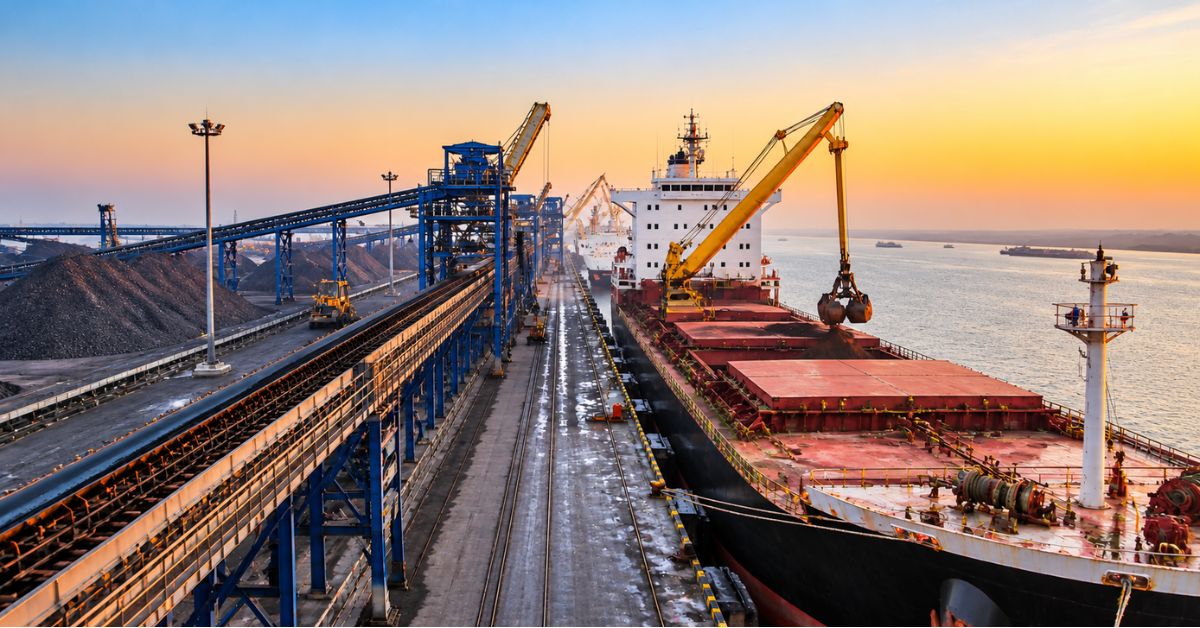
Jindal Steel subsidiary Jindal Paradip Port Limited has started commercial operations at the first phase of its Western Dock cargo terminal in Odisha. The 12.5-million-tonne-per-year facility forms part of a ₹3,393-crore, two-phase development intended to strengthen maritime access for the steelmaker and the region’s industrial supply chains.
Commercial operations begin ahead of contractual deadline
The Jindal Paradip terminal commenced Phase-I commercial operations on 15 October 2026, bringing new dry-bulk handling capacity into service at Paradip Port.
Jindal Paradip Port Limited, or JPPL, received the phase’s completion certificate on 12 October. Its contractual commercial-operation deadline was 16 October.
Jindal Steel holds a controlling stake in the subsidiary, which is developing the Western Dock under a build-operate-transfer concession with Paradip Port Authority.
The complete project will provide 25 million tonnes per annum of capacity across two phases. The company says work on both phases has progressed simultaneously.
The ₹3,393-crore project cost covers the two-phase development; it should not be attributed solely to the capacity commissioned this month.
Terminal links steel production with maritime logistics
The investment gives Jindal Steel dedicated, long-term port access as it expands its manufacturing operations.
Its significance extends across the group’s industrial network in Odisha, Chhattisgarh and Jharkhand, where steelmaking, mining, power and pellet production generate substantial transport requirements.
A February 2026 assessment by CARE Ratings identified proximity to these operations as a principal commercial strength of the project. The assessment recorded Jindal Steel’s 51% shareholding in JPPL.
It also identified 15-year take-or-pay arrangements with Jindal Steel and group entities covering 17.5 million tonnes of cargo, equivalent to 70% of the terminal’s planned full capacity.
Those arrangements provide a contractual demand base for the completed development. They are distinct from actual throughput at the newly commissioned first phase and should not be read as cargo already handled.
Equipment supports bulk handling and evacuation
The Western Dock development is designed around commodities including coal, limestone and steel products.
The operator’s published project outline lists ship unloaders, mobile harbour cranes, coal silos, wagon loaders, rail-mounted gantry cranes and stacker-reclaimers among the planned infrastructure.
Together, these assets connect vessel handling with storage and inland evacuation. The equipment list describes the overall development rather than confirming that every listed asset belongs to the first commissioned phase.
The operator’s phasing schedule provides for 12.5 MTPA within three years of the concession award and the full 25 MTPA within five years.
For customers, the commercial benefit will depend on how efficiently the terminal combines unloading, stockyard management and onward movement. Berth capacity creates the opportunity to handle cargo, while evacuation performance determines how smoothly that cargo moves into industrial supply chains.
Earlier approval established the project’s purpose
The commissioning follows a development process that began several years earlier.
In December 2020, the Union Cabinet approved deepening and optimisation of Paradip’s inner harbour facilities, including the Western Dock, to accommodate Capesize vessels.
The approved structure envisaged two 12.5-MTPA phases and a 30-year concession. Paradip Port was assigned responsibility for common supporting infrastructure, including breakwater-related works.
The original commercial rationale centred on coal and limestone imports, together with exports of granulated slag and finished steel products from the port’s industrial hinterland.
Handling larger vessels was intended to create economies of scale and improve the competitiveness of bulk supply chains. These were project objectives; the latest commissioning announcement does not quantify freight savings already achieved.
Cargo ramp-up becomes the next milestone
Phase-I commissioning moves the project from construction into commercial operation, but capacity and utilisation remain separate measures.
The announcement does not disclose first-year cargo expectations, initial vessel calls or the timetable for reaching steady operating volumes.
CARE’s earlier assessment identified cargo ramp-up, competition from other eastern-coast terminals and exposure to industrial cycles as factors affecting future performance. Its analysis also anticipated a cargo mix concentrated in coal and limestone.
For Paradip’s wider logistics ecosystem, the opening provides another operating facility serving bulk-industrial demand. Opportunities for rail operators, transporters, equipment suppliers and service providers will develop alongside cargo flows.
The immediate achievement is the start of commercial operations at half the project’s ultimate capacity. The next tests are reliable handling, effective inland evacuation and completion of the remaining development, supported by sustained customer volumes.
FAQs
When did Phase-I operations begin?
On 15 October 2026.
What capacity has been commissioned?
12.5 million tonnes per annum.
What is the terminal’s planned full capacity?
25 million tonnes per annum across two phases.
Does ₹3,393 crore cover Phase I alone?
No. It is the stated cost of the two-phase project.
Which cargoes will the development serve?
Its intended cargo base includes coal, limestone and steel products.
 Join our WhatsApp channel for more updates:
 Subscribe to our YouTube channel for more updates: