




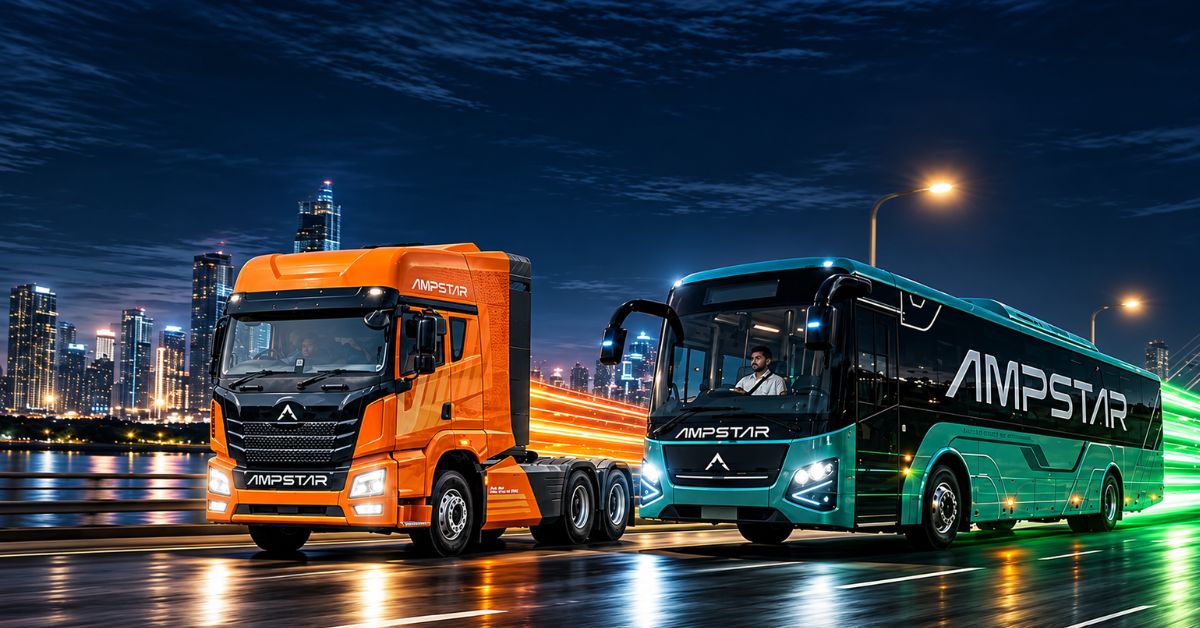

JSW Greentech has selected Siemens Xcelerator software to connect engineering, product development and manufacturing for its AMPSTAR commercial electric vehicles. Announced on 3 November, the initiative will support the company’s research and development centre in Pune and its planned manufacturing facility in Chhatrapati Sambhajinagar, Maharashtra.
The implementation includes Teamcenter for product lifecycle management (PLM) and Mendix for supplier and business-process collaboration. JSW Greentech aims to improve engineering coordination, strengthen product traceability and shorten vehicle development cycles.
What will the Siemens implementation cover?
Teamcenter will connect product and engineering information, including bills of materials, product structures, requirements, programme planning and engineering changes. It will also support collaboration between mechanical and electrical engineering teams.
Integration with JSW Greentech’s enterprise resource planning (ERP) system is intended to synchronise engineering and business data. A supplier portal built using Mendix will extend collaboration beyond the company’s internal teams.
JSW Greentech chief executive officer Sumit Mittal said the collaboration would support the development and manufacture of its electric commercial vehicles. Mathew Thomas, vice-president and managing director for India at Siemens Digital Industries Software, described connected engineering and lifecycle management as a foundation for expanding vehicle development efficiently.
Where is JSW Greentech building its manufacturing capabilities?
Established in 2024, JSW Greentech is the JSW Group’s commercial electric vehicle business. Its AMPSTAR brand covers electric buses and trucks developed for Indian operating conditions.
The company is developing a greenfield manufacturing facility across approximately 90 acres in Chhatrapati Sambhajinagar. Its published plans specify annual manufacturing capacity of 10,000 electric buses and 5,000 electric trucks. These figures describe the planned facility’s capacity, rather than current production or deliveries.
JSW Greentech’s manufacturing programme also envisages battery manufacturing capabilities and integration between ERP, PLM and manufacturing execution systems. Its Pune engineering centre supports in-house technology development, prototype testing, connected-vehicle systems and software development.
The company says its approach combines internal engineering with selected international partnerships and localisation. This places the Siemens implementation within a broader effort to establish vehicle development and manufacturing capabilities together.
Why is product information important to vehicle production?
Product lifecycle management provides a shared system for organising the information required to develop, manufacture and maintain a product. It allows engineering teams, business functions and suppliers to work from controlled product records.
Siemens describes Teamcenter as a central platform for managing product information from initial design through production and maintenance. Its functions include communicating requirements, coordinating design work and managing changes across departments.
For a commercial vehicle programme, this means connecting the information used by different engineering disciplines instead of maintaining separate, potentially inconsistent records. The purpose is to keep teams working with current specifications as designs develop and move towards production.
How does bill-of-materials management support suppliers?
A bill of materials identifies the components and assemblies that make up a product. Siemens’ Teamcenter documentation describes capabilities for managing mechanical, electrical, electronic and software elements within a common product structure.
The system can record changes, retain historical configurations and distinguish between product variants. It can also connect product information with other enterprise systems, including ERP platforms.
These functions are relevant when manufacturers coordinate component requirements, engineering revisions and production planning across suppliers. They provide the technical context for JSW Greentech’s planned integration, although actual improvements will depend on implementation and use.
The announcement establishes the software selected for the programme. It does not disclose the contract value, implementation completion date or quantified reductions in development time. For freight operators, it represents a step in AMPSTAR’s vehicle development programme rather than an announcement of truck orders or fleet deployment.
 Join our WhatsApp channel for more updates:
 Subscribe to our YouTube channel for more updates:




