


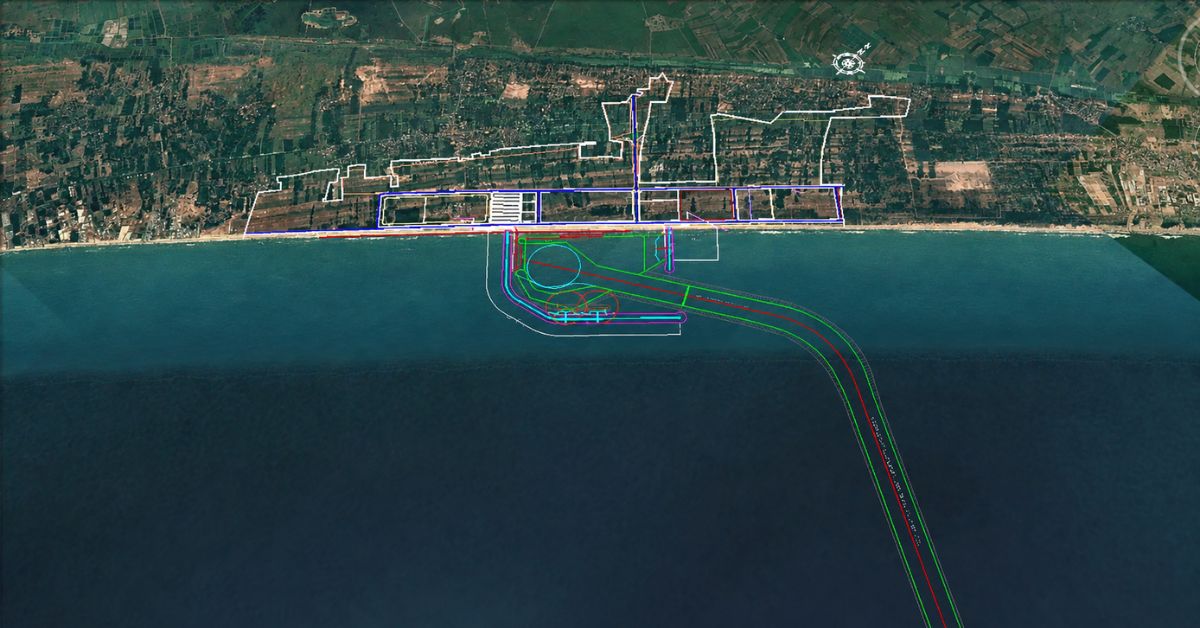

The Gateway port being built in the Kakinada Special Economic Zone (KSEZ) is set to be commissioned by early next year, as construction of the 3.3-kilometre-long breakwater facility has been completed at Kona in Kakinada district. The greenfield port will be the third port on the Kakinada coast.
The Kakinada Gateway Port Private Limited (KGPL), a subsidiary of Auro Infra Private Limited, is building the port at an estimated cost of Rs 2,620 crore, with three berths and an annual capacity of handling 16 million metric tonnes per annum.
The first phase targets exporting coal, granite, fertilizers and aluminium. A Liquefied Natural Gas terminal will be built in the second phase, facilitating maritime trade facilities for companies engaged in oil and natural gas exploration.
A few weeks ago, construction of the breakwater facility, comprising a 2.715 km-long South Breakwater and 589 metres of North Breakwater, was completed.
Construction of the first berth is in full swing and will be complete by year-end, inching close to commissioning the port by early 2027. Spreading over 1,726 acres on the land front, the port has been blessed with a nearly six-kilometre-long coastal belt.
The ongoing works of the four-lane Bharat Mala greenfield highway, which passes through the port, will be completed by early next year, coinciding with the port’s commissioning timeline. Simultaneously, railway authorities have consented to the railway track proposed to be laid between Annavaram and the port.
KGPL has proposed to lay a 15-km railway track connecting its port to Samarlakota, at an estimated cost of Rs 400 crore. Kakinada district authorities are engaged in land acquisition for the railway project.
On the prospects of investment in the KSEZ, all the legacy challenges of land have been resolved recently, and talks are on with major investors for various projects. Recently, KSEZ authorities handed over more than 2,100 acres of land that was excluded from the KSEZ to farmers.
 Join our WhatsApp channel for more updates:
 Subscribe to our YouTube channel for more updates: