





Summary
Andhra Pradesh plans to strengthen Kakinada’s position as an international logistics and export centre by integrating maritime facilities with roads, railways and waterways. Roads minister B.C. Janardhana Reddy outlined the ambition at a CII regional summit, linking the city’s development to the state’s wider marine-based economy.
Government outlines an integrated trade strategy
Kakinada logistics hub development will form part of Andhra Pradesh’s effort to connect producers and industries with domestic and overseas markets through a coordinated transport network.
Roads minister B.C. Janardhana Reddy outlined the government’s approach on 12 October at Jawaharlal Nehru Technological University Kakinada, alongside tourism minister Kandula Durgesh and industries minister T.G. Bharat.
Reddy highlighted the region’s maritime advantages and the potential of National Waterway-4 for lower-cost freight movement.
He said 104 road projects covering 1,967 kilometres, involving ₹38,815 crore, were under execution across the state. Another 51 projects spanning 2,624 kilometres were in the pipeline, with combined investment exceeding ₹1 lakh crore.
These are statewide transport figures, rather than a separately announced investment package for Kakinada. The statement sets out a development direction without specifying a completion timetable for the proposed logistics hub.
Existing ports provide the commercial foundation
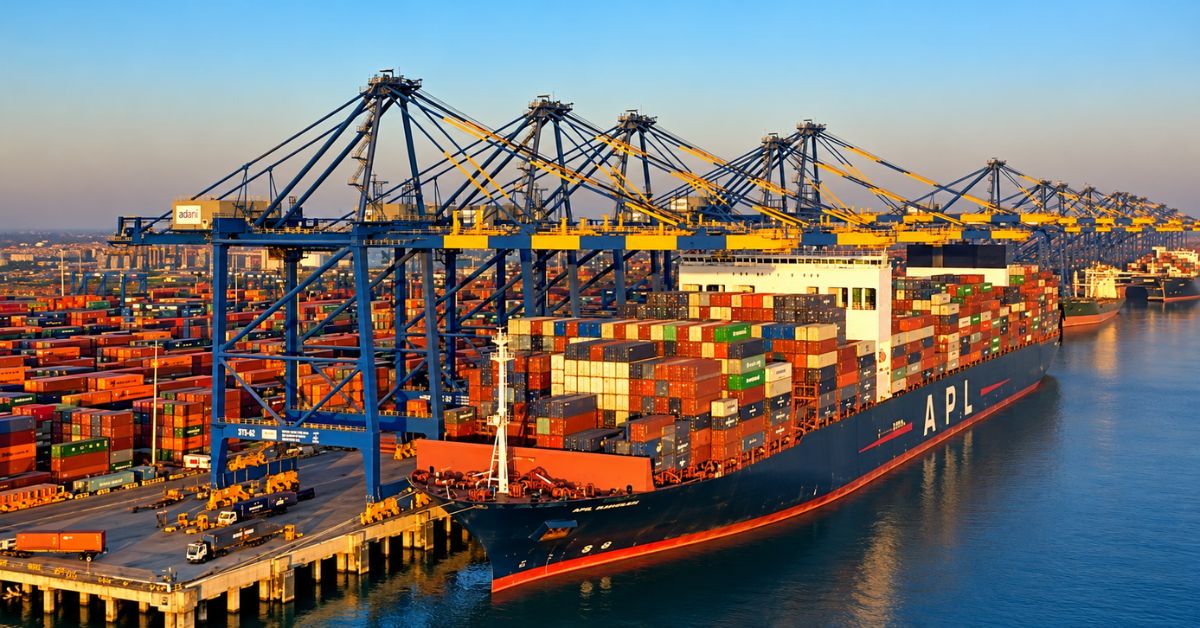
Kakinada’s logistics ambitions build on an established maritime base. The Deep Water Port was commissioned by the Andhra Pradesh government in November 1997 with a 610-metre quay.
Kakinada Seaports took over operations following privatisation in 1999. Subsequent expansion increased the quay length to 2,500 metres and added facilities for handling multiple cargo categories and supporting offshore exploration.
The port’s hinterland includes the Godavari region, Krishna and Guntur, alongside Telangana. Agricultural products, minerals, coal and fertilisers feature among the cargoes associated with this catchment.
This history distinguishes the latest policy ambition from a proposal to establish an entirely new gateway. Kakinada already handles industrial and agricultural freight; the government’s stated objective is to strengthen the surrounding connections and commercial ecosystem.
The existing cargo base also gives the city a broader role than a single-commodity export centre, bringing together manufacturing inputs, agricultural trade and offshore supply requirements.
Cargo facilities extend beyond vessel berthing
The Deep Water Port’s listed infrastructure includes warehouses, liquid storage tanks and cargo yards, supported by road and rail connections.
Its handling systems cover coal, alumina, granite and fertiliser cargoes. Other facilities include hazardous-liquid handling, including liquid ammonia, and an offshore supply terminal serving oil and gas activities.
The port also lists an electronic data interchange-connected customs office and container terminal facilities.
These assets illustrate the range of services available within the maritime gateway. Storage, customs processing and inland cargo evacuation are integral to its logistics function, alongside loading and unloading vessels.
Their presence provides context for the government’s emphasis on connecting ports with inland transport. The hub strategy concerns the relationship between these facilities and the industries, producers and customers they serve.
Regional conference targets maritime-linked investment
The Kakinada meeting was organised within a wider series of regional investment conferences preceding the CII Partnership Summit 2026.
The regional programme identified maritime development, shipbuilding, chemicals, green hydrogen, ammonia, aquaculture exports and food processing as Kakinada’s priority sectors.
That selection connects established coastal industries with emerging investment opportunities. It also positions logistics as a supporting requirement across several sectors, rather than an isolated activity.
Preparations for the conference included an MSME exhibition, an Andhra Pradesh pavilion and a help desk for aspiring entrepreneurs. Local entrepreneurs and students were invited to access the exhibition.
The event therefore combined investment promotion with opportunities for smaller businesses to engage with the region’s development agenda. The broader conference series was intended to showcase location-specific strengths and encourage investment beyond the signing of memoranda of understanding.
Earlier policy identified supporting infrastructure needs
Kakinada’s place in Andhra Pradesh’s logistics planning predates the latest announcement. An earlier state logistics policy envisaged promoting a multimodal logistics park near Kakinada port through private participation.
The policy also addressed facilities supporting agricultural and marine exports, including collaboration with export-development agencies. These provisions show that hinterland infrastructure has been part of the state’s logistics agenda for several years.
The LEADS 2024 assessment subsequently identified a specific access issue: cargo bound for Kakinada port passes through the city, creating a need for a bypass across Godavari Creek to ease congestion.
That finding provides a practical backdrop to the current emphasis on integrated connectivity. Turning the hub ambition into improved freight movement will require attention to access routes and supporting facilities as well as the port’s maritime capacity.
FAQs
What has Andhra Pradesh announced for Kakinada?
The government intends to develop the city into a major international logistics and export hub through integrated transport connectivity.
Where was the strategy outlined?
At the CII regional summit at JNTU Kakinada on 12 October 2026.
Was a separate Kakinada investment package announced?
The cited road investment figures cover statewide projects. The statement did not specify a dedicated hub budget or completion date.
Which sectors were prioritised at the regional conference?
Maritime activities, shipbuilding, chemicals, green hydrogen, ammonia, aquaculture exports and food processing.
What existing infrastructure supports the ambition?
Kakinada’s port facilities include cargo berths, storage, specialised handling systems, customs services and road and rail connections.
 Join our WhatsApp channel for more updates:
 Subscribe to our YouTube channel for more updates:



