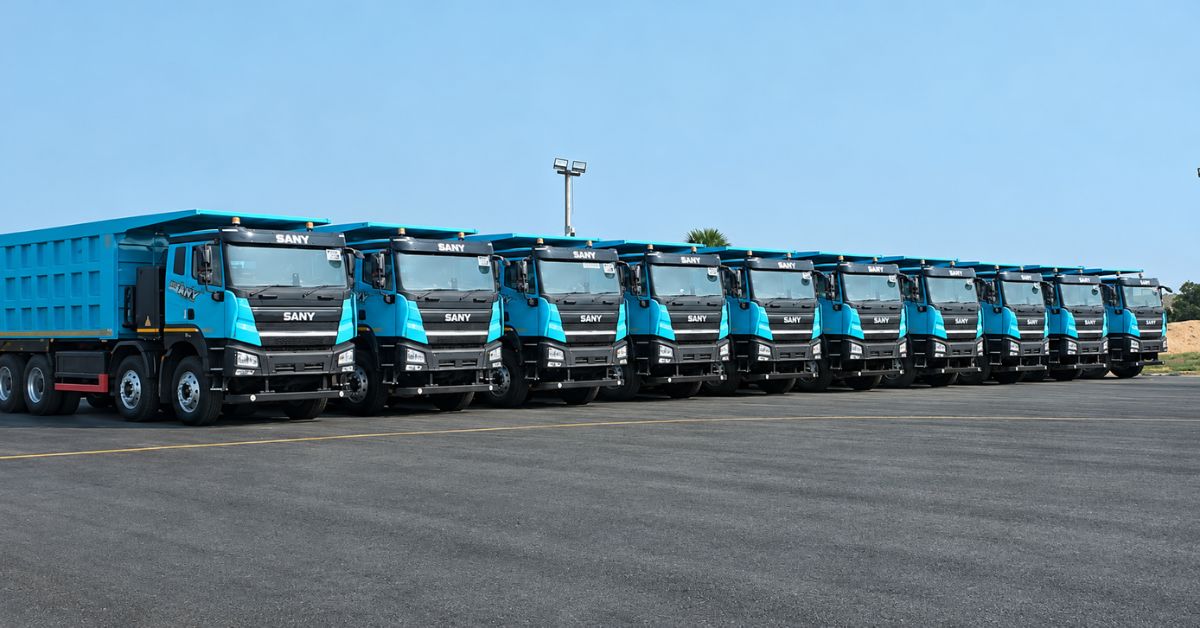

Adani Krishnapatnam Port Limited (AKPL) has inducted 288 electric vehicles and machines into its operational fleet in Andhra Pradesh, expanding the replacement of diesel-powered equipment across port activities. The deployment includes trucks, loaders, excavators and internal transfer vehicles, with another 193 electric units expected to follow.
AKPL Chief Executive Officer Jagdish Patel said the transition was being undertaken progressively to improve energy efficiency and reduce the port’s environmental footprint. The additional equipment would take the announced deployment programme to 481 units once inducted.
What equipment has Krishnapatnam Port deployed?
The inducted fleet comprises 170 electric trucks, 108 loaders, six excavators and four internal transfer vehicles. The mix extends electrification across transport and cargo handling activities rather than concentrating on a single equipment category.
The announcement, reported on 18 November, did not specify the delivery schedule or equipment breakdown for the next 193 units. It also did not disclose procurement costs, manufacturers, battery capacities or charging infrastructure specifications.
No quantified diesel savings or emissions reductions were provided for the deployment. The stated objective is to reduce reliance on conventional fuel while improving the efficiency of port operations.
How does this build on earlier electrification?
Krishnapatnam had already undertaken equipment conversion before the latest fleet induction. In its FY2024–25 operational review, Adani Ports and Special Economic Zone Limited (APSEZ) reported that the port had electrified all its mobile harbour cranes and modified ship-to-shore cranes for dual operations.
The company also reported introducing a vehicle management system that enables dumpers to be monitored remotely from a command centre. These measures combined equipment upgrades with closer supervision of vehicle movements.
Located in Nellore district, the port serves South India’s hinterland through road and rail connections. Its links include National Highway 16 and the Chennai–Kolkata railway mainline, connecting waterfront cargo handling with inland distribution.
Where does the deployment fit into APSEZ’s climate strategy?
APSEZ has set a net-zero emissions target for 2040, with equipment electrification and renewable electricity among its principal measures.
Its FY2025–26 climate strategy identifies diesel consumption in cargo handling, dredging, tug operations and other marine activities as a major source of direct emissions. The company’s transition programme includes replacing fossil-fuel-powered equipment with electric alternatives and testing lower-emission technologies.
APSEZ reported investing ₹1,255 crore during FY2025–26 in environmental, social and governance initiatives covering electrification, energy efficiency, emissions reduction, water management and climate adaptation. This is a company-wide figure and does not represent the cost of Krishnapatnam’s new fleet.
The strategy also includes developing 1,000 megawatts of captive renewable power. Its annual disclosure reported commissioned capacity comprising 200 megawatts of solar, 52 megawatts of wind and 25 megawatts of hybrid generation.
What are the next milestones?
An October 2026 investor presentation reaffirmed APSEZ’s target of using 100% renewable energy for domestic port operations by 2027. It also reported more than 330 electric internal transfer vehicles deployed across its sites.
The wider programme includes asset electrification, shore power, alternative-fuel bunkering infrastructure and exploration of lower-emission marine technologies. These measures extend the company’s decarbonisation effort beyond land-based vehicles to other parts of port operations.
At Krishnapatnam, the immediate next step is the proposed induction of the additional 193 electric units. Subsequent operating data on equipment utilisation, electricity consumption and diesel displacement will provide a clearer measure of the programme’s results.
 Join our WhatsApp channel for more updates:
 Subscribe to our YouTube channel for more updates: