



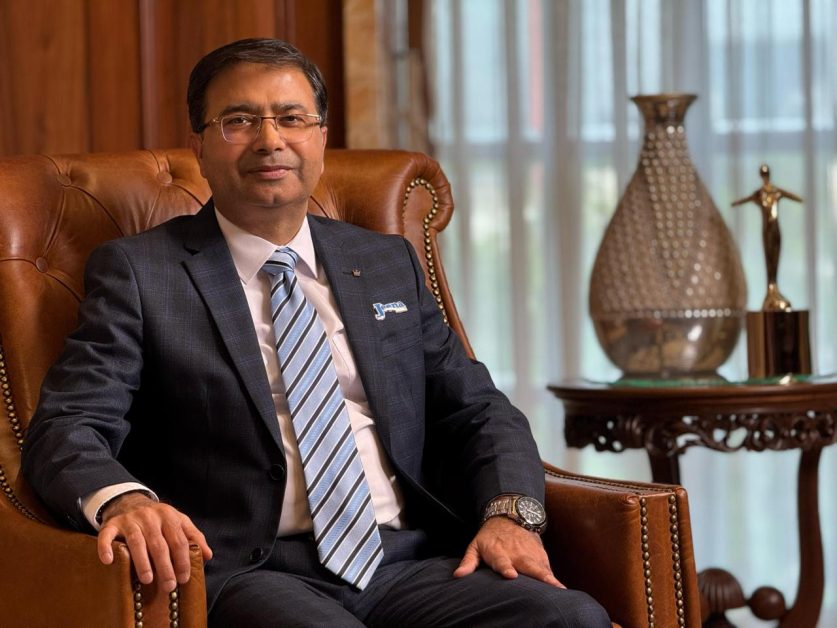

Prediman Koul, CEO, Jeena & Company, in conversation with Kalpana Pandey, on leading India’s oldest freight forwarder through digitisation, sector diversification, and global expansion
Jeena & Company is over 125 years old and India’s largest freight forwarder. How has the firm adapted its end-to-end logistics model to the digitisation and consolidation trends reshaping India’s freight forwarding sector today?
Jeena draws strength from our rich 125-year legacy while embracing a forward-looking spirit. We see ourselves as a dynamic company that continues to evolve with emerging technologies and industry trends.
From OCR-powered customs documentation and intelligent classification systems to real-time customer dashboards and ESG tools that monitor carbon footprints, technology forms a core part of our identity. As a legacy brand, we integrate these advancements thoughtfully to deliver greater value, ensuring every upgrade and automation serves a clear purpose in enhancing efficiency and sustainability for our clients.
Jeena serves diverse industries — chemicals, pharmaceuticals, automobiles, engineering, retail, FMCG, and renewable energy. How are the logistics requirements and risk profiles across these sectors diverging, and what strategic adjustments are you making to serve them?
We clearly understand the requirements of the sectors, having served them for over 12 decades, and know how different they are from each other. Pharma demands strict cold chains and quick regulatory checks with high product integrity risks. Chemicals need special handling for hazardous materials and safety compliance. Automobiles and engineering focus on just-in-time delivery and heavy part movements. Retail and FMCG want fast, flexible distribution, while renewable energy involves large, oversized shipments with project timelines.
Risk profiles vary from temperature failures in pharma to transit damage in autos or regulatory fines in chemicals.
To serve them well, we invest in sector-specific fleets, advanced tracking systems, and tailored training for teams. We have dedicated professionals for each sector who understand the needs of the diverse industries that Jeena has been serving with expert-driven, tailored solutions for decades. We also build stronger partnerships with industry players, which helps us deliver reliable service across all verticals and grow steadily.
With your appointment as CEO and the expansion of the Board, how does this leadership transition reflect the broader industry shift from legacy family-run logistics to a more structured, growth-oriented organisation?
Jeena, though being a family-run business, has always focused on being a structured organisation, eyeing growth and adaptation of core values and processes in line with MNC standards. My appointment as CEO, along with the Members of the Management Committee, marks a natural step forward. We bring fresh expertise in technology and global operations while keeping the core values intact.
This shift mirrors the industry move from traditional family setups to professional teams that drive efficiency and expansion. It helps us adopt better systems, serve diverse sectors with precision and expertise, and build stronger partnerships.
Customers gain from faster decisions and reliable service. We stay agile yet rooted in trust. This balanced approach positions Jeena for bigger opportunities in the years ahead.
Jeena has been planning to revamp its tech stack to adapt to the evolving business environment and expand into New Zealand and the USA. What are the key technology priorities for a 125-year-old logistics firm to stay competitive against tech-native freight forwarders?
Our focus is on seamlessly integrating advanced technologies into our business framework to enhance efficiency, visibility, and scalability. We leverage AI-powered solutions, advanced Warehouse Management Systems (WMS), and API-driven global connectivity to streamline operations and enable real-time collaboration. Our Transport Management System (TMS) offers end-to-end shipment visibility, from planning and execution to billing, while supporting complex multi-pickup and multi-drop movements.
We also adopt a data-driven approach by analysing insights from ports, trade platforms, and public sources to identify emerging opportunities and align with customer needs. Technology-driven analytics, such as the use of OCR technology for manifestation and document reading, help us anticipate market trends, understand customer behaviour, and design customised, technology-led logistics solutions.
With 27 locations in India and a global partner network across 6 continents and 60 countries, Jeena emphasises “logistics architects” designing curated end-to-end solutions. How does this approach differ from traditional freight forwarding, and what value does it deliver to Indian shippers?
We call our team “Logistics Architects,” as we deliver complete end-to-end solutions tailored to each client’s needs instead of just moving cargo from one point to another.
Traditional freight forwarding often focuses on basic transport and standard rates. Our approach goes deeper. We study the full supply chain process, suggest custom routes, handle compliance, and monitor every step with care. This cuts costs and transit times, and protects cargo. For Indian shippers, it means smoother exports, better visibility with real-time sensors, and trust in our services.
This sets us apart and helps us compete strongly in international markets, and across diverse sectors.
Jeena is one of the largest customs house agents and freight forwarders in India. How are evolving customs regulations, trade facilitation initiatives, and digital India infrastructure impacting your role as a customs house agent and freight forwarder?
Evolving customs regulations bring stricter compliance needs but also faster clearance processes under new trade pacts. We now spend more time training teams and using smart tools to meet updated rules without delays.
Trade facilitation initiatives like single window systems help cut paperwork and speed up movements. This allows us to offer quicker services to clients. Jeena’s IT infrastructure has been a big boost, with e-filing, online tracking, and integrated platforms that reduce human errors.
Overall, these developments make our role more strategic. We act as trusted advisors to many customers for their operational requirements, helping them navigate complexities smoothly and digitally. We keep investing in technology and people to stay ahead and updated to deliver reliable results.
The company offers time- and temperature-sensitive logistics, 3PL, project logistics, and customs brokerage. How are Indian shippers increasingly demanding integrated, multi-service contracts rather than point services, and how is Jeena meeting this demand?
We have noticed that Indian shippers prefer integrated contracts that cover everything from pickup to final delivery under one roof. They want fewer vendors, better coordination, and full accountability for all their work.
The need for simpler operations and lower risks in global trade drives this demand. Instead of handling point services separately, clients seek end-to-end solutions that save time and cut operational costs, without dealing with multiple stakeholders.
At Jeena, we meet this demand through our logistics architects, who tailor innovative solutions every time we have a complex cargo or a challenging shipment at hand. Our experienced teams combine air and sea freight, temperature-controlled logistics, 3PL services, project handling, and expert customs brokerage seamlessly. Clients look for one reliable partner for their complete supply chain needs with full transparency at every stage, and at Jeena, we ensure we meet their cargo demands effortlessly with our expertise.
Jeena has been active in port modernisation and inland waterway development. How do you see these initiatives reshaping India’s logistics cost structure, multi-modal connectivity, and competitiveness for exports and imports?
We see port modernisation and inland waterway projects as the game changers for Indian logistics. These steps lower overall transport costs by reducing road congestion and offering cheaper water routes for bulk cargo.
Multi-modal connectivity improves as new ports and waterways link seamlessly with rail and road networks. This means faster movement of goods from factories to ships and better last-mile reach. For exports and imports, it boosts competitiveness by cutting delays and expenses.
We at Jeena are already adjusting our operations to use these upgraded routes more effectively. It helps our clients move cargo efficiently across the country and beyond. We stay optimistic about the positive impact on India’s position in global trade.
Looking ahead, what are the two or three most critical trends shaping the next phase of global freight forwarding and supply chain solutions in India, and how is Jeena preparing to lead in this evolving landscape?
India is setting its foot forward to emerge as one of the world’s leading manufacturing and export hubs. To keep pace with this growth, the logistics industry is continuously evolving to be agile and adaptive. With geopolitical uncertainty, the government is diversifying trade alternatives and routes, opening multiple opportunities, and the industry has started investing strategically to be future-ready.
Firstly, digital transformation is critical to the industry, which is moving away from traditional routes. The industry is establishing digital platforms that deliver integrated services and enhanced data capabilities, providing better visibility, efficiency, and overall decision-making throughout the supply chain.
Secondly, investment in multimodal and resilient infrastructure is essential to ensure a seamless connection between all transportation modes: road, rail, air, and sea. This is further supported by multimodal logistics parks, corridor development, and other initiatives aimed at reducing transit time, optimising cost, and effectively managing disruptions to operations.
Lastly, we are investing in developing and creating a talent base prepared for the future, as well as sustainability practices that enhance existing operations through greener operations, optimisation of routing processes, and responsible logistics initiatives.
 Join our WhatsApp channel for more updates:
 Subscribe to our YouTube channel for more updates: