



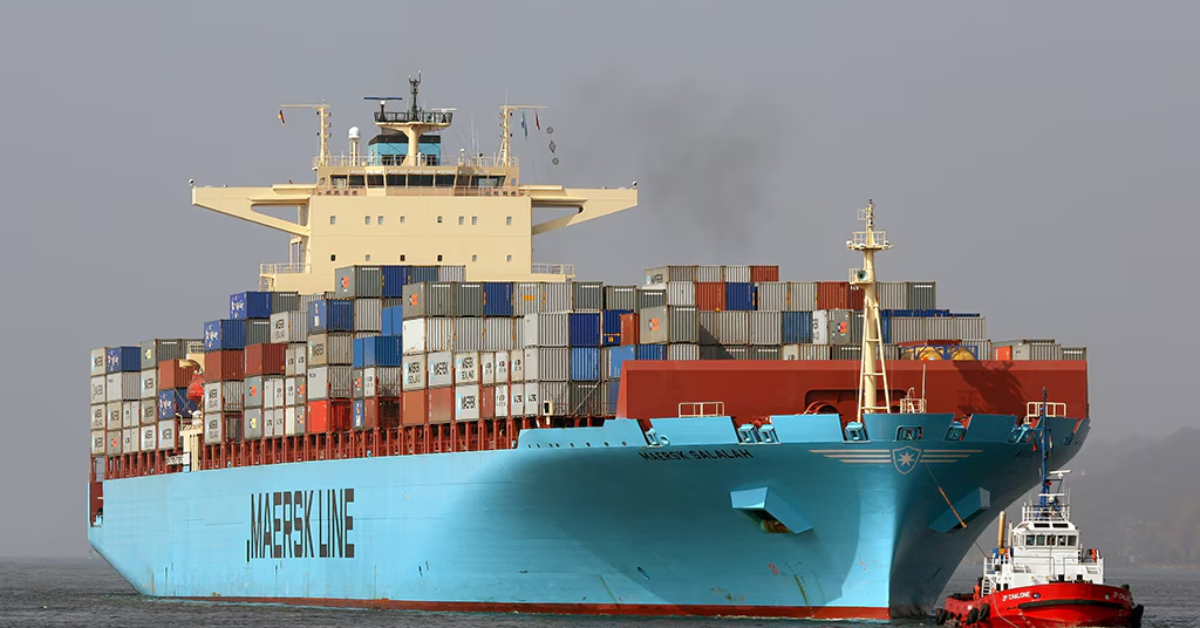

Global container shipping major Maersk will increase its Emergency Contingency Surcharge (ECS) on cargo moving from the Indian subcontinent to North Europe from August 1, pushing up ocean freight costs for India–Europe trade lanes. The revision applies across key Indian gateways serving exports to European markets.
Europe is an important destination for Indian exports such as textiles, automotive components, leather products and pharmaceuticals, making any rise in ocean charges sensitive for manufacturers and traders. The higher surcharge is expected to add to overall logistics expenses for exporters using North Europe services.
Higher ECS for South and East India Ports
For cargo originating from South and East India ports, including Chennai, Kattupalli, Thoothukudi and Visakhapatnam, the ECS on shipments to North Europe will move up to 3,800 dollars per 20-foot container (TEU), compared with the current 2,800 dollars per TEU. These locations are major container hubs for a wide range of export industries, from textiles and leather to engineering goods.
The increase means shippers in these regions will face a 1,000‑dollar jump per TEU on the surcharge component alone, potentially impacting landed pricing and margins on long-haul contracts to European buyers. Exporters may need to revisit freight budgeting, renegotiate rates with buyers, or explore route and carrier diversification to manage the higher cost base.
Surcharge Rise for North West India Gateways
For cargo moving out of North West India, covering ports such as Mundra, Jawaharlal Nehru Port (Nhava Sheva), Hazira and Pipavav, the ECS for shipments to North Europe will be increased to 3,500 dollars per TEU from the existing 2,500 dollars. These ports handle a large share of India’s containerised export flows to Europe, including engineering goods, chemicals and automotive parts.
A 1,000‑dollar escalation per TEU in this corridor is likely to influence freight negotiations and spot market rates on Europe-bound services. Logistics planners and exporters in this region may closely monitor how other carriers structure their surcharges and base rates on India–Europe routes.
Impact on India–Europe Trade and Logistics
Maersk is among the largest container shipping lines operating in India, so changes in its surcharge structure tend to shape market benchmarks for ocean freight on key trade lanes. A higher ECS can feed into overall logistics costs, especially for small and mid-sized exporters with thinner margins.
With India seeking to deepen trade ties with Europe across multiple sectors, the cost dynamics of container shipping remain a critical factor for competitiveness in global markets. Export-oriented firms and logistics service providers are expected to track further pricing actions by carriers and adjust supply chain strategies accordingly.
 Join our WhatsApp channel for more updates:
 Subscribe to our YouTube channel for more updates: