



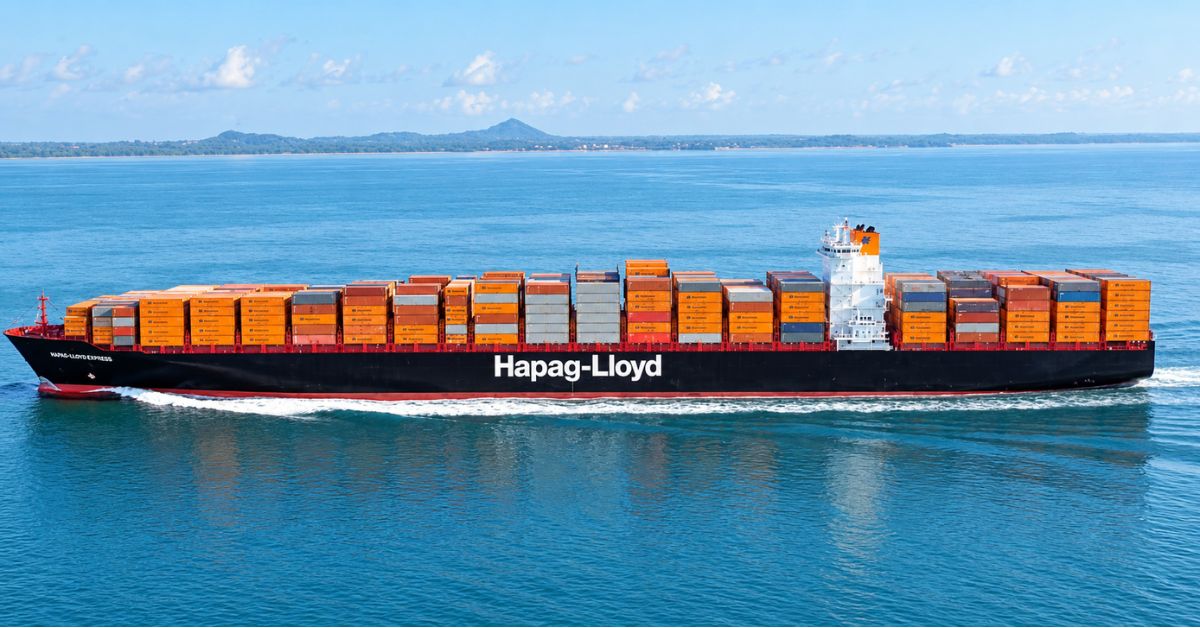

Hapag-Lloyd incurred around US$600 million in additional costs as a result of the Middle East conflict, according to CEO Rolf Habben Jansen. The majority of the additional expenditure came from higher oil prices, with the carrier also facing costs related to alternative land routes, insurance and the storage of containers affected by disruption in the region.
“The large majority of the USD 600 million was higher oil prices,” said Habben Jansen. “There were also the land bridges we had to build up, insurance costs and additional storage costs for boxes that were stuck for a while.”
Hapag-Lloyd has established several land bridges to countries in the Upper Gulf to maintain cargo flows during the disruption. The carrier continues to offer customers alternative routings where required. “It causes quite a lot of additional cost, but we are able to keep those supply chains going,” said Habben Jansen.
Hapag-Lloyd also provided an update on its current operations through the Red Sea and Suez Canal. Five Gemini services are currently routed through the corridor: SE2, SE3, SE4, NE4 and IEX. However, Hapag-Lloyd said the Red Sea continues to play only a limited role in its overall network, with the vast majority of its services continuing to sail around the Cape of Good Hope. The carrier said it continues to assess the security situation with maritime security advisers, authorities and its partners.
Hapag-Lloyd said disruption in the Middle East has had a limited impact on the remainder of its global network, pointing to the hub-and-spoke structure of the Gemini Cooperation with Maersk as an important factor. “This crisis has shown that our network is resilient,” said Habben Jansen. “The impact on the rest of our global network has been limited, and the hub-and-spoke structure we operate in Gemini together with Maersk has again proven to be robust.”
Hapag-Lloyd said it will continue monitoring developments and adjust its network if security conditions change.
 Join our WhatsApp channel for more updates:
 Subscribe to our YouTube channel for more updates: