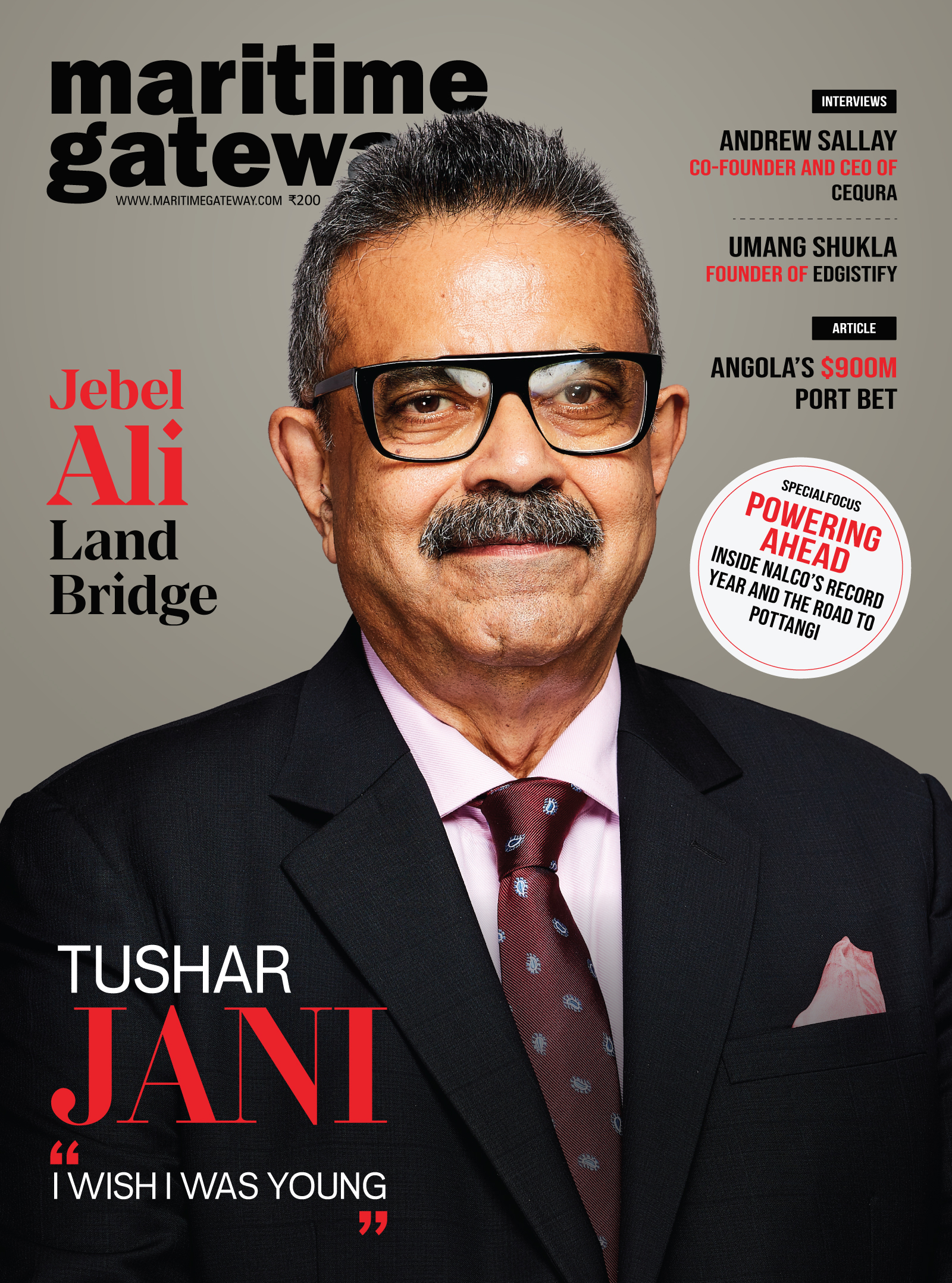




Magnus Sjöberg, Executive Vice President, Merchant Solutions at MacGregor, talks to Ramprasad Ravi on automatic twist locks, electrification and the push to fit more cargo on every vessel
What structural or design changes are you seeing in the newest generation of container ships coming off the order books today versus five years ago?
The structural changes, of course, the question is whether there’s a need to make the vessels bigger. I think we’ve seen that trend reach its limit at around 20,000-plus TEU. Right now we see a lot of new orders for feeders, and of course feeders are getting bigger and bigger. Where does the feeder size stop? I’d say a feeder is up to around 6,000 units. For us as MacGregor, we’re on the container side with products like hatch covers, lashing bridges, and lashing systems, so we’re a solution provider in that sense. Through that, we can also help optimize the cargo, how many containers a vessel can take.
How is cargo handling equipment, like hatch covers, lashing systems, and cranes, being redesigned to accommodate larger and more complex box stacks and mixed cargo configurations?
We’ve recently launched our fully automatic twist lock, nicknamed Hippo. We’ve received sizeable orders for that, over one million pieces. We believe we have a very strong, fully automated twist lock with very tight clearance, so you can actually load cargo higher up. On top of that, we have our counterbalance lashing, which is essentially lashing rods with a spring device. Once you reach a certain load, the spring takes a little extra, so the force doesn’t increase, and that lets you carry higher payload further up the stack. So between the fully automatic twist lock and the counterbalanced lashing rods, we believe we have a solution that helps owners take more payload. For the counterbalance system alone, we now have more than 130 vessels delivered, also rather recently launched to the market.
Are shipowners prioritizing flexibility, retrofit readiness, or fixed specifications when ordering new builds, given the uncertainty around future fuel costs?
That’s a good question. I think flexibility is the key, because who knows where shipping routes will go in the future. Can you go through the Red Sea? Can you go through the Strait of Hormuz? So flexibility is actually key for them when they do the vessel design.
What operational pressures, port congestion, bigger alliances, just-in-time arrival mandates, are most reshaping how container ships are being built and equipped?
For us as an equipment supplier, we want to give reliability, so the equipment is there when they come to port. Things have to work: the cranes have to work, the ramps need to open, and so forth. The latest trend we’ve seen over the last years is a move toward electrification of our equipment, meaning it’s operated by electric winches and electric actuators instead of traditional hydraulic winches and cylinders. That gives more precision and less maintenance need for this kind of equipment, a bit like electric cars versus combustion engine cars. Once you start using electric, you don’t really want to go back, you want the latest technology.
Since you mentioned technology, how is digitalization, remote monitoring, and predictive maintenance on deck machinery changing the way operators manage their cargo handling equipment?
For more advanced equipment, like cranes, to some extent RoRo equipment, and also our offshore products, owners are willing to have remote connection and diagnostics. But for simpler equipment, like hatch covers or deck machinery, that’s more commodity and isn’t as connected today. So it varies depending on how advanced and how mission-critical the equipment is, the more critical it is, the more connectivity you’ll see on it.
Where is MacGregor investing R&D right now?
We’re investing in more solutions that help get more cargo on board container ships. I gave you a couple of examples already, the fully automatic twist lock and the counterbalanced lashing. We’re also investing a lot in electrification. We’ve done a lot up to now, and we’ll continue for the next generation of electrification. We’ve been in electric solutions for the last 20 years, but there are always new solutions coming, with new components and new control systems. So, it’s constant R&D to develop and test new things.
What kind of retrofit solutions are owners actually asking for when they extend the life of existing boxship fleets?
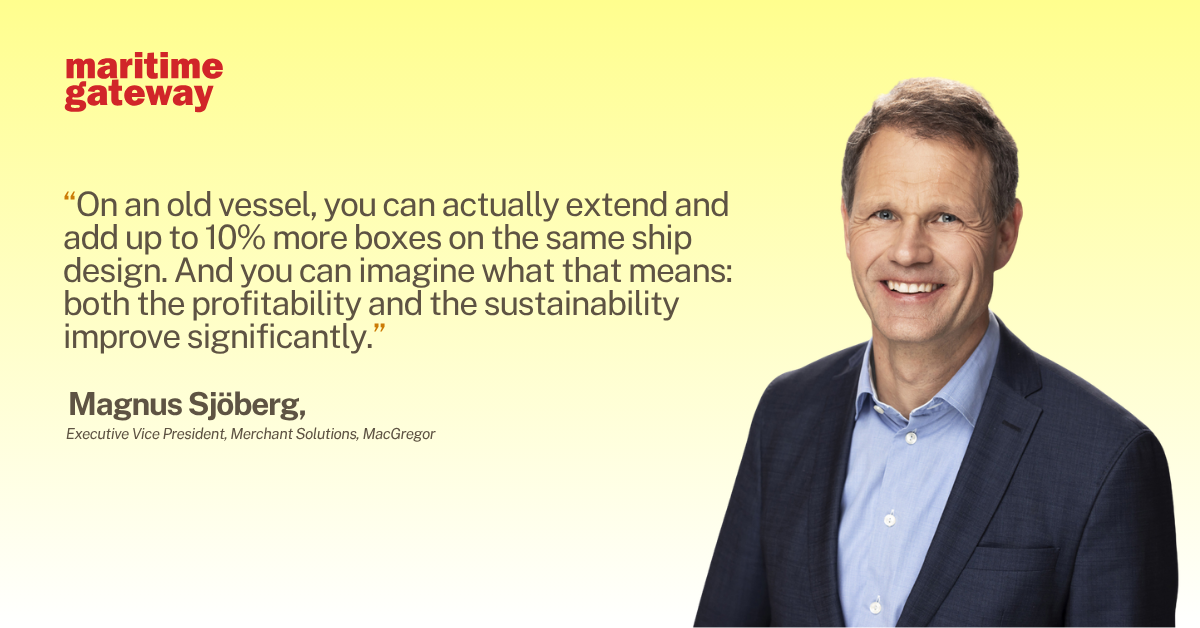
We have a solution we call Cargo Boost. By adding these new twist locks and lashing tools, we can also help owners do upgrade manuals. On an old vessel, you can actually extend and add up to 10% more boxes on the same ship design. And you can imagine what that means, if you get 10% more boxes, both the profitability and the sustainability improve significantly. That’s a really important part of what we offer for the existing fleet, and we call it Cargo Boost, getting more cargo on the same vessel.
Is full automation realistic for container ships the way it’s progressed in the bulk and tanker segments?
Full automation is still very manually operated in this segment. The cranes are there, but you still need people to go and check things. But if you have a fully automatic twist lock instead of a semi-automatic one, you save important time in port.
What’s the biggest engineering or safety challenge you’re investing in solving?
It’s around further electrification, finding new solutions, and also software and connectivity, how that develops going forward. We’re putting a lot of R&D into that.
How do you see things five years from now? What kind of next-generation equipment would be coming into operation?
That’s a really good question. I think electrification will continue, connectivity will continue, and automation as well. We have certain projects where we have fully automatic cargo cranes. For instance, we delivered a fully automatic discharging bulk crane to a Finnish owner, ESL. It essentially pulls from the bottom, and there are loaders and everything needed to take it off the grab and off the vessel. We’re seeing requests for similar automation on the container side too. So, automation will definitely drive shipping forward.
Q: Can you walk us through how MacGregor’s latest hatch cover and lashing system innovations are being deployed on recent projects? Any flagship projects you can mention?
A: We have a really strong position with the major container owners, and we’re there in the early phase developing the whole solution, the hatch cover, the lashing bridges, the lashing bars, and the twist locks. With many of the big owners, we’re involved early to help them develop the concept before they even approach the shipyards.
Are you implementing digital twin and remote diagnostic capabilities?
To some extent, yes, especially on crane operations. We have a test center in northern Sweden, in Örnsköldsvik, where we test full-scale real cranes, but we also have a virtual twin, a digital version for testing certain solutions.
And the recent restructuring of the company, what kind of impact has it had on product development?
We got a new owner a year ago, moving from industrial owner Cargotec to private equity firm Triton. That hasn’t come with any restructuring or downsizing. We’re actually on a positive growth trend, so no restructuring has taken place over the last couple of years, and no impact on product development.
 Join our WhatsApp channel for more updates:
 Subscribe to our YouTube channel for more updates: