



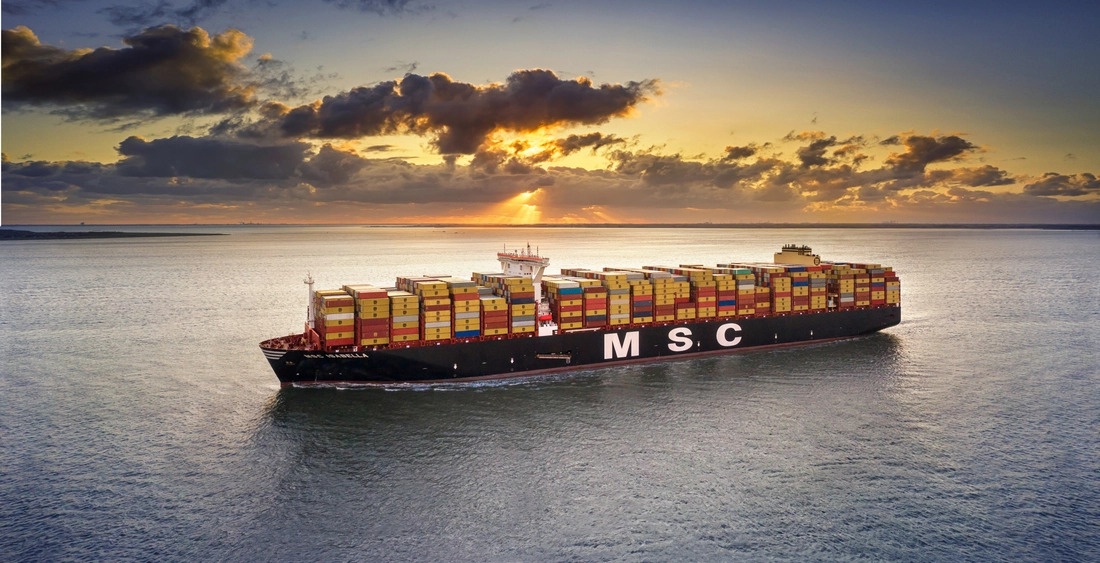

Container transits through the Suez Canal are rebounding as shipping lines increasingly view security risks in the region as manageable, with Mediterranean Shipping Company becoming the latest major carrier to test the route.
According to the latest weekly report from maritime consultancy Linerlytica, MSC has sent seven ships eastward through the Suez Canal and the Bab el Mandeb strait over the past two weeks. The Geneva based carrier has made no official announcement, but the movements suggest MSC does not want to lag behind global competitors in the gradual return to the shorter route between Asia and Europe.
The Suez Canal Authority, headed by Osama Rabie, has been actively engaging the shipping industry for months through what it describes as a constructive strategy built on direct communication with clients. Volumes remain below historical peaks, but the steady trickle of re-engagement suggests this outreach is producing results.
Maersk and Hapag-Lloyd, partners in the Gemini Cooperation alliance, announced last week the relocation of a new service back to the Suez Canal. The Danish carrier had already resumed calls in the Eastern Mediterranean and is now adding a route with a stop in Tangier Med, Morocco, alongside more calls in Jeddah, Saudi Arabia. Linerlytica estimates Maersk has already returned more than 30 percent of the volumes it had diverted via the Cape of Good Hope back to the trans-Suez corridor, with the carrier signalling conditions are right to shift more services in the coming weeks.
Maersk told clients the changes followed thorough security evaluations, citing reduced sailing distances, improved transit times and lower fuel consumption as key commercial drivers, a critical factor this year given elevated bunker prices. Reduced emissions from shorter rotations formed part of the same rationale.
CMA CGM has remained the most committed of the top global carriers to maintaining Suez transits, continuing operations even at the height of Red Sea tensions with support from the European Union’s EUNAVFOR escort operation. The Suez Canal Authority has detailed recent passages of several of the French line’s largest and most modern vessels, including the CMA CGM Saint Germain, CMA CGM Notre Dame and CMA CGM Vendome, each with a capacity of 24,000 TEUs.
Rabie held a fresh meeting with CMA CGM representatives on August 18, described by the Egyptian authority as positive in tone. The Suez Canal Authority estimates 199 CMA CGM ships have transited the canal since the start of 2026, carrying a combined 5.2 million tonnes of cargo, compared with 212 ships and 18.8 million tonnes transported through the full year 2025, illustrating both the scale of last year’s diversion and the recovery potential that remains.
During the meeting, Christine Kaboo, Executive Vice President of Assets and Operations at CMA CGM, conveyed the company’s commitment to continue increasing transit numbers, with additional vessels from various services expected to return to the corridor in coming weeks.
The simultaneous return of MSC, Maersk, Hapag-Lloyd and CMA CGM to the Suez-Red Sea axis is reshaping the operational map of Asia-Europe trade that had consolidated around the longer Cape of Good Hope route over the past two years. For the canal authority, each recovered service translates into toll revenue. For carriers, it means fewer days at sea, lower fuel costs and faster supply chains into Mediterranean ports.
 Join our WhatsApp channel for more updates:
 Subscribe to our YouTube channel for more updates: