




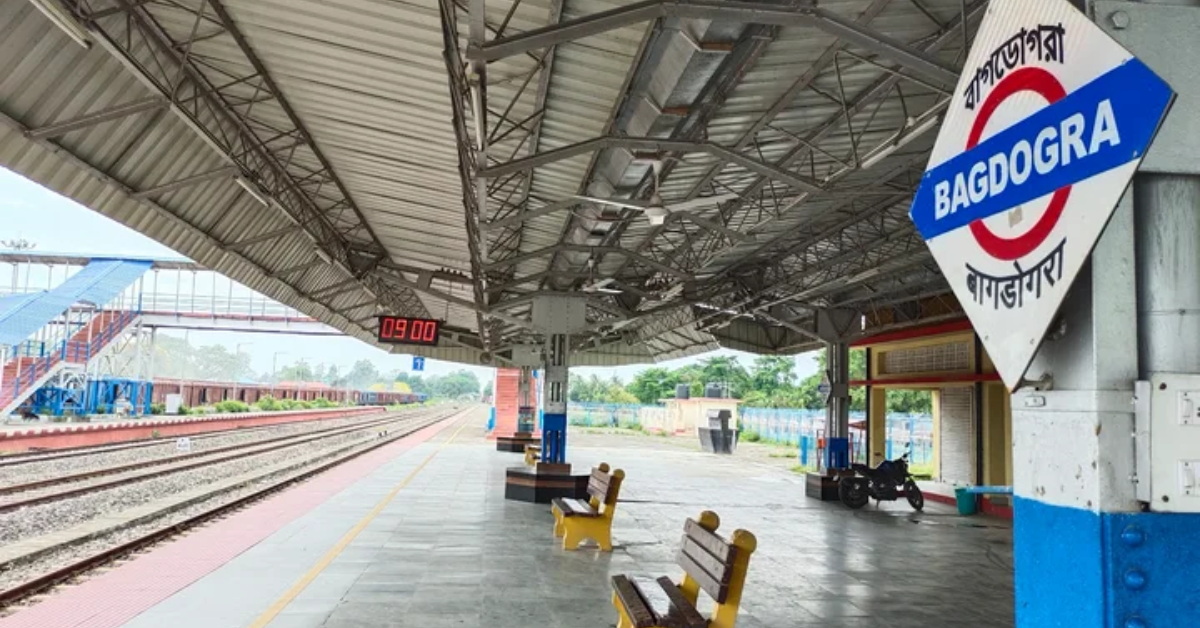

The Northeast Frontier Railway has commissioned the long-idle 6.8-km Rangapani-Bagdogra siding line under its Katihar division for regular freight operations, a low-cost intervention that removes a long-standing choke point in the rail supply chain serving North Bengal and the Northeast. The line sits in the Siliguri region, the narrow strip of Darjeeling district widely known as the Chicken’s Neck — a corridor whose bottlenecks ripple through cargo movement for the entire north-eastern region.
The immediate gain is the end of a time-consuming manoeuvre. Trains arriving from East Central Railway and entering the NFR network at Forbesganj previously had to reverse direction at Siliguri Junction before proceeding. That is no longer required, with loaded rakes now routed onward through Bagdogra.
Why eliminating a reversal matters
A locomotive reversal is not a simple turn. It involves detaching the engine from one end of the rake, moving it to the other, conducting a brake power test, carrying out shunting and arranging a fresh crew. Railway sources put the process at roughly 45 minutes to an hour per train, during which the rake sits idle while fuel or electricity is consumed.
Doing away with that cycle delivers three savings at once: energy, rolling stock detention and manpower. Fewer shunting staff and additional crews are needed, and each rake returns to revenue service sooner.
“The long-disused line has been brought into use with minimal expenditure, making productive use of existing railway infrastructure to meet growing freight transportation requirements,” said Kapinjal Kishore Sharma, NFR’s chief public relations officer.
Ten more trains a day from Forbesganj
NFR expects the new arrangement to let it receive at least 10 trains per day from East Central Railway at Forbesganj for onward movement to destinations beyond Barsoi. Officials said this would meaningfully lift freight-handling capacity and operational efficiency, while allowing faster transit and better utilisation of rolling stock.
For cargo owners in North Bengal and Bihar, the extra path capacity should translate into more reliable dispatch of commodities that dominate the corridor, including foodgrain, cement and fertiliser.
An existing asset, reactivated
The track was upgraded and electrified in the previous year, making it suitable for electric traction. Until now, however, it was used only by military trains, with regular goods services not permitted to run on the section.
The conversion was carried out under the guidance of NFR general manager Chetan Kumar Shrivastava, with coordinated efforts by the Katihar division and other departments, according to a railway release.
“The additional freight route offers greater operational flexibility and more efficient utilisation of railway resources,” Sharma said, adding that the arrangement would support more reliable goods transport for traders, businesses and consumers and create scope for additional freight traffic and railway revenue.
Passenger demand still pending
Local rail passenger groups and public representatives have been pressing for passenger services on the Rangapani-Bagdogra section, arguing that daily commuters between Siliguri and the Bagdogra area would benefit. No official decision on running passenger trains on the line has been announced so far.
FAQs
1. Which line has NFR opened for freight?
The existing 6.8-km Rangapani-Bagdogra siding line under NFR’s Katihar division, located in the Siliguri region of Darjeeling district in North Bengal.
2. What is the main operational benefit?
Freight trains entering NFR from East Central Railway at Forbesganj no longer need to reverse at Siliguri Junction. This saves energy, cuts rake detention and reduces the crew and shunting staff required.
3. How many additional trains can NFR handle?
NFR expects to receive at least 10 trains per day from East Central Railway at Forbesganj for onward movement beyond Barsoi.
4. Was the line newly built?
No. It is an existing, long-disused line that had already been upgraded and electrified. It was earlier used only by military trains, and has now been opened to regular goods traffic at minimal expenditure.
5. Will passenger trains also run on this section?
No decision has been announced. Local passenger organisations and elected representatives have been demanding passenger services on the route, but the line has so far been opened only for freight.
 Join our WhatsApp channel for more updates:
 Subscribe to our YouTube channel for more updates:




