



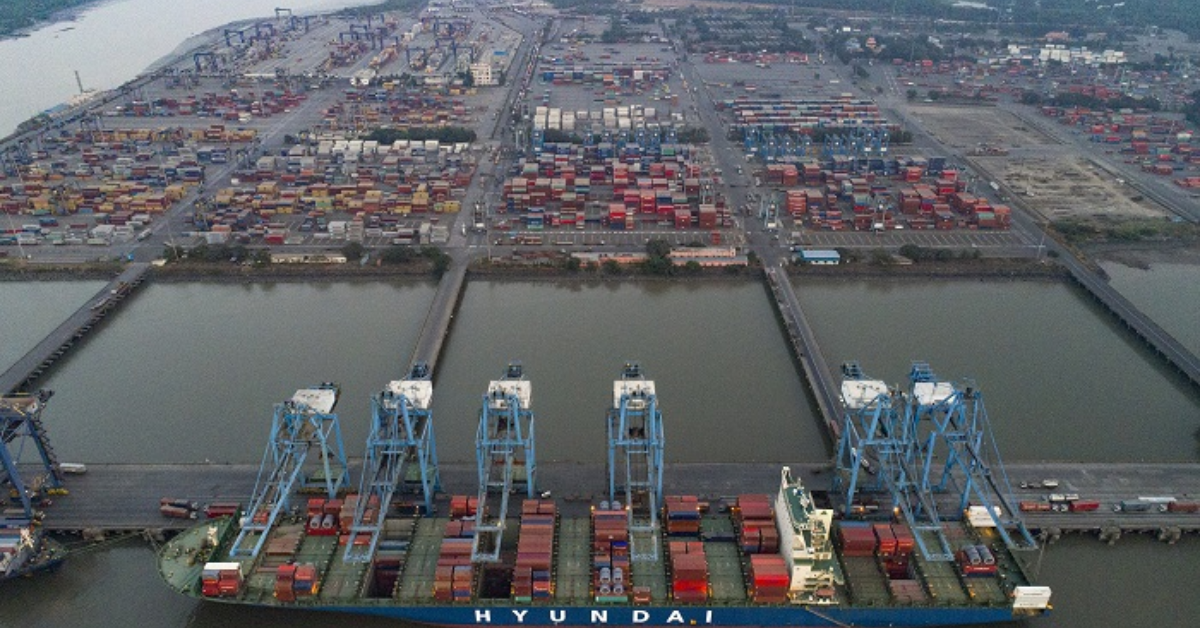

Jawaharlal Nehru Port, commonly known as Nhava Sheva, is India’s busiest container port and a central hub for EXIM cargo on the west coast. Its ecosystem depends heavily on hinterland logistics assets such as Container Freight Stations, transporters, and warehousing to keep vessel and yard operations fluid.
Situated across the harbour from Mumbai, Nhava Sheva has grown into a multi‑terminal complex handling millions of TEUs annually and serving manufacturing and consumption centres across western and central India. It is widely regarded as a key gateway for India’s drive to reduce logistics costs and improve Ease of Doing Business.
Regulatory action and trigger
Customs authorities have suspended the licence of a major Container Freight Station (CFS) serving Jawaharlal Nehru Port under Regulation 11(2) of the Handling of Cargo in Customs Areas Regulations, 2009, a provision that allows immediate suspension in exceptional circumstances where urgent intervention is considered necessary in the public interest.
The suspension of approval for the Nhava Sheva CFS operated by International Cargo Terminal Pvt Ltd (ICTPL) is formally recorded in a Public Notice issued by Jawahar Customs, which cites Regulation 11(2) as the legal basis for the action. The measure, initiated following serious compliance concerns flagged around specific import consignments, has remained in force for more than 80 days and the adjudicatory process is still ongoing.
With the case now also featuring in appellate proceedings, what began as a facility‑specific regulatory step has evolved into a wider sectoral debate on proportionality, speed of decision‑making and the need to safeguard critical trade infrastructure from prolonged uncertainty.
Operational and trade impact
Before suspension, the CFS was handling roughly 15,000 TEUs per month and was an important node in the Jawaharlal Nehru Port logistics chain. Its sudden non‑availability has removed meaningful capacity from an already stretched system, forcing diversion of cargo to alternate facilities.
Stakeholders report that diversion has contributed to congestion, longer dwell times, higher transportation and handling costs, and schedule disruptions for importers, exporters, shipping lines and freight forwarders using Nhava Sheva. Businesses that had built their supply chains around this facility now need to reorganise warehousing, revise trucking plans and absorb additional costs, which in turn affects competitiveness in international markets.
Livelihood and “green” credentials
The suspended facility is estimated to support the livelihood of more than 800 people directly and indirectly, including employees, contract workers, equipment operators, drivers, security and housekeeping staff, and associated service providers. With the licence on hold and no final determination yet, many within the trade question whether extended suspension should continue to impose such economic hardship on those not accused of any wrongdoing.
The CFS has also been publicly positioned as India’s first green Container Freight Station, with investments in modern infrastructure, safety systems, security protocols, compliance mechanisms and sustainability initiatives. Industry participants find it difficult to reconcile these credentials with the prolonged closure and argue that enforcement must balance strict compliance with the practical needs of trade facilitation and employment protection.
Broader policy questions for Nhava Sheva
Industry voices emphasise that while strong enforcement is essential to protect national interest and the integrity of Customs administration, it must be fair, consistent and proportionate. When a major logistics asset at Nhava Sheva remains idle for months while legal proceedings move through multiple forums, questions arise about the predictability of regulatory powers and the risk of de facto punishment before adjudication is complete.
This situation is being closely watched by the wider logistics and shipping community, investors and businesses that rely on Jawaharlal Nehru Port. At a time when India is actively pushing to reduce logistics costs, attract investment and position Nhava Sheva as a global manufacturing and supply chain hub, stakeholders are seeking assurance that critical port‑linked infrastructure will not face prolonged disruptions without timely resolution and clear, proportionate regulatory outcomes.
 Join our WhatsApp channel for more updates:
 Subscribe to our YouTube channel for more updates: