




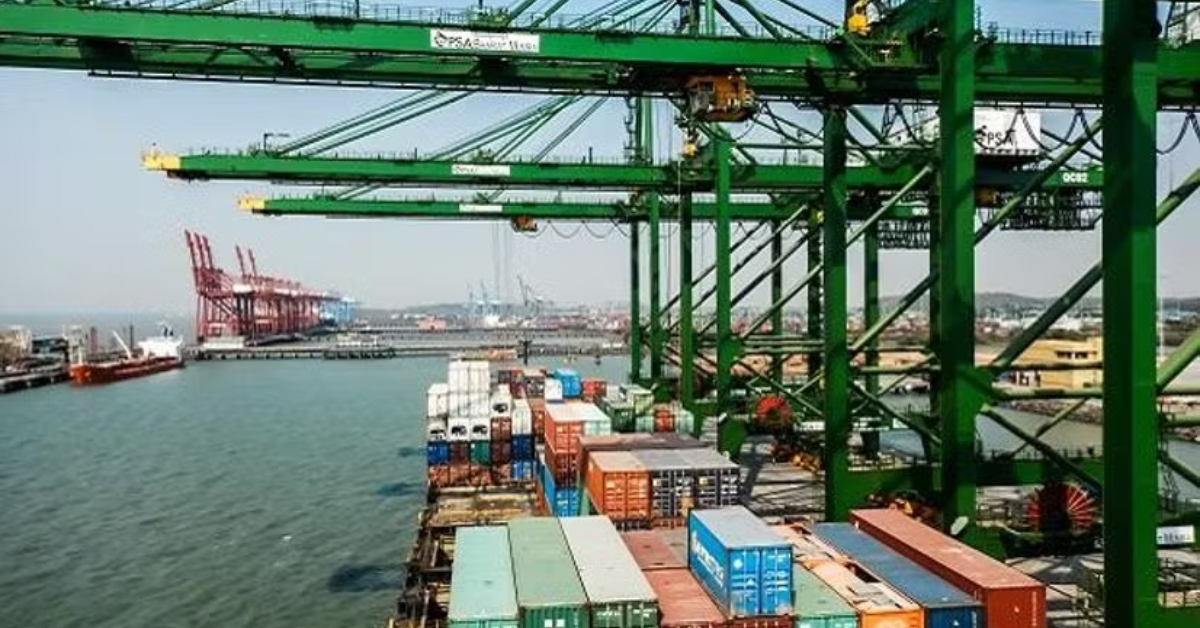

The ongoing congestion and prolonged suspension of cargo movement at Nhava Sheva have once again highlighted how vulnerable India’s supply chains remain when a major gateway port slows down. As one of the country’s busiest container hubs, Nhava Sheva handles a large share of EXIM cargo, so even a short disruption quickly spills over into shipping schedules, freight costs and delivery commitments. For exporters, importers and logistics operators, the impact is not limited to port delays alone; it also affects inventory planning, vessel rotations, inland transport and customer confidence.
In his statement, Vivek Kele, Director, Teamglobal Logistics Pvt Ltd captures the higher cost of such disruption: when congestion is allowed to build and suspension continues for too long, it is ultimately trade that pays the price. That assessment is especially relevant in a port ecosystem where predictability matters as much as capacity. A backlog at a gateway port creates a chain reaction across terminals, customs, container yards, trucking networks and freight forwarders, leaving the wider trade community to absorb the inefficiency.
Trade bears the cost
When a port like Nhava Sheva faces prolonged operational stress, the consequences go beyond missed schedules. Shipping lines may be forced to reroute, roll cargo to later sailings, or pass on added costs to shippers. Exporters, meanwhile, face the risk of late shipments, higher detention and demurrage charges, and weaker reliability in overseas markets. Importers also bear the burden through delayed clearances, higher landed costs and production slowdowns if raw materials or components are held up.
The problem is not merely operational; it is structural. Congestion often reflects a mismatch between cargo growth and infrastructure readiness, or between port capacity and inland evacuation. If vessel calls, terminal productivity, rail connectivity and road movement are not aligned, the system begins to strain. In that sense, the Nhava Sheva issue is a reminder that gateway ports need constant coordination across all stakeholders, not just temporary fixes after bottlenecks emerge.
The Nhava Sheva episode underlines a simple but important truth: port congestion is never an isolated problem. It becomes a trade problem, a logistics problem and eventually an economic problem. Vivek Kele’s statement serves as a timely warning that prolonged suspension and unmanaged congestion can erode the efficiency of even the country’s most important maritime gateways. The longer such disruptions continue, the greater the cost to trade, competitiveness and supply-chain reliability.
 Join our WhatsApp channel for more updates:
 Subscribe to our YouTube channel for more updates: