




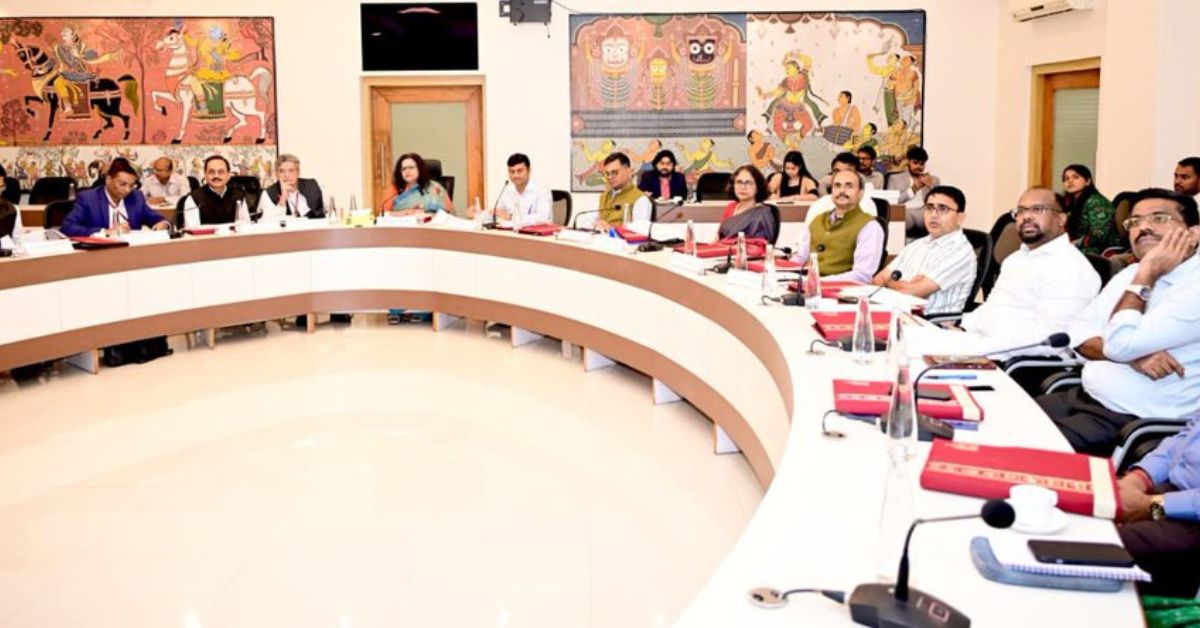

Odisha and the Union Ministry of Ports, Shipping and Waterways reviewed the development of National Waterway-5 (NW-5) in Bhubaneswar on 3 November, focusing on the infrastructure and inter-governmental coordination required to connect the state’s mineral and industrial centres with coastal ports.
The meeting, attended by Odisha Chief Secretary Anu Garg, Union Shipping Secretary Vijay Kumar, industry representatives and state departments, examined pending implementation requirements. Garg assured state support for developing the Odisha section of the waterway, which remains under the approval process.
What issues require coordination?
Discussions centred on cooperation between the Inland Waterways Authority of India (IWAI) and the Odisha government, including state participation in project execution and operations, land acquisition for terminals, hydraulic structures and statutory clearances.
Officials also examined water releases needed to maintain the Least Available Depth (LAD), development of the Khalpal navigational lock, bridge construction and dismantling, last-mile road access and relocation of high- and low-tension electricity lines.
These requirements form part of the preparatory work needed to establish navigable routes and connect waterway terminals with the surrounding transport network.
Which sections of National Waterway-5 are being prioritised?
NW-5 was declared a national waterway in November 2008. Its approximately 588-km designated network incorporates the Mahanadi and Brahmani delta systems, the Matai River and the East Coast Canal.
The network comprises a 237-km Talcher–Mangalgadi stretch, a 95-km Dhamra–Paradip stretch and a 256-km Dhamra–Geonkhali section extending towards West Bengal.
However, the full designated length should be distinguished from the stretches prioritised for development. IWAI’s published project account identifies 332 km between Talcher and Paradip/Dhamra as the initial economically and commercially viable focus.
That development framework divides the Odisha route into a 212-km section between Paradip/Dhamra and Pankapal and a 120-km section between Pankapal and Talcher. The same account states that the remaining Dhamra–Geonkhali stretch was not considered feasible for development under the assessment cited.
How would the waterway support industrial logistics?
The Ministry of Ports, Shipping and Waterways identifies NW-5 as a proposed connection between the mineral-rich Talcher and Angul areas, industrial centres such as Kalinganagar, and the ports of Paradip and Dhamra.
The Union Budget 2026–27 placed the project within a programme to operationalise 20 new national waterways over five years, beginning with NW-5 in Odisha. Its role is therefore both regional and national: improving access to Odisha’s ports while expanding the use of inland transport for freight.
Technical planning presented in an official waterways briefing envisaged developing the 332-km section with an assured navigation depth of three metres for vessels of 2,000 deadweight tonnes. These are planning parameters, rather than confirmation that the entire route is operational at those specifications.
What will determine implementation progress?
The latest review highlights the importance of aligning navigation infrastructure with state-level responsibilities for land, water and connecting infrastructure. Terminal development, navigational structures and access roads must progress together for the proposed industrial-to-port connection to function.
Odisha’s Economic Survey 2025–26 reported that preparatory technical studies, including hydrographic surveys and engineering assessments, had been completed for NW-5. That provides a technical foundation for subsequent development, while the November meeting addressed the coordination issues still requiring resolution.
The immediate focus remains on securing approvals and resolving implementation requirements for the Odisha section. The distinction between the wider designated waterway and the prioritised development stretches remains central to assessing the project’s scope and progress.
 Join our WhatsApp channel for more updates:
 Subscribe to our YouTube channel for more updates:




