



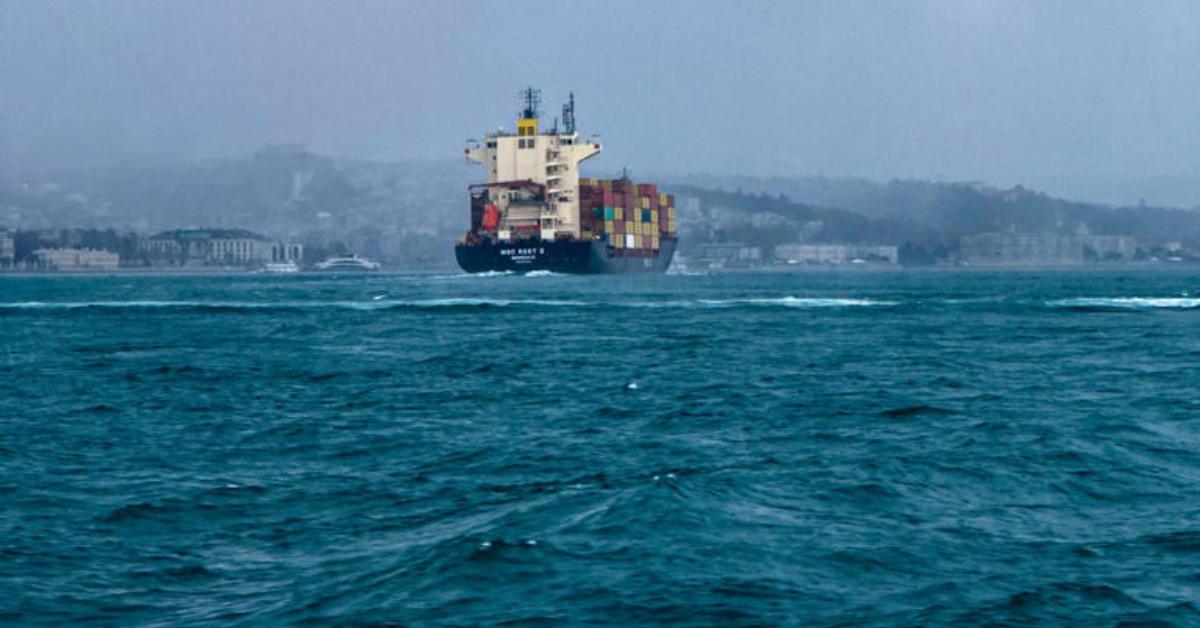

Traffic through the Strait of Hormuz has effectively collapsed to near-zero, with only five vessels transiting the world’s most critical energy chokepoint in the past 24 hours — a figure that underscores the catastrophic scale of maritime disruption now in its ninth week. The data, from live AIS vessel tracking systems, represents a more than 97 per cent decline from the pre-conflict baseline of approximately 130 ships per day, and comes as the IRGC seizure of two commercial vessels last week — including an MSC-operated container ship — and continued reports of gunfire on merchant vessels have made the strait commercially impassable for virtually all operators regardless of flag.
US President Donald Trump and UK Prime Minister Keir Starmer spoke by phone over the weekend and agreed on the ‘urgent need’ to restore normal shipping through the Strait of Hormuz, warning that continued disruption could have serious consequences for the global economy and energy supplies. According to Downing Street, Starmer briefed Trump on diplomatic efforts being led jointly by the UK and France to prepare a multinational initiative aimed at safeguarding freedom of navigation in the region once conditions allow — a formulation that carefully avoids promising an immediate military solution while establishing the framework for collective action. Both leaders acknowledged that reopening the route is essential to stabilise trade flows and contain the rising energy and transport costs now hitting households and industries across their economies.
The Panama Canal Ripple Effect
The near-total shutdown at Hormuz is now generating severe congestion thousands of kilometres away at the Panama Canal, where transit prices have surged sharply as carriers reroute cargoes to avoid Gulf waters. Canal authorities reported that some vessels recently paid more than USD 1 million in priority slot auctions, while average auction prices climbed to approximately USD 385,000 — nearly triple the USD 135,000-140,000 baseline before the Middle East conflict began. The spike reflects demand from energy shippers, container lines, and bulk carriers all competing for limited Panama Canal capacity as they seek alternatives to the disrupted Hormuz-Suez corridor. Shipping analysts describe this as the ‘Iran butterfly effect’ — one strategic chokepoint’s closure creating cascading bottlenecks and price spikes at other chokepoints thousands of miles away, demonstrating how deeply the global logistics system depends on the free and unimpeded flow of energy and cargo through the Gulf.
Piracy Resurfaces: Tanker Seized Off Somalia
The crisis environment is also providing cover for a resurgence of piracy in the western Indian Ocean, with a fuel tanker seized off the Puntland coast of Somalia by suspected pirates — a reminder that the Gulf’s security vacuum is radiating instability across a broader maritime arc. The Indian Ocean and Gulf of Aden had seen significant improvement in piracy incidents since the peak years of 2010-2012, and the return of high-profile tanker seizures in these waters, coinciding with the Hormuz crisis, creates compounded security complexity for vessels transiting the entire region. India’s Operation Sankalp naval escort mission and the broader Indian Navy’s Indian Ocean presence are providing some deterrence but cannot cover the entire piracy-prone arc from Puntland to the Strait of Malacca.
 Join our WhatsApp channel for more updates:
 Subscribe to our YouTube channel for more updates: