



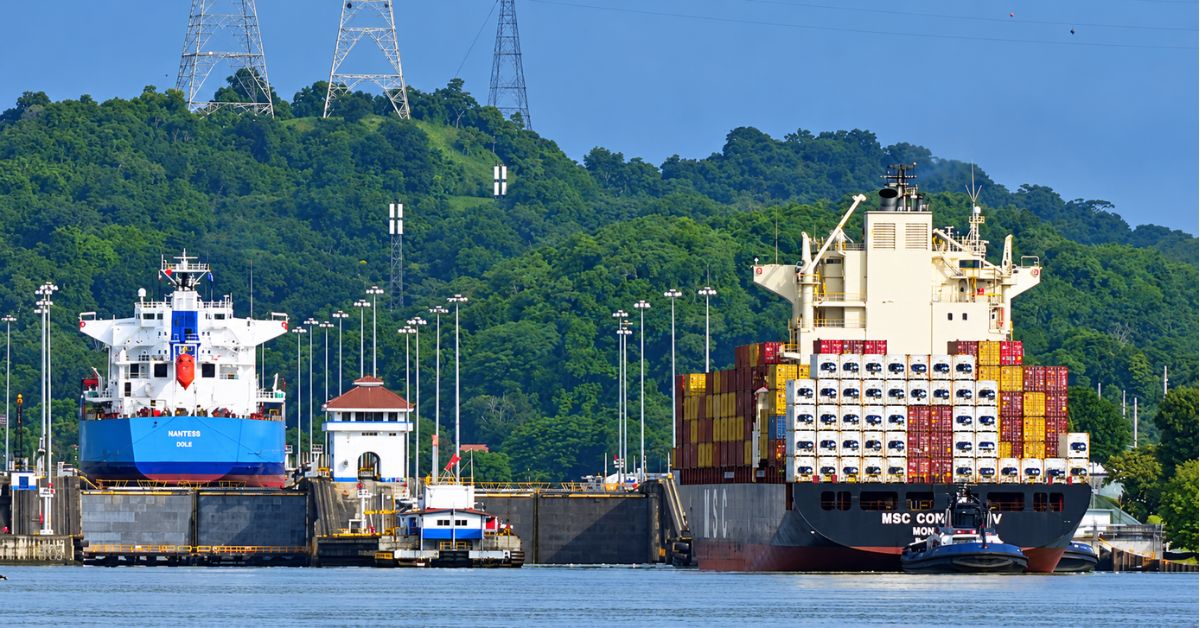

Panama Canal’s new administrator, Ilya Espino de Marotta, said on Monday that the number of ships sailing through the waterway could be cut further due to a severe drought caused by the El Niño weather pattern, potentially reducing transit slots from the current 32 per day to 29 as water levels continue falling.
Panama has declared a nationwide emergency over El Niño, a phenomenon developing over the Pacific Ocean that is affecting worldwide weather patterns and pushing up global temperatures. This year’s El Niño is expected to be the strongest since record-keeping began four decades ago.
Panama’s restrictions come even as use of the canal has risen, with shippers seeking an alternative to the Strait of Hormuz, which Iran has blocked in retaliation for the war launched by the United States and Israel. The interoceanic Panama Canal, which handles 5% of global maritime trade, has already reduced the maximum number of ships allowed through daily from 36 last month to 32 by mid-September. Apart from reducing vessel numbers, canal authorities have also cut the maximum permitted draft, from 15.2 metres to 14.6 metres (50 feet to 48 feet), the vertical distance between a ship’s waterline and the lowest point of its hull, and a key measure of how much water a vessel needs to float safely without running aground.
In 2023, El Niño forced a reduction in daily transits from 38 to 22 due to a dramatic drop in reservoir levels. Espino de Marotta, the first woman to head the US-built canal authority, said she does not expect restrictions to reach the levels seen that year, though she acknowledged the current conditions remain challenging.
Each transiting ship requires about 200 million litres of water, which is then discharged into the sea. Canal water manager Erick Cordoba said water remains the most important resource for operations, noting that between April and August the accumulated rainfall deficit was 35.8% below the historical average, with “no signs of recovery in the short term.” Forecasts indicate the 2027 dry season, normally running between January and April, will start earlier than usual and extend into May.
Experts have warned that long-term restrictions on canal crossings could lead to higher shipping costs and longer waiting times for deliveries, compounding disruptions already stemming from the Strait of Hormuz crisis. The United States and China remain the canal’s main users, given its role as the fastest maritime route between the Pacific and Atlantic oceans.
 Join our WhatsApp channel for more updates:
 Subscribe to our YouTube channel for more updates: